10 Historical Myths – #01


One of the biggest things which I love…and perhaps sometimes hate…about studying history is that you get to clarify, learn and debunk all the rubbish about history that you thought you knew as a child. Once you’ve done that, everything else that you’ve learned either makes a whole heap more sense, or makes you start questioning everything else. Not everything that we’d like to imagine about history is actually true.

Here are ten really common historical myths, and why, or why they aren’t, rubbish!

1). People wrote with big fluffy feathers!

This is a really common one, thanks to Hollywood, and big-time historical dramas. I’m thinking stuff like The TudorsThe BorgiasMaster and Commander, and so-on. But did people really write with big white (or other-coloured) feathers, back in the old days?

Yes…with a ‘but’. 

YES. People did write with feathers – they’re called ‘quills’, by the way – but NO, people did not write with feathers which still had all the frilly, fluffy bits (‘barbs’) still on them. During the Middle Ages, right up to the early 1800s, writing with a quill was the most common way of writing anything that had to be done with ink. The feathers used were typically large flight-feathers from big birds like geese or swans. They were large, long and thick enough to be worthwhile turning into quills.

The first step was to remove all the barbs. Barbs got in the way of writing – they were big, frilly and unnecessary. They also added a lot of weight to the pen, which isn’t exactly comfortable when you could be writing for hours at a time!

Once the barbs – the frilly pretty bits – had been cut off, the naked feather-shaft was buried and filled with hot sand. This dries out any moisture in the shaft and hardens the material (which is the same stuff which your fingernails are made of, by the way), so that it’s ready for the next step: Carving.

The point of the quill was then cut with sharp, short-bladed knife – a pen-knife. At least four cuts were required to turn the shaft from a quill into a pen. Shaping the pen-point would determine how the pen would write.

Of course, as you wrote, the pen-point would soften. Eventually, the point would be come so soft, it’d be like writing with cooked spaghetti, and it’d be pretty useless. So you cut off the point you made, and then you started cutting another one. And then you went back to writing…and then eventually that point would wear out, and you’d cut another one…after some time, the quill would get shorter, and shorter, and shorter, with your hand slowly creeping up the shaft, until it finally became too short to be practically used.

This is why the barbs on quills were often removed – to make them easier to use, and last longer as writing instruments. The notion in the Middle Ages, that you’d write with a feather that still had the barbs growing out of the sides would’ve been as ridiculous then as trying to write today with the cap still on the pen!

2). Loads of things about Knights!

Forget the U.S. Marines or the SAS, SWAT teams or the Royal Navy – knights will always be the ultimate battlefield heroes! And like any other hero, there are loads of ridiculous rumors that have come to surround knights in the centuries after their dominance. What are they?

Knights in Shining Armour!

Sorry to upset you, but knights in shining armour were not always a thing. In fact, for much of the Middle Ages, most knights did not wear the classic depiction of ‘shining armour’ – what is properly called ‘plate armour’ today. Most knights would’ve worn a tunic, hose, a thick, padded, quilted overjacket called a gambeson, and over the top of that – a shirt or jacket of mail (NOT ‘chainmail’, just ‘mail’), which was composed of thousands of steel rings linked through each other and riveted together with tiny steel rivets. This was basically the medieval equivalent of your bulletproof vest.

Last but not least, there’s no evidence that the military salute comes from a knight raising his helmet-visor, or removing his helmet altogether. A knight only removed (or even opened) his helmet when it was absolutely necessary – since it’s kinda important to protecting his head and all – so the likelihood that this is the origin of the salute is flimsy. It’s much more likely that the salute came from the time after knights, when it was common practice to sweep off one’s hat as a gesture of greeting and respect. The modern military salute is simply a much-simplified version of this.

Knights are Chivalrous!

As Mr. Gibbs says in the Pirates of the Caribbean movies, ‘they’re more like guidelines, than actual rules’!

And that is the truth. The idea of knights being all romantic and noble, chivalrous and dashing is…honestly not as true as you’d like it to be. Sorry folks. Knights are humans just like the rest of us, and just like the rest of us, they followed these guidelines when it was convenient to them, and not because they had to.

Chivalry actually came into play after knights had been around for a while. Without wars to fight, knights became restless and would often just go off raiding to find something to do. To keep knights in line, the Catholic Church decreed that from then on, knights were religious warriors, bound to a certain ‘code of conduct’, although there is no proof that all knights followed this code. The chivalrous knight might sound extremely noble and romantic, but it has little to do with the actuality of knighthood.

An Armoured Knight Could Not Move!

On the surface, you can kind of see how this thing plays out – a knight typically wore three to four different layers, at least two of them made from heavy steel mesh or plate, and at least one from heavy fabric. How on earth did they move around!?

Actually, armour was not as heavy as you might think. The modern soldier on the battlefield carries more crap with him than the knights of old! Although they’re typically thought of as being horse-mounted warriors, knights did have to be able to fight effectively on foot, so mobility and flexibility were extremely important. A knight which couldn’t move was of no use to anybody!

Knights were Older Men

Not really!

Training for knights started very, very young, and typically had two or three stages. A boy becoming a knight started at the age of seven. He would be sent away to the home of a nobleman-knight, who would oversee his education. This included things like swordsmanship, horse-riding, reading, writing, serving, and other important skills.

At the age of fourteen, the boy (then called a ‘page’) would step up to the rank of ‘Squire’. A squire was an apprentice-knight. He had to learn to wear, clean, and repair armour, he had to know how to fight, he had to know how to attack someone while riding on horseback, and had to physically assist the knight who was training him, in any number of ways, so as to fully understand what he was getting himself into.

Finally, at the age of anywhere from 18-24, usually at 21, a squire became a fully-fledged knight.

As a result, the average knight was probably no older when he started, than your typical raw military recruit these days, something which really hasn’t changed much throughout history.

Despite the Armour, Knights could be Killed on the Battlefield.

Well, yeah. Sure, they could. But in actuality, it was more common for a knight to be captured on a battlefield, rather than killed. Knights were the military elite of their day, and as such, typically earned great sums of money, land, titles and courtly positions. This made them far more useful to the enemy, alive, rather than dead.

It was common practice for knights to be captured and then ransomed back to their family, or whichever person was their immediate superior (such as a king or higher noble). Because of this, it was far more important to keep a knight not only alive, but also comfortable during his imprisonment.

3). Spices were used to disguise the taste of rotten meat

Food during Medieval times could be scarce. Effective farming and knowledge of cattle-rearing and breeding had not yet become a thing, and because of this, the availability of food could vary significantly from season to season, and year to year.

Because of this inability to reliably produce or store food year-round, absolutely nothing would’ve been wasted. Every part of an animal would be eaten, and every part of a plant or vegetable which was not otherwise dangerous or inedible, would be consumed.

This possibly led to the myth that medieval cooks would even go so far as to mask the taste of rotten meat by lacing it liberally with spices in an effort to waste absolutely nothing at all.

Now, I’m not sure exactly why this myth is so common, but…I can tell you that it isn’t true.
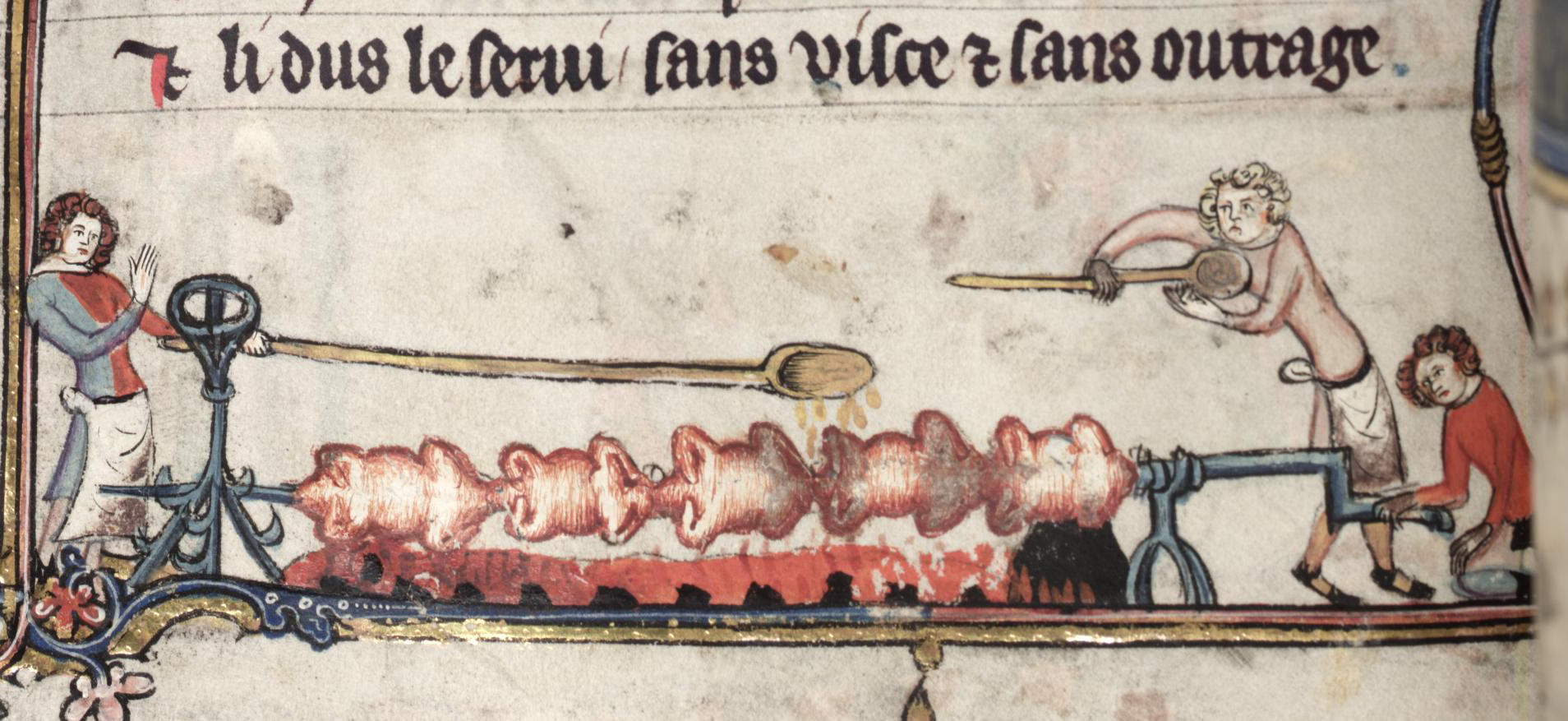
Spit-roasting meat was a long, slow, laborious process requiring nonstop attention. Wasting spices on rotten, roasted meat would’ve been unthinkable in the Middle Ages.

The fact is that spices were hideously expensive in the medieval world. They came from places like China, India, Madagascar, and Indonesia in long, long voyages and treks which could take months to complete. The price-hikes that were paid on spices at each exchange from merchant to merchant were huge, so much so that by the time they reached Europe, spices were so expensive that only the wealthy could afford them – and they certainly weren’t going to waste something which came halfway around the world, and which cost so much – on meat which wasn’t worth flavouring!

4). Chinese Emperors ate with silver chopsticks, to detect poison!

On the surface, this sounds really sensible. You eat your food with a metal which changes colour when it comes in contact with poison – that way, you prevent assassination! Real smart, yeah?

Well, it would be – if it worked.

Chopsticks have been made out of all kinds of things over the years, bone, ivory, rare woods, porcelain, and yes, even silver, so silver chopsticks certainly did exist – but there’s no proof that they were ever used to detect poison. And that’s for one very good reason: loads of things turn silver black!

The myth goes that when the silver chopsticks come into contact with the poisoned food, the silver tarnishes and turns black, and this warns the diner that he’s about to be poisoned. But actually – loads of foods, poisoned or not – turn silver black. Especially things with sulphur in them. That means anything flavoured with, or cooked with – eggs, garlic, onions, and various types of meats and vegetables, would all sooner, or later, turn a set of gleaming silver chopsticks – black. For this reason – poison-detecting silver chopsticks just simply wouldn’t work; they’d be too unreliable.

5). Columbus Found America, and Proved the World Was Round

Actually, neither of those things is true. Through geometry and sheer looking-aroundedness, mankind has known that the earth was round for centuries before Columbus. Knowing that Earth was round goes back to the Ancient Babylonians and Ancient Greeks. By the time Columbus showed up in the 15th century, it was a widely-accepted fact.

Along with this, neither was Columbus the first to discover America. In fact, he never did discover it! Vikings got there first, via Greenland, and Columbus only ever landed in the Caribbean, although he did eventually end up in what is today, Florida, on future voyages.

6). Loads of things about the Titanic

The most famous ocean-liner in the world. And with fame comes rumor and scandal, and the Titanic has loads of that! Here are some of the more persistent Titanic rumors, and why they are, or aren’t, garbage!

The Titanic and its Lifeboats

The Titanic has constantly been criticised for its chronic lack of lifeboats. But how many was the ship actually supposed to hold?

On the fatal night in question, it had twenty lifeboats of varying capacities, eighteen of which were successfully loaded and launched, with the last two being floated off the sides as the ship went down.

The Titanic was designed with Welin Double-Acting davits. These davits (winches or cranes, basically), had the ability to swivel both out (over the side of the ship) or in (over the deck). They were designed to lower multiple lifeboats. Had the Titanic been stocked the way that some in the White Star Line had desired, she would’ve carried approximately thirty-six lifeboats, which, if they’d been fully-loaded, would’ve been enough for everyone on board.

The Titanic was going too fast!

Actually the Titanic was not going ‘too fast’, the Titanic was going at its cruising speed. Which was absolutely normal. It was nothing which any other ship of the time would’ve been doing – it’s still standard practice today! The only reason for a ship to slow down was if it was departing, arriving, or if there was any imminent danger.

If the lookouts had had binoculars, the Titanic would’ve been saved!

Um…no. And for one very simple reason – the whole point of binoculars (or telescopes or any other such distance-viewing equipment), is to sight a specific item, object or location in the distance. This is tricky enough to do during the daytime, never mind at night. And on top of that, the lookouts on the Titanic were not sighting a known object.

Victorian-era brass binoculars. Glasses of this style would’ve been commonly used by officers and deckhands on ships such as the RMS Titanic

You can’t look for something which you’re not even sure exists. Binoculars would only have been of use to them if they know that something is definitely out there and they have some sort of reference-point with their eyes, with which to find it. Since they didn’t know there was an iceberg out there, they didn’t know where to look to find it with a pair of binoculars, which means even if they had them, they would’ve been useless, up until the time they’d spotted the iceberg with their eyes, which as we know, was already too late.

The Titanic was trying to win the Blue Riband

Another common (and completely pointless) myth is that the Titanic was trying to win the Blue Riband, which at the time, was the unofficial speed-record for ships steaming between the United States and Europe across the Atlantic Ocean.

While the Blue Riband certainly did exist, and was competed for, the Titanic did not, and could not, have won it. For one very simple reason: It simply didn’t have the speed to do so. The Titanic was built first and foremost for luxury and comfort, and to have the latest, and greatest technology available at sea during the early 20th century: Electric lights, elevators, telephones, radio, electric heaters, a photography darkroom, and the latest in safety innovations, but the one thing the Titanic did not have, was record-breaking speed, and this was part of her design. Even if she had wanted to, the Titanic would never have won the Blue Riband.

7). Loads of things about the Wild West!

Aaah, the Wild West. Where men were men, and where gun-toting outlaws shot it out in the streets and stuck up steam trains, stagecoaches and riders, relieving them of their gold, silver, watches and jewels. But how much of all this is actually real?

Everybody and their momma was packin’ heat!

Actually, despite the depictions shown by Hollywood and big-name Western films…everybody and their momma was more than likely, NOT packing heat. Believe it or not, but a lot of Western cities and frontier towns during the days of the ‘Old West’ (ca. 1865-1920), actually had extremely strict gun-control laws.

It was not illegal to own a gun. It was not illegal to own ammunition. It was not even illegal to fire a gun! But it was, in many towns, illegal to carry a gun openly in town. It was seen as threatening, hostile, and inviting danger. Because of this, town sheriffs actually enforced strict no-carry laws, regardless of open, or concealed.

The murder rates were super-high!

Actually…no. While murders certainly did happen, since people were not allowed to carry loaded guns in public, they were not nearly as common as Hollywood would have us believe. Most towns had less than five deaths a year!

Cowboys and outlaws were hot-blooded, white Americans.

Sure. Some were. But actually, there were also a lot of other ethnicities. Mexican, African-American and other, lesser ethnicities and nationalities were all represented in the Wild West – even gay cowboys were apparently a thing!

…Why?

Remember that a lot of these people lived very rugged lifestyles. Towns were days apart by horse and cart, and trains were not always as frequent as you’d like them to be – sometimes they didn’t run at all! Because of this, long cattle-drives and long journeys between towns relied on competent, reliable, sober men, if the stock (and the men driving it) were going to reach their destination alive.

This meant that they didn’t have time to piss around with things like racism or homophobia. That doesn’t mean it didn’t happen – sure it did – but in such a harsh environment, most people didn’t have the luxury of complaining about it. What was far more important was whether this guy on your team could do his job, more than anything else!

8). Loads of things about Pirates!

Just like with knights, pirates are also drenched in myth. But which ones are actually true?

Pirates buried treasure, and drew maps to it!

Nope. Instances of pirates burying treasure are phenomenally rare – there’s maybe one or two recorded instances of buried treasure in all of classical pirating history (ca. 1600-1800), and even those are contested. It’s certainly true that pirate ships sank, loaded with treasure, and that some of this treasure has been located, recovered, and put in museums, but that’s not the same thing.

Pirates walked the plank!

Nope. Pure fiction, and an invention of Hollywood.

There was a Pirates’ Code!

Actually…yes, there was! Well, yes, and no. At no time in history was there ever ONE specific pirates’ code. Such a thing never existed. But individual pirate captains did have codes of conduct on their ships which they expected to be obeyed. Articles listed in these codes mentioned everything from health insurance, bedtime, dividing the spoils of victory, a strict no-rape policy, and that every pirate was responsible for keeping their weapons in working order.

Pirates were marooned on desert islands.

Yes, this really did happen, and there are recorded instances of this happening throughout history. Admittedly not often, but it was a recognised pirate punishment. As is the bottle of water (or rum) and the pistol with one charge of powder and one shot.

Pirates spoke like they do in the movies! Yarrr!!

Sure they did!…Buuuut…only in the movies. A lot of that comes down to early Hollywood ‘talkies’ from the 1930s, 40s and 50s.

Pirates were obsessed with ‘Pieces of Eight’.

Probably, yeah. The ‘Piece of Eight’ is the slang term for the Spanish 8 Reales coin, millions of which were minted in South America, and  shipped back to Spain by the galleon-load. They certainly did exist, and you can certainly go and buy one, if you look hard enough. Spanish treasure-galleons loaded to bursting with gold and silver coins like these were often targeted by Dutch, English and French pirates and privateers.

Pirates wore eyepatches, had peg-legs and hook-hands.

Again, probably yes. While some of this has certainly been dressed up by Hollywood, it’s also true that pirates (and seasoned seafarers in general) did have eyepatches, peg-legs and hook-hands. Losing a limb during naval battles was extremely common, and crude prosthetic limbs would’ve been made out of whatever materials would’ve been available on the ship at the time.

Pirates wore eyepatches so that they could retain night-vision in one eye, and day-vision in the other. This was to make sight clearer when going above, or below decks, and switching between the darkness of the ship’s interior, and the brightness of the open decks.

9). Stuff about the Model T Ford

The most legendary car in history, there have been quite a few myths and misconceptions about the old ‘Tin Lizzie’. What are they?

‘The customer may have any colour he desires so long as it’s black!’

Actually, the Model T was available in a wide array of colours. While black was certainly one of them, it was also available in blue, red, green, grey and maroon. Ironically, black was NOT the first colour which Ts came in!
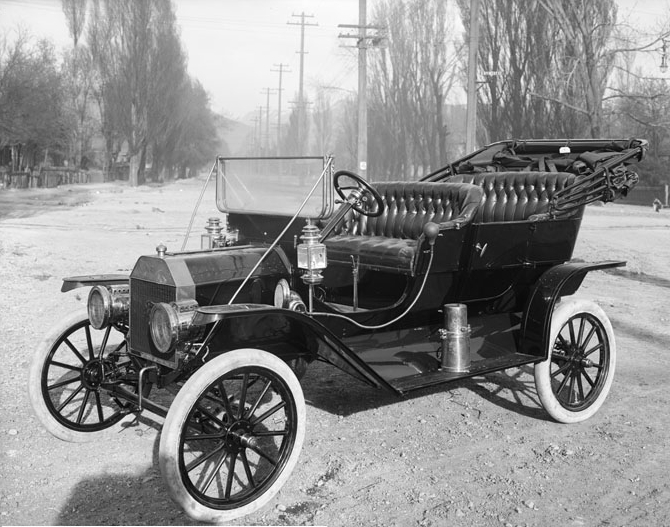
Model Ts were rickety, unreliable, fiddly machines.

While they were certainly fiddly to operate (the controls are NOTHING like those of a modern car), Model Ts were actually manufactured to be amazingly robust and long-lasting! Their engines were simple, their controls were…not exactly straightforward, but at least not dangerous to operate…and they were designed to cross open country! Remember that in the 1910s when most Ts were made, roads were often little more than dirt tracks. As a result, cars had to be built extremely tough to drive over them safely.

Model Ts could run you over when you started them.

Yes they could, if you didn’t follow the correct starting procedure. The handbrake had to be engaged (pulled all the way back) before the engine started (if you cranked it), or else the car could very well run you over!

10). The British Government once had a Window Tax!

Actually…yes! During the 1700s, with the British fighting an increasingly large number of very expensive wars, all kinds of taxes were introduced. One of them was a window tax, whereby every house which had more than a specific number of windows had to pay a tax for the privilege of having them. Some people got around this ridiculous law by simply employing the services of a competent bricklayer, and blocking up the extra windows!

The idea of taxing light is nothing new!!

Other taxes from the 1700s included ones on candles, watches and clocks, soap, newspapers, wigs and wig-powder, personal income, and the employment of male servants!…this final one lasted until the 1850s! During this time, candles, soap and newspapers became so expensive that they were virtually luxury items until the mid-Victorian era.

Georgian-Era Brass Telescope with ‘guillotine-style’ Shutters. Ca. 1825-1835 (?)


As far as functional telescopes go, this is probably the oldest one that I’m ever likely to get my grubby little mitts on! I have no idea how old this thing is – it was sold as being early Victorian (1840s). However, research suggests anywhere from 1800-1850, with the style becoming increasingly uncommon from the 1850s onwards. What I do know is that this telescope is definitely of a much, much older style than I’m used to, and which hasn’t been seen in at least a hundred and forty years.

The way it’s constructed, the way it operates, and its various component pieces, and features, screams just how different it is from any other telescope which I’ve ever had the privilege of handling.

So, what do I know about it?

This particular type of telescope is pretty freakin’ old. That much I do know. In some respects it’s not too different from the others I have, in other respects, it is very different!

It’s a two-draw wooden-barreled naval telescope with brass fittings, with an eyepiece cartridge, erector cartridge, and two-piece objective lens, which were all common features of antique telescopes of the 1800s. Where it differs is in how these pieces are assembled and fitted.

For a start, let’s look at the eyepiece mount. It’s much larger and more elaborate than most such mounts, and the eyepiece lens which it protects is also fitted differently into the cartridge which holds it.

The eyepiece cartridge has two lenses which magnify the image seen by the big objective lens at the front of the telescope. On later telescopes, both these eyepiece lenses are fitted into rims of roughly the same shape and size, and are screwed into either side of the cartridge which holds them.

On this telescope, the eyepiece lenses are not only of dramatically different sizes, but how they’re mounted into the cartridge is also markedly different. This style of fixture is something you just don’t see in telescopes which come from the second half of the 1800s.

The second major difference between this telescope and others which I’ve handled, and which points it out as being an older style, is how the lens-caps are mounted and operate on the telescope.

Most telescopes have one big round objective lens-cap, which just covers the front of the telescope, to stop the big, light-catching lens from getting dirty, gritty, scratched or damaged, and a smaller cap at the other end, for the same purpose. To use the telescope, it’s necessary to remove the lens-cap at the front, and to slide the lens-cap built into the eyepiece mount, to one side. The cap or shutter pivots on a screw-post into the side of the telescope’s eyepiece and is hidden neatly away.

Here, you can see the two ‘guillotine’ shutters raised into their open positions.

By comparison, this telescope has rectangular, sliding lens-shutters on both the front, and back end. They slide open and shut and they stick out the sides of the telescope instead of tucking neatly away. I’ve seen some people call these ‘guillotine-style’ shutters, on account of how their operation resembles that of everyone’s favourite full-sized vegetable-chopper – so, I’ll call them guillotine-style shutters too!

The lens-cap removed, with its shutter raised.

They really are a very whimsical piece of telescopic history. They’re a feature that you simply do not see on modern telescopes – and not on many antique ones, unless they’re really old, like this one! I’m pretty sure I’ll never find another one like this – at least not at any price which I could comfortably afford!

Another feature which I like about this telescope is the fact that the lens-cap that protects the objective lens at the front of the wooden barrel has two purposes. First, it acts as a lens-cap, to keep the lens free from dust, scratches and breakage – second, it acts as a rain and glare-shield! It’s not actually necessary to remove the lens-cap from the front of the telescope, in order to use it. You simply slide up the shutter on the front of it!

This feature would’ve been common on telescopes designed for naval use at sea, where sea-spray or rain could easily have obscured the view of the telescope’s user. Protecting the telescope’s lens from the full force of the rain or sea would’ve allowed for clear vision even during inclement weather.

Given all these factors, how old is it?

I honestly don’t know. My guess is the 1820s or 1830s. I have no evidence to back this up beyond what I’ve seen from similar telescopes which were dated to this era, and which match the design elements which I’ve seen here. But that said, that would make this about 180 years old…which is impressive, any way that you slice it!

This has certainly been a fascinating piece to tinker with and pull apart, fix and clean. Hopefully I’ll have a video about this coming soon on my YouTube channel, so watch out for that! 🙂

New Video: The Kyneton Lost Trades Fair – SewWhat Maryborough


This weekend just gone, I went to the Kyneton Lost Trades Fair in Kyneton, country Victoria, where I got the chance to see all kinds of ‘lost trades’. Blacksmiths, cobblers, bell-makers, potters, glass-blowers, knife-makers, carvers, carpenters, chandlers, weavers, spinners…the list goes on and on and on.

Anyway, while I was there I ran into some friends and got the chance to film them. This is the result!

My First Vintage Pocketknife


When I was attending university a few years ago, for the first time in my life, I found myself doing a lot of travelling and walking around every day. Going to the campus, going to lecture halls, going to classes, the library, the store, the cafeteria for lunch, all kinds of places. And it was during this time in my life that I started to realise just how many things I needed to cut open. Lunch packets, sauce packets, that super-annoying skin-tight plastic wrap that adorns almost every single type of manufactured product these days, from POST-IT notes to writing supplies, and I began to wish more and more that I had some sort of pocketknife on me.

I never had a pocketknife as a child. I never saw the point, I never saw the need, and for almost every cutting job around, I used a pair of scissors. But as I got older, and started moving around more, I began to realise just how handy it would be to have a portable blade on me with which I could do things. And so I started hunting.

At first I really didn’t know much about knives, but with my historical bent, I knew that I’d like a pretty, antique one. The good news was that antique pocketknives are really common. The bad news is that finding a decent pocketknife that you like enough to buy, refurbish, maintain and use can be a bit tricky. There are loads of different styles, models or patterns out there, each one suited for different purposes. After a lot of hunting around, I bought a knife at the local flea-market. As I said, vintage pocketknives are really easy to find, the trick is finding one you like. The good thing is that most of them really don’t cost much at all.

What Did I Buy?

I ended up with a neat, medium-sized ‘Barlow’-pattern knife. It’s rounded off at one end of the knife (designed this way so that it’s easy to slip into the pocket), and has a pair of bolsters at the other end. The scales (decorative panels) on the sides of the knife are covered in panels of polished bone. Would be nice if it was ivory, but we can’t all be that lucky!

The Barlow knife is one of the oldest knife-patterns still manufactured today. And I mean really old! The first Barlow knives were invented back in the 1600s and were owned by such people as George Washington, and mentioned in the works of Mark Twain. Although it was actually invented in England, the Barlow became an icon of Americana by the middle-1800s, and was liable to be owned by thousands of people.

The classic Barlow has a handle with a rounded end, and two folding blades which both pop out of the same end. The style of the blades changes from manufacturer to manufacturer, but in the end, they comprise of one larger main blade, for general use, and one smaller blade, about half the size. This smaller blade was originally intended as a pen-knife, used for sharpening, cutting and shaping pens and pencils, in the days when writing was done with either quills, steel dip-pens or pencils (before the widespread availability of pencil-sharpeners).

The reason the Barlow was so popular was because it was effective, simple and cheap. The two blades did just about everything that most people in the 1600s, 1700s and 1800s needed of their knives, and it was also small enough, and cheap enough for most men, boys and probably women too, to own one. It’s qualities like this which have seen it last into the 21st century.

Cleaning the Knife

Any antique pocketknife that you pick up at an antiques shop or at a flea-market is bound to need cleaning. In most cases, the knife won’t have been properly maintained in decades. Cleaning the knife is important for a number of reasons.

First, it makes it easier, and therefore, safer to operate – an essential importance when anything with sharp blades is concerned.

Second, it improves the look of the knife and keeps your clothes clean. Nobody wants to carry a pocketknife in their pocket when it’s full of grime, and liable to transfer that to your jeans or slacks. And for something so small, a pocketknife can come with a whole heap of crap packed into it, and I’m not talking about the blades!

The first thing you’ll want to do, if you can, is to open all the knife-blades and toss it into an ultrasonic bath, ideally with warm water and liquid soap to blast out all the gunk inside the knife. Turn the machine on and watch all the dust and grime and crud come shaking out. You may need to do this two or three times, and change the water in between washes. This should clean out most of the grit inside the knife. Anything extra you can pick or scrape or wipe out with tissues, cotton-buds, or pins (useful for getting into the tiny cracks).

Once you’re removed all the grime, it’s time to remove all the tarnish and rust. This can be done using either hard abrasives like extra-fine sandpaper or steel-wool, or liquid polishes like Brasso, depending on how bad the the tarnishing is. Like the cleaning, polishing and rust-removal may take a few applications to get the look that you’re most comfortable with.

Sharpening Your Pocketknife

Once you’re done cleaning your pocketknife, the last thing to do is to sharpen it. There’s a million ways of sharpening a knife and half a billion ways of testing how sharp it is, so I won’t be going into this in great detail. YouTube is always a great place to find more, if you need it.

But to cover the basics – I sharpen my knives using stones of three different grits – coarse, then fine, then extra-fine, staring with the roughest, and progressing to the finest, with about 20-30 strokes of the blade across each surface on both sides. It’s important to keep the stones lubricated while you sharpen them. If you’re the sort of person who sharpens blades regularly, it might be useful to keep your stones soaking in a bucket of water somewhere, so that they’re always ready for use. If not, you’ll need to soak them for a few hours before you start using them.

Once you’ve given each blade of your pocketknife a thorough sharpening on both sides, now is the time to test it. The classic way is to see how cleanly it slices through a sheet of paper. A well-sharpened knife will produce a clean, straight cut and the paper will have sharp, clean lines either side of it. A knife which hasn’t been sharpened properly will simply tear the paper, or fail to cut it at all. As you cut, make sure that you pull the blade along so that you can test that its entire length has been properly sharpened. If it cuts cleanly, then congratulations, you’ve sharpened your first vintage pocketknife!

PUBLIC NOTICE: Antiques For Sale!


Hey folks!

As of today, throughouthistory.com will be listing all the antiques which I currently have for sale. If you want to see what’s available for purchase at the moment, please visit the ANTIQUES SALES page here! It may also be accessed through the ‘PAGES’ menu, down the left side of this blog.

Please note that all prices are listed in AUSTRALIAN DOLLARS, and that the final price to be paid on each item is the price of the item itself, plus postage! 

The flag of the Commonwealth of Australia, in case people have forgotten what it looks like.

Reasonable offers are accepted on all items, and questions are welcome. If you wish to buy an item, make an offer, or ask questions about something which I’ve got for sale, please email me at contact@throughouthistory.com. Thank you!

All payments for purchases and postage will be carried out through PAYPAL.

All photographs featured in the ANTIQUES SALES page are of the items themselves, and have been taken by me, your friendly blogger!

Daily Life in the Tudor Era


Life during the Medieval and Renaissance eras is often romanticised as being quaint, quirky, idyllic, relaxing and easy. A simpler time where simpler people with simpler pleasures led simpler lives. But what were the realities of life during the Medieval era and the Renaissance which followed, a period of time lasting 1,200 years?

Before the Industrial Revolution, technological innovations were slow. It wasn’t uncommon for things to be done the same way that they’d always been done, for hundreds of years. The same building techniques, the same methods of cooking, the same basic styles of clothing and countless other practices remained unchanged for generations.

In this posting, I’ll be looking at some aspects of daily life as it would’ve been lived during the Tudor era, from roughly 1485-1600.

Housing in the Tudor Era

In the 1500s, the majority of people would’ve lived in humble wattle-and-daub houses, often with a thatched roof. The walls were made of thick posts driven into the ground, and braced with wooden beams. Rods were driven up and down between the open spaces, and reeds (the ‘wattles’) were woven in and out of the rods, back and forth, up and down, a bit like weaving a basket. It was easy work and could be done relatively quickly. Wattles (reeds, essentially) were always sourced green, and never dry. Dry reeds, like dry wood, cracks and breaks really easily. The reeds had to be green when they were woven, or they wouldn’t have the elasticity to be bent back and forth between the rods.

A basic wattle & daub house, with a thatched roof. Until the mandatory manufacture of bricks in the 1660s, after the Great Fire of London, the majority of houses were built like this.

Once the walls of the house were rodded and wattled, then came the daub – a mix of water, mud, grass or straw-clippings, and excrement – usually horse, or cattle – which was easily found almost anywhere in Tudor England! The mixture was trodden and mixed underfoot, and then toshed up onto the walls, packed into the reeds and wattles and rods to create a thick, weatherproof layer to set and dry and harden. Entire houses were built using this method, with gaps in the framework for windows, doors and passageways.

What about windows?

Glass for the most part, was extremely expensive. If it couldn’t be made locally, then it would’ve been imported from Europe (most likely Italy), so most people didn’t actually have glass in their windows. They might’ve had lattices, and at night – shutters – but for the most part, windows were open to the breezes. At night, it was common practice for the head of the household to go around ‘locking up’, which meant barring the doors, and shutting and bolting the windows.

For people who were a bit better off, and could afford glass, windows were often leadlight – meaning that they were a lattice of dozens of square or diamond-shaped panes, held together by strips of lead, melted and crimped into place. Glass was expensive, and large panes of glass were difficult to transport over bumpy and pothole-riddled streets, so smaller panes which could be clipped, chipped and broken down to smaller sizes, and then simply ‘glued together’, essentially, by strips of lead, were easier to produce.

Okay, not everyone had nice glass windows. But what about flooring?

Again, that varied according to what you could afford. If you were absolutely dirt poor, then you had…a dirt floor! Usually just earth, packed and compacted and rammed down with sledgehammers. If you were a bit wealthier, then hardwood floors were common. If it was possible or necessary, your floor might be made of stone, or if you were of the upper echelons of society – marble or granite, or fancy tiles.

Every home in Elizabethan times would’ve had at least one fireplace. Temperatures during this time were a lot colder than they are today, due to a phenomenon known as the ‘Little Ice Age’. In fact during Stuart times, the weather in winter could be so cold that the River Thames in central London would freeze over solid! ‘Frost Fairs’ were held, where people could go skating on the frozen river!

Fireplaces had been rare in the medieval era. They had to be made of stone or brick, which was expensive, so most people had open floor hearths, with the smoke just finding its way up out of the house through the roof, but by late Tudor times, fireplaces and the materials to make them were becoming cheaper, so it was now possible for most people of moderate means to have at least one fireplace in their house, usually in the kitchen.

Fireplaces were of course used for cooking, heating water, keeping warm, and providing light, but one thing they couldn’t be used for was baking! The inconsistent heat from the fire being stoked and fuelled and dying down meant that baking was not possible at home. It was for this reason that most people took their bread, cakes or pies to the local bakehouse to be baked by their local baker. This is why you prick it, and poke it, and mark it with ‘B’, so that you knew which pie was yours, so that you could get it back when it came out of the oven!

Houses in the Tudor period could be surprisingly large. It was common for houses to be two, three, or even four storeys high, often with the upper floors being wider than the lower ones. The result was that in especially narrow streets, your bedroom could be almost kissing the bedroom of your neighbour, which could be as little as just a couple of feet apart! Often, houses doubled as shops, so the ground floor of a building was often the family business, whereas the upper floor or floors, contained the family home.

But what about rooves?

The majority of rooves were thatched. This meant that bundles of straw were sewn to the roof using yarn, to keep the rain out. Thatch could be extremely thick, and while it was surprisingly weatherproof, it would still have to be replaced occasionally, as old bundles wore out, and new ones had to be brought in to replace them.

With the majority of houses built in this manner, you can bet that fire was a huge risk. Close-packed wattle-and-daub constructs with straw rooves are highly combustible, and it was what caused, a hundred years after the start of Queen Elizabeth’s reign, the Great Fire of London, in 1666.

Water and Sewerage

Clean water and removing sewerage are the two biggest challenges of any city in the world. In Tudor times, water was sourced from springs and rivers far from the city, or else from the River Thames. Finding clean drinking water was such a problem that most people didn’t even drink water – well into the 1800s, the drink of choice for most people was alcohol – either wine, beer or ale. The boiling process for making beer and ale, as well as the alcohol content that it contained, killed bacteria and made it safe to drink.

Alright. What about going to the toilet?

The majority of houses in towns had either a cesspit or a chamberpot. Cesspits were dug out as frequently as every three to six months, to maybe once a year. Any filth on the streets was swept and shovelled away by streetsweepers. But what about the sludge in your cesspit?

Enter: the nightman.

Sewerage was meant to be carted out of the city by gong-scourers, muck-rakers or nightsoil-men, who worked the night-shift, digging out cesspits, clearing crud off the streets, loading it onto carts and then driving it out of town where it would be used as fertiliser. Nightsoil labouring was dangerous to one’s health, pretty unpleasant, and very physically demanding! For this reason, anybody willing to carry out this unenviable occupation actually got a pretty impressive weekly wage! Provided you didn’t mind shovelling crap all night long, you could earn yourself quite a lot of money…or if you were Queen Elizabeth’s personal gong-scourer…an impressive amount of booze…he insisted that half his wages were paid in alcohol!

So, how much could you make as a gong-scourer? Well, it depended on who you worked for. If you worked for the City of London, for example, you were paid by quantity. Two shillings paid for every ton of excrement removed. If you worked for the Queen at Hampton Court, you earned sixpence a day, or 3/- (three shillings) a week (if we assume a day off on Sundays). Not a bad wage in an era when most daily expenses were counted out in farthings, ha’pennies and pennies and most people earned maybe two or three pence a day! Keeping people clean and hygienic might’ve been unpleasant and messy, but at least the job paid well!

The occupation of nightman or nightsoil-man persisted in London into the mid-1800s, and in other parts of the world, right into the 20th century, although it’s now mostly relegated to history, except in some undeveloped countries.

Travelling Around, Tudor Style

Travelling anywhere in Tudor England was slow and dangerous. Unless you had a horse and cart, your speed and how much you could carry was entirely up to how fit you were. The fastest way to travel was arguably by water. Travelling in London was particularly difficult due to the filthy state of the roads, and the sheer congestion of people. London Bridge, the only bridge across the River Thames for hundreds of years, dating all the way back to Roman times, was the only nearby river-crossing in Tudor times. The bridge had shops and houses built on it, and traffic was often so congested, it was faster to jump from boat-to-boat across the river, than wait at the bridge! The bridge also had to abide by a strict curfew. The gates were locked each night and unlocked at dawn. If you were unlucky enough to fall foul of the Tudor courts and end up with your head on a spike…that spike was driven into the bridge, so that everyone passing could see it.

Cooking and Cleaning

For most people in Elizabethan England, food comprised of pottage, vegetables and bread. Meat was often a luxury as animals such as chickens, sheep and cows were more important alive rather than dead. The only exception to this was the pig – which could be fattened and slaughtered regularly. Pork and bacon were the most common foods you were likely to come across in Tudor England.

Okay, what about cooking, then?

In theory, if you had a fireplace at home, then you could do most of your cooking at home, too. Cooking was traditionally done on a round-bottomed pot called a cauldron, hung over a fire on an iron hook and chain. Raising or lowering the hook (and therefore, the cauldron) determined how much heat was transferred to the pot (and the contents), thereby varying temperature and cooking-times. Most people just ate pottage – whatever they could find to chuck into the pot. Fish. Meat. Vegetables. Peas. Bread. Oats. Barley.

It’s the origin of the modern word ‘porridge’.

A fire in an open hearth, or fireplace, with a cauldron above it filled with pottage, would’ve been a common sight in many homes right up until the 1700s, when the first cast-iron stoves started being made.

As mentioned, most homes did not have ovens. Ovens were larger and generally harder to work properly. Part of the reason was that most ovens (not all) required you to rake out the flames, embers and burning wood, before chucking the bread in and closing the door, not like the wood-fired pizza-ovens we know today, where you keep the fire going while the bread bakes. The danger was that an errant spark could set the whole house on fire, and obviously this could only really be done safely in homes with dirt or stone floors.

Well that’s cooking. What about cleaning?

Although it would be centuries before knowledge of microbes was available, that did not mean that people back in Tudor times did not at least try to keep clean, although their concept of hygiene was somewhat different to ours.

Contrary to popular belief, people did wash and bathe, and keeping clean was considered important, but at the same time, bathing was not done as often as we might do today. Even into the 20th century, it wasn’t uncommon for most people to have just one bath a week. This was because of the expense of water, soap and firewood or coal to heat the water.

In Elizabethan times, personal hygiene as well as keeping a clean house were just as important then as now. Bathing was often done whenever and wherever it was practical to do so – a pond, a stream or river, or simply by heating water up in the copper (the enormous copper basin in the scullery or kitchen) and bucketing it into a tub for a quick scrub-up in the kitchen.

Cleaning the house involved many of the tasks we still associate today with cleaning – hot water, rags, brushes and brooms, however the Tudors did have some other rather more interesting cleaning methods, which they used in an era before soap and detergent.

For scrubbing wooden surfaces such as chopping boards, tables, benches, buckets, milk-churns and other wooden food-preparation items, salt and boiling water was used, one after the other, to sterilise and clean out an item thoroughly. They of course did not understand sterilisation, but the Tudors did know that improper cleaning spread disease.

For cleaning clothing, linen and fabrics, the Tudors used lye, an alkaline solution created by straining water through wood-ash, which was simply scooped out of the fireplace. The concentrated alkaline-water solution created by this straining process was added to the laundry and it helped to loosen up grease and sweat stains to make washing clothes easier.

Along with the lye solution, another common cleaning agent, for a whole host of things was…urine!

Stale urine, usually collected and left to sit for a few days, up to a few weeks, was the Tudor washing-liquid par excellence! Urine degrades over time, turning into ammonia (which gives it its delightful fragrance), and it was this concentrated ammonia that was useful in shifting stains, polishing metals, fulling cloth, and a whole host of other household tasks! Urine was also actively collected out in the streets, the nitrate inside it was concentrated and added to charcoal and sulphur to create gunpowder. Householders were encouraged to donate their urine to the State for gunpowder manufacturing. Public houses, inns and taverns often had large, communal piss-pots parked outside the front door where the gentlemen of a community could make a contribution to the safety of the realm and aid in the production of gunpowder!

Clothing

During the Tudor era, the majority of people wore garments made of wool and linen. Cotton wasn’t generally available, and silk was extremely expensive. For most men and boys, the typical outfit was the doublet and hose, complete with underclothes, stockings, a belt and boots.

The hose was a pair of leggings with an opening at the crotch, which was covered with a removable pouch or flap of fabric known as a codpiece. Underneath, one wore one’s linen underwear, and a linen undershirt. Over the top, a man would wear his doublet – a short jacket made of a double-layer of wool (hence the name ‘doublet’). The doublet was buttoned at the front, and then to keep everything together, short cords were looped and tied through eyelets at the top of the hose and the bottom of the doublet, holding everything together. This was reinforced with a belt, onto which things like knives, pouches or pockets could be tied to, or hung from. Garments with pockets included in them would not be a feature of clothing for another few centuries!

If it was cold, a man might wear an overcoat, or a cloak or cape on top, along with a hat. If it was sunny and hot, he might remove his doublet and just wear his hose and undershirt, however to be seen in one’s shirtsleeves was tantamount to being seen in one’s underwear – It wouldn’t be until the 20th century that the shirt would gain any sort of respect as a garment in its own right. Even in the Victorian era, it was considered impolite to show off one’s shirt in public, without a waistcoat to cover it.

Women on the other hand wore a whole host of fabrics! An undershirt or blouse known as a chemise typically went on first. Then came a corset stiffened with reeds, whalebone, or wooden stays. Then came petticoats, a stomacher, an overskirt and then another jacket or blouse to go over the top. Everything was held together by drawstrings tied in elaborate knots, or else by clothespins which were sharp little brass or steel pins designed to keep everything from coming apart at the seams. Pins were essential for proper dressing in those days, especially for women, which spawned the expression of ‘pin-money’ (a bit of cash on the side), but which came from the days of the Tudors, when you actually needed money for pins, otherwise your clothes wouldn’t stay together!

Lighting

The rhythms of life were very different five hundred years ago. In general, people woke up earlier and went to bed later. Waking up at dawn or near to it, was common. Work was started early and the main meal called ‘dinner’ was taken at late morning or midday, and another meal of ‘supper’ was had in the late afternoon, before one went to bed in the early evening.

…Why?

The reason was light. The availability of light affected everybody. It affected when and how long you could work, when you woke up, when you went to bed. The only forms of light were either oil lamps, candles or rushlights – cheap reeds (rushes) drenched in tallow (animal fat), dried, and then lit to provide illumination.

For most people, the main source of light was either an open fire, or candles, either made of beeswax, or tallow. Tallow candles were cheaper, but as with anything – you get what you pay for. Tallow burned horribly, it stank to high heaven, and it was never very bright. It was basically a candle made of animal fat! Eugh…

A rushlight in its holder. Extremely cheap to make, they only burned for a few minutes, unlike candles, which could burn for hours.

Beeswax could be melted and purified, it could be coloured and scented, and it burned and melted more cleanly. This gave beeswax candles a much brighter, purer light. But this light came at a price, and candles were taxed…five hundred years later and we still have electric light bills…so not much changes! Because of the expense of candles, however, people, rich or poor, burned as little light as possible at night, and generally retired early. This was what dictated the rhythms of everyday life.

This article was originally posted in the September, 2016 issue of TAT History, and was reproduced here by permission of its author…me! 

Researching Family History – Genealogical Needles in Haystacks!


“So uh, where are you from?”

Looking Chinese, I get this question a lot. Almost every time I meet a new person, it pops up. Depending on the situation, a sarcastic or honest reply usually follows. But it’s a difficult question to answer. I’ve never been fully comfortable with saying that I’m Chinese. I’ve been to China but once in my life – I don’t speak Chinese, I wasn’t born in China, and neither were my parents.

Despite this, we have undeniably Chinese roots. Both my grandfathers were born in China in the early 20th century. But here again there’s a separation – my grandmother (on my father’s side, at least) – was not. She was born in Singapore – at the time, a jewel in the crown of the British Empire. She grew up speaking English, along with a slew of other languages,

You can start to see why there’s hassles involved in researching my family history.

My Own Historical Journey

I only really started getting interested in genealogy after my grandmother died in 2011. She had led what I felt, was an incredible and arduous life, as well as growing up during an incredible time in history, and as part of a unique element of Chinese culture.

I knew very little about my grandparents’ lives while they were alive. My grandfather died before either my brother or I were old enough to know him, and I never felt comfortable asking grandma about him. At any rate, grandma’s worsening Alzheimer’s disease as she entered her 90s meant that by the time I was old enough to ask intelligent questions, it was becoming increasingly difficult for her to answer them. As a result, I learned most of my family history by asking my father, uncles, aunts, and older cousins.

It was only after my grandmother passed away that I gained access to a whole wad of her personal papers. Statutory declarations, passports, immigration papers, household documents, employment slips, hospital records, and even my grandfather’s death-certificate, that I was able to really delve into the history of our family – who was who, when and where they were born, and how everyone was related to everyone else. This was very exciting, but also incredibly confusing and difficult – not least because half the documents were written in a mixture of Cantonese, and Malay – two languages which I know almost nothing about!

The Difficulties of Asian Genealogy

In the Western world, tracing one’s family history is relatively easy. There are workhouse records, war-department records, immigration records, census-documents, birth and death registers, marriage records and school and university records to look through, to find out all kinds of things like when grandpa migrated to America from Italy, where and when he met grandma, what his parents and grandparents did for a living, where your Uncle Tony was born…all kinds of stuff.

Sadly such ease of access to ancestral information is next to impossible to attain for Chinese families. Centuries of war, revolution, invasion, occupation, more revolutions, more wars, more occupations and changing governments throughout China, Japan, the Malay Peninsula, Singapore, Vietnam, Thailand, Hong Kong and other Asian countries has meant that the likelihood of finding a complete and unbroken chain of records and dates going back more than a few generations is pretty unlikely.

Confucian Filial Piety

Another huge barrier to recording Asian genalogy is filial piety, a notion established by Chinese philosopher Confucius, centuries ago, and something which a lot of Chinese people still adhere to, to this day. Confucius stated that in everything, there was an order, a ranking and a hierarchy which had to be maintained. Every person in this hierarchy, from the emperor downwards, had a ranking and a title. This even extended to the family-unit, where every member was addressed not by name, but by rank and title. And in many Chinese families, this has continued into the 21st century.

“Alright”, I hear you say. “So what?”

Well, imagine trying to trace your family tree through even just a couple of generations, when you don’t know ANYBODY’S names. Not your grandparents’ names, not your uncles or aunts’ names, not the names of your great-grandparents, your grandparents’ siblings, their spouses…nobody, all because they would’ve been known by rank and title, and not by name.

Beginning to see the problem here?

The fact of the matter is that it is very, very difficult, unless you have access to loads of documents, and someone who is willing to sit down with you and go through them all, and explain things – especially if, unlike your parents or relations, you don’t speak your ‘mother tongue’, let alone read or write it!

Grandma’s little brother. I never knew we had a pipe-smoker in the family!

For my own part, I was lucky enough that my father’s side of the family was largely brought up Christian, and as such, almost everyone had Christian names as well as Chinese ones. This made recording names, dates and relations much, much easier! I didn’t have to think in terms of first uncle, second uncle, third uncle, second aunt, second-aunt’s husband, fourth uncle’s wife’s brother, third uncle’s cousin’s brother…

You get the idea. It can be maddeningly confusing!

Researching My Own Family

Researching family history can be a lot of fun. I found out the names of my great-grandparents, I found out when and where my grandfather was born, I found out that my grandmother had a little brother who died in the 1950s – and that he worked as an apothecary! I found out that our family has had more adoptions in, adoptions out, and adoptions around the family, than a revolving door orphanage, but it helped to explain how we got where we are, and how the current family all fits together.

Clockwise from top left: Uncle Mark, Aunty Lucy, Aunty Noni, grandma (middle), Aunty Nancy (left) and dad (on grandma’s lap!). Date: December, 1952.

I found all these details out from photographs, records, and from interviewing family members. Unfortunately for me, finding out about my family history isn’t as easy as doing a Google Search, and that means that every single unearthed speck of genealogical gold-dust that I find is precious and fascinating. If you’ve ever struggled to piece together your family history, you’ll know what I mean!

My uncle as a youngster! Born in September, 1935, he estimated this was taken just after World War Two, so he’d be about 10 years old in this picture.

For some people, knowing who they are and where they came from is a point of pride and fascination. For others, they couldn’t give a damn!…My uncle is one such person – he didn’t even keep his wedding photographs! He told me so! I have copies of them, though, and keep them as a record of everything that’s happened in our family which I’ve been able to find out.

Researching Your Own Family History

Genealogy can be a fascinating hobby, albeit a frustrating one. if you ever intend to start, then the best advice I can give is to find every elderly member of your family that’s left, with decent memories, and absolutely pump them for every single drop of information you can squeeze from them.

Living memories are better than dry words on paper, and questioning people when they’re alive means that you get more details out of them, rather than trying to figure out everything from records, after they’re dead! This is one thing I wish I’d done with my grandmother before she’d died, but unfortunately I just didn’t have the interest back then.

Next, get a-hold of all the papers you can find. Birth records, death records, passports, immigration records, in any way that you can. If you need to, get them translated! And above all, make sure that you cross-reference things. Records are not always as definitive as you’d like them to be!

My great-grandmother. Nobody knows when she was born, or when she died. She lived into her 90s, that’s all anybody seems to remember!

Once you’ve confirmed what you know, write it down! On the backs of photographs, in a family bible, in a document that you’re keeping – anything! Once lost, information like this is never won back, so guard it jealously! And make things easier for future generations (should you intend to have any), by keeping, saving and recording everything that you can, if not for your own children, then for your nieces and nephews further on down the line. You never know who might be interested in who came before them!