Throughout History

A blog about antiques and history!

Category Archives: Cultural & Social History

20/03/2018 by scheong

WANTED: Jobs From History

If you look around, you’ll find that some of the oldest jobs in the world still exist. You can still find blacksmiths, chimney-sweeps, potters, farriers and even lamplighters. But what are some of the more interesting jobs that have gone through the pages of history, which no-longer exist? Let’s find out together. These are not presented in any order or with any clear start or end…

Song-Plugger

Capable musician to work in music-shop in regular, 9-5 job. Must be able to play the piano and sight-read sheet-music. In an age before audio-recorded music, it is your job to play pieces of sheet-music selected by customers at your music-shop, so that they can hear what it sounds like before they purchase it. You must be able to sight-read sheet-music and play a piece of music set in front of you – ANY piece of music.

The job-title comes from the ability of the pianist to ‘plug’ (demonstrate, sell or push) a song to a customer, to convince them to buy it. Song-pluggers could be men, or women. They just had to be able to play the piano really well. Famous pluggers included George Gershwin and Lil Hardin Armstrong, the wife of jazz-trumpeter Louis ‘Satchmo’ Armstrong.

The position as it originally was does not exist today, although songwriters who push their music onto singers and musicians are still called ‘song-pluggers’ today.

Iceman

Once upon a time, a lot of things were home-delivered. Milk, bread, meat, cheese…and ice.

In the 19th century, the icebox was the forerunner of the modern refrigerator. To keep food cold, huge blocks of ice weighing several pounds were loaded into the tops of ice-boxes. The cold air released by the ice as it melted chilled the storage-compartment underneath, keeping food inside the box cold and fresh.

Ice was delivered every three to four days in winter, and every second day in the summer, by your friendly neighbourhood iceman. This job required significant physical strength! We’re not talking about ice-cubes. We’re talking about ice BLOCKS. Huge rectangular chunks of ice that could weigh up to twenty or thirty pounds, possibly even more. They’re cold, wet and slippery. Drop one and shatter it and you’d have to go and get another one!

An iceman carried his precious cargo using razor-sharp ‘ice-tongs’ which hacked into the blocks of ice, biting into them and providing the friction to safely lift them out of his ice-wagon and carry them into a homeowner’s kitchen. If you had to visit an apartment-block, you also had to carry the ice all the way up flights of stairs! At least in winter-time you didn’t have to make deliveries so often. And if it snowed, not at all! The iceman would often wear an apron to protect his clothes from meltwater, and from cold-burns caused by handling his frigid cargo.

Rag-and-Bone Man

Just as how a lot of things were delivered to the house, a lot of things were also taken away. Dustmen collected dust and ash from your house, in dust-bins. We still have them today – except now they’re called garbage-men.

But one man who we don’t have visiting our houses every week any more is the Rag-and-Bone Man.

The Rag-and-Bone Man was a neighbourhood institution. He would show up to collect old rags and used bones from the kitchen. Rags were anything from old clothes, old linen, cloth-scraps from household sewing-projects and so-on. Bones were chicken bones, pork-bones, beef-bones, any bones that were leftover from cooking.

Rags were torn up, cut up or pulled apart. Cloth which was still in decent shape might be picked apart and the thread reused to weave new cloth. Cloth which was too small or poor-quality for this was mashed up and used in paper-making, producing what was called ‘rag paper’.

The bones collected were also crushed up and used in fertiliser. If the bones were large enough, or plentiful enough, they might be sold to a ceramics factory. Here, the bones were again crushed and ground up into a powder and used to produce Bone China. Bone China, a variation of porcelain, is about 50% clay, and 50% bone-powder.

Tosher

Existing in Victorian times, a ‘tosher’ was a sewer-worker…of sorts. He was a scavenger who hunted and raked and scoured down in the drains and tunnels underneath cities, digging out anything valuable that might’ve been washed down the drains. Coins, spectacles, watches, nicknacks…anything that might have a resale value. Their job gave rise to a popular expression still used by people today. Since the stuff they found was generally detritus, it was said to be a “load of old tosh!“.

Costermonger

Most people have never heard of a costermonger. First time I read this term was years ago in a book written back in the 1800s. A cross between a fast-food vendor and a fruit-shop owner, the costermonger was originally a seller (‘monger’, as in ‘fishmonger’, ‘ironmonger’, etc), of costers…or costards – a type of apple – known today by most people as…’custard’ apples. Although they were called costermongers or costard-mongers, as time passed, they realised they couldn’t make a living selling just costards. As a result, they branched out into other fruits and vegetables, or started selling snacks and fast-food in the streets. Stuff like oysters, baked potatoes, soup, pease pudding, sandwiches, and so on.

Tinker

Tinker, tailor, soldier, spy…If, like me, you grew up with your grandmother singing this nursery rhyme to you, then you probably had a pretty decent idea what the second, third and fourth persons in this sequence of occupations were, but were also pretty ignorant about what the first one was! After all, who’s heard of a tinker, in the 21st century!?

A tinker was someone who worked with, and who repaired, tinware, or items which contained tin. In centuries past, tin was an important metal – used to make pewter, used to make cheap, serviceable metalware, and used for lining (‘tinning’) the insides of cookware, such as pots, kettles, frying-pans, etc (if they were made of copper, instead of cast-iron). Tinning the insides of copper cookware was (and still is) a necessary part of manufacturing copper cookware because of the coppery taste that would be imparted to the food if it wasn’t…eugh!

A tinker used to go from door to door with his cart, his soldering irons, his tin, his tools, and a swinging basket of charcoal to heat up the irons and do the necessary repairs to pots, pans, kettles and buckets. My grandmother used to say that tinkers (still a thing when she was a girl in Singapore in the 1910s), were nothing but ripoff-artists who would deliberately do a poor job on their repairs so that you’d have no choice but to pay for them to fix your broken pots and pans AGAIN when they came around next time.

Link Boy

A link-boy was a youth (usually a small boy) who guided people through dark city streets late at night, lighting their way home with a flambeau (flaming torch) or a candle or lantern, for a small fee of a few pence. In the days before regular streetlighting, link-boys were an important if humble service-provider in crowded cities where people would stay out late eating, drinking, whoring, or visiting the the local theatre or dance-halls.

Link-boys were often the children of the poor, who took up link-carrying as a way to earn a few extra coppers for the family income. Because the money they earned, while pitiful, was so important to their survival, they also earned the nickname ‘moon-cursers’, because a full moon would light up the sky so much in the middle of the night, so as to render their services unnecessary.

The link-boy was such a fixture that even today, the idiom survives of ‘not being able to hold a candle to someone‘. Since being a link-boy required no special skills, if you were not worthy or capable enough to hold a candle to light someone’s way home, you were considered lower than trash!

Lamplighter

To be fair, the job of lamplighter hasn’t been entirely consigned to history – there are a few who still ply this trade, and they still carry out the same duties done by their forebears over a hundred years ago.

With the advent of reliable streetlighting in the 1700s and 1800s, someone was needed to walk around and light all these streetlamps every afternoon, and extinguish them every morning. Lighting lamps was done with the aid of a lamplighter’s staff, which was capable of both turning the gas-nozzles on and off, as well as lighting the wicks of lamps or igniting the gas-mantles at the tops of the lamps.

Lamplighters sometimes took advantage of their unusual working hours to find extra ways to bolster their wages. Some of them would earn a bit of extra coin by doubling as human alarm-clocks. Since they had to stay up all night, or had to wake up very early to douse the lights at sunrise, some lamplighters would walk the streets rapping their lighting staffs on people’s doors and windows to wake them up in the morning. In an age before mass-produced, reliable alarm-clocks, the payment of a few cents or pennies was a small fee to be assured of an early wake-up call, and it was one way for the enterprising lamplighter to make more money.

Powder Monkey

The job of ‘powder monkey’ sounds almost cute, doesn’t it? Well, what it sounds, and what it is, are two totally different things.

This job was prevalent during the 1700s and 1800s, primarily in the British Royal Navy. A powder-monkey was the nickname given to small boys (typically anywhere between seven and twelve years old) whose job it was to relay charges of gunpowder from the ship’s powder-magazine (at the bottom of the ship) up to the ship’s gun-decks, where they would be loaded into the cannons along with the shot and wadding, to fire off the ship’s guns during time of battle. Powder monkeys had to be agile, fast and sure-footed. Jumping, climbing and running up and down ladders and staircases while carrying explosives goes some way to explaining why they were called powder-monkeys.

When a ship was not engaged in battle, powder-monkeys filled in the posts of servant-boys to the ship’s officers. If your vessel and the crew on board it were successful and captured an enemy ship, then the powder-monkeys (along with everybody else on the ship) would get a share in the prize-money! Granted this might only be a few pounds, but in the 1800s, a few pounds would’ve constituted several months’ wages. The work was hard and dangerous, but if successful – very rewarding!

The Washman

Ever done a whole heap of cooking? Maybe you tried making spaghetti sauce from scratch, or you made a pie, or tried to do beef stroganoff or something like that? Ever noticed how there’s always a huge pile of food-scraps leftover afterwards? Stalks, stubs, skins, peelings, leaves, stems, apple cores, seeds, pulp…god knows what else, right? You scrape it all together and dump it in a bag and you chuck it out into the bin under the kitchen window.

At least, that’s what you’d do today, right?

Back in Victorian times, things were done a little differently. Instead of just throwing it out, you’d save all your vegetable and food-scraps and peelings and fruit leftovers, and toss them into a bucket under the kitchen table. This composting cauldron of collected cast-offs would mature under the table, in its own little bucket, until once a week, someone knocked at the back door.

The local washman.

The washman was the person who bought your kitchen-scraps. For a nominal fee, he’d pay for the privilege of your leftovers. He’d dump the contents of your wash-bucket into his cart and then drive off with it.

What for? Because if he collects enough food-scraps, he can use it to feed his pigs! He can fatten them up, then slaughter them, then sell the meat at a profit! That’s why today, anything cast off, discarded or rubbish is called…

…’hogwash’.

The Shoddy Man

Along with the washman, another person who might visit your house on occasion was the shoddy man. He was the person who bought or collected, all your fabric scraps, or old, worn out, useless clothing. This function might have also been done by the rag-and-bone man (see above), but if it wasn’t, then the shoddy man cometh!

The shoddy man collected your fabric scraps and then sent it off to factories where the fibres were torn apart, shredded up, and then respun and rewoven into a new, cheap, recycled fabric called ‘shoddy’. Its poor quality meant that it was really only used for making clothes for the poor. It’s also why anything cheap, nasty and of poor quality today, is called ‘shoddy’.

The Hall Boy

Along with the link-boy and the powder-monkey and the chimney-sweep’s climbing-boy, another dead occupation from the 1800s is that of the hall boy. The hall boy was the lowest of the lowest male servants in a grand, servantholding household. As hall-boy, the youth (typically a preteen or teenaged boy) was tasked with doing all the heavy grunt-work below stairs. This included everything from moving furniture, carrying coal and rubbish, carrying firewood and moving tools around.

Footmen, who were originally employed as coaching-attendants, generally carried out duties akin to being waiters – serving the family, their house-guests, and visitors. To prevent them from damaging their expensive liveries (uniforms), they weren’t allowed to do any of the heavy, dirty, exhausting manual labour in the house (beyond carrying luggage), as this was considered below their station. For everything that the footmen would not, or could not do – there was the hall boy.

The hall boy got his name from the fact that he typically worked (and even slept) in the Servants’ Hall, the big communal room used by the servants downstairs. This was their break-room and lounge; in smaller households, the servants’ hall might also double as their dining room. If they applied themselves, hall boys might become footmen, valets or butlers.

The Funeral Mute

This is a job so obscure that you’ve probably never heard of it before. To say that the Victorians had an obsession with death and morality is putting it mildly. With warfare, cholera pandemics, and grinding poverty, death was ever-present in the Victorian world. Up to one in four children died in infancy during the 1800s, and death from industrial accidents, misadventure, or crime were common.

Because of this, the Victorian-era funerary industry was booming. The manufacturers of caskets, coffins, and hearses, as well as undertakers and florists were making a killing during this era – almost literally!

One of the jobs associated with funeral directors in the 1800s was that the funeral mute. And the job title directly reflects its duties. The mute was a person employed by a funeral home to accompany the casket, with the body inside it, to the gravesite during the funerary procession. In an age when most people were buried rather than cremated, funeral processions could sometimes be very long.

It was not the job of the mute to say anything – all he or she did was follow the coffin, as a silent witness to the burial, to give the occasion the required solemnity. In arguably Charles Dickens’ most famous novel – young Oliver Twist is employed as a funerary mute by Mr. Sowerberry, the undertaker, to accompany childrens’ funerals.


Share this:

  • Share on X (Opens in new window) X
  • Share on Facebook (Opens in new window) Facebook
  • Share on Pinterest (Opens in new window) Pinterest
  • Share on Tumblr (Opens in new window) Tumblr
Posted in Cultural & Social History
1 Comment
22/01/2018 by Scheong

Ceramic Support: An Antique Chinese Porcelain Opium Pillow

You find the strangest things at your local flea-market if you look hard enough. Like this oddity which I found last week.

One side of the pillow. The open vents are shaped to resemble two ancient Chinese coins overlapping each other.

Made of porcelain, and about the size of a tissue-box, this object is covered over in Chinese characters, with a hole at one end, and circular designs at the other. I recognised it at once for what it was, having seen many in antiques shops and museums in Asia – a 19th century Chinese opium pillow!

“It’s a WHAT??”

You heard me! It’s a Chinese pillow!

Now I hear you – ‘Them crazy orientals, how on earth are they expecting to sleep on that!?’

Well actually, hard pillows have quite a history in China. Made of wood, woven reeds, leather, or in this case, porcelain, they were long, rectangular objects used by people to rest their heads on while sleeping at night, or napping, during the day.

“But why?” I hear you ask.

Pillows served a dual purpose in China in centuries past. They weren’t just for sleeping on, they were also used for storage. Gold, coinage, silverware, jewellery, or anything important (like special documents) could be put inside the pillow. This could then be closed, or put in such a position as to be inaccessible to anybody except the user. This ensured the security of valuables while a person slept. This porcelain pillow has a slot at one end, to allow the admittance of a wallet, coin-pouch or bank-notes, so that they would be kept safe while the pillow was in use.

The open slot at the other end allowed the user to store money or other valuables inside. The open end was shoved up against a wall or side of the bed, while the user slept, preventing theft.

In the days before strongboxes, safety-deposit boxes, banks and personal safes, hiding your valuables inside your pillow and sleeping on it was the most secure way to protect the items you treasured when you weren’t awake or around to keep an eye on them all the time. They were so commonplace that even today, antique ones can be purchased for next to nothing.

Antique Hard Pillows. What are they made Of?

It depends. Wood, woven reeds or cords, leather, and porcelain were the most common materials. Each one had its advantages and disadvantages. Wood was flammable and easily damaged. Woven pillows could come undone due to wear and tear. Leather pillows were more expensive, but the trade-off for a higher price was greater comfort.

Two more pillows from my collection. One made of hollow wood (left), and one made from woven cord (right). They’re both the same size as the porcelain one, but unlike the porcelain one, these cannot be used for storage.

Porcelain pillows were mass-produced in China in their millions in the 1800s, and exported to expat Asian communities all over the world. Although breakable, the hard material used to make them would last forever, and the cool touch of porcelain would’ve been refreshing in the hot, muggy climates of southeast Asia where many of these pillows ended up. The porcelain also lent itself to artistry, with pierced sides and colourful blue-and-white decorations painted on the panels, to make the pillows more desirable. Not all pillows were meant for storing things – some were sealed at both ends and were meant merely for sleeping or resting on.

Is it really called an ‘opium pillow’?

Yes. Yes it is. Although they could be used by anybody who wanted something to sleep on, these porcelain pillows – hard-wearing and cheap to manufacture – were largely produced for people who ran opium dens. The robust pillows could withstand thousands of uses. They were easily cleaned, had an in-built storage compartment, and were easy to keep clean. This is why they were ideally suited for old-fashioned opium dens, where the smoker typically smoked opium while lying down.

So how do these things work?

When a smoker entered a den, he would put his valuables into the pillow, shove one end up against the wall next to his opium-bed, then lie down, resting his head on top of the pillow to prevent the pillow’s contents from being stolen.

Smoking opium actually takes a long time. First, the bead of opium must be heated to make it pliable. Then it must be ‘threaded’ into the hole in the bowl of the opium-pipe using a pin or needle (the heated opium is too sticky and hot to touch with fingers). Then the bowl must be held over a lit opium lamp to warm the opium so that it produces the vapours which are then inhaled by the smoker. Since this was most easily achieved while lying down, reclining on an opium bed, dens required pillows on which smokers could rest their heads.

Fabric pillows stuffed with straw or feathers or wool or whatever, would be too easily damaged, easily soiled, and would wear out faster. Hence the choice for porcelain pillows which were, as I said previously – tougher, stronger, easier to wash and less susceptible to wearing out.

Once the pipe had been prepared and the smoker had laid down, it was important to keep the bowl of the opium pipe warm. If it was not, then the bead of opium inside the bowl would cool down, solidify…and be impossible to smoke. By keeping the pipe low, and its bowl over the top of the small opium-lamp (which existed for heat, rather than light), it was possible to keep the opium in a smokable consistency. As the opium heated up, fumes would come off of the opium, which could be inhaled by the smoker, but only for as long as the pipe remained warm.

“Given the History of Opium, I imagine they’re Very Common?”

Oh yeah. VERY common! You can find them extremely easily in Southeast Asian countries, in particular China, Singapore, Malaysia, Indonesia…in fact most countries in Southeast Asia. For fairly obvious reasons, they are less common in Western countries, but you can sometimes come across them in antiques shops featuring Asian antiques. Mind you, they’ll be much more expensive.

“That’s cute! I want one! How much?”

It really depends. For cheap ones, go to Asia. They’re so plentiful there that they’re really not worth much. They can be picked up for anything from $20.00 to about $70.00, $100 at the most, although I reckon it’d be rare for you to pay THAT much.

“Do they come in Different Sizes?”

Oh sure they do! The one I have is probably medium-sized. I have seen ones which were smaller, and more ‘blocky’, and I have seen others which were two or three times the length of mine. Obviously, the larger, or more decorated ones tend to cost more, either due to rarity, or higher quality in decorations and design.

Do They only come in Blue and White?

No! They come in all kinds of colours. While white is the most common, accented with blue, I have also seen ones which were yellow, and even green! Some had scenes and artwork painted on the panels in a multitude of colours. Red was a common all-over colour, although this seems to have been reserved for pillows made of wood, leather or fabric, rather than those made of porcelain.

“Do People Collect These Things?”

Good question. I have no idea. I know of at least one museum in Malaysia which has an extensive collection of these pillows as part of the local Straits Chinese or Peranakan museum, and I know that collecting antique opium paraphernalia is definitely a thing, so possibly collectors do exist, but I’ve never heard of opium pillows being an area of active collection.

“Where can I find out more about these things?”

Look up websites dealing with the history of, and paraphernalia concerning, the smoking of opium, or the history of the opium-trade. Alternatively, you could check out websites specialising in Asian antiques. Information does exist, but it may take a while for you to find it.


Share this:

  • Share on X (Opens in new window) X
  • Share on Facebook (Opens in new window) Facebook
  • Share on Pinterest (Opens in new window) Pinterest
  • Share on Tumblr (Opens in new window) Tumblr
Posted in 19th Century, Chinese History and Legend, Cultural & Social History
5 Comments
16/01/2018 by Scheong

Beacons of Hope: The History of Lighthouses

In this modern world of ours, with GPS, satellites, radio, live weather-mapping, and global communications, travelling anywhere – by car, by bicycle, by airplane, by ship – is pretty routine. We expect to board our vehicle, make ourselves comfortable, and arrive in our destinations…eventually. But for centuries, travelling across the world’s oceans was fraught with all kinds of dangers. Storms, hurricanes, rocks, reefs, pirates, illness, disease, rogue waves, navigational errors and the very real risk of getting hopelessly lost, to the extent that you couldn’t possibly find your way back home again.

This all began to change in the 1700s, when for the first time in history – mankind developed reliable methods, and instruments, for accurate, and safe, navigation at sea, beyond sight of land. Inventions such as the refracting telescope, the octant, the sextant, and the marine chronometer or ship’s clock, allowed sailors and navigators for the first time, to confidently sail beyond sight of land, cross an ocean, and confidently sail back again.

But there was a problem.

Sailing in the 1700s and 1800s was done by what was called ‘Line-of-Sight’ navigation. That meant taking visual references of what you could see of the world around you, to figure out where you were. For example, to find out your latitude, you measured the angle of the sun at noon, against the horizon to determine how far north or south of the equator you were. Similarly, you checked the time on your ship’s clock at noon, to determine the time-difference between local time (noon, indicated by the sun) and your port of departure (the clock) to calculate distance traveled.

The same thing applied when sailors got closer to land. Now you might think that this was easy – but in many ways it wasn’t. Sure, seeing land is great, but navigating along its coastline is not. Especially in bad weather, or at night, or when it’s cloudy, or excessively windy, or if the waves are too high…you get the picture.

Sailing ships are slow-moving vessels, and were equally slow to respond. If you were sailing along the coast and spotted trouble – you first had to consider yourself very lucky – since not all trouble could be spotted with the naked eye, or even the aid of a telescope – but secondly – you had to move very fast in order to maneuver your ship out of the way – not an easy task when it relies on the wind and currents to provide its motion.

This brings us to the one navigational aid which for centuries, has guided sailors in and out of harbours, and safely from shore to shore – an unblinking, unflinching guide, and a metaphor for hope against a sea of troubles.

The humble…

…lighthouse.

What IS a Lighthouse?

A lighthouse, as most people are doubtless aware – is a navigational aid in the form of a fixed point of illumination raised inside a tower to guide ships at night, or to warn them of dangers which may exist where the lighthouse was constructed (or nearby). For centuries they were so important that thousands of them were built all around the world lining coastlines, inlets, harbours, inland seas and lakes, as well as important navigable waterways such as estuaries, rivers and bays.

How old are Lighthouses?

If we accept that the term ‘lighthouse’ refers to a fixed point of illumination which serves as a navigational aid for shipping – lighthouses probably date back to antiquity – certainly to the time of Ancient Rome, and the fabled Lighthouse of Alexandria, in Egypt.
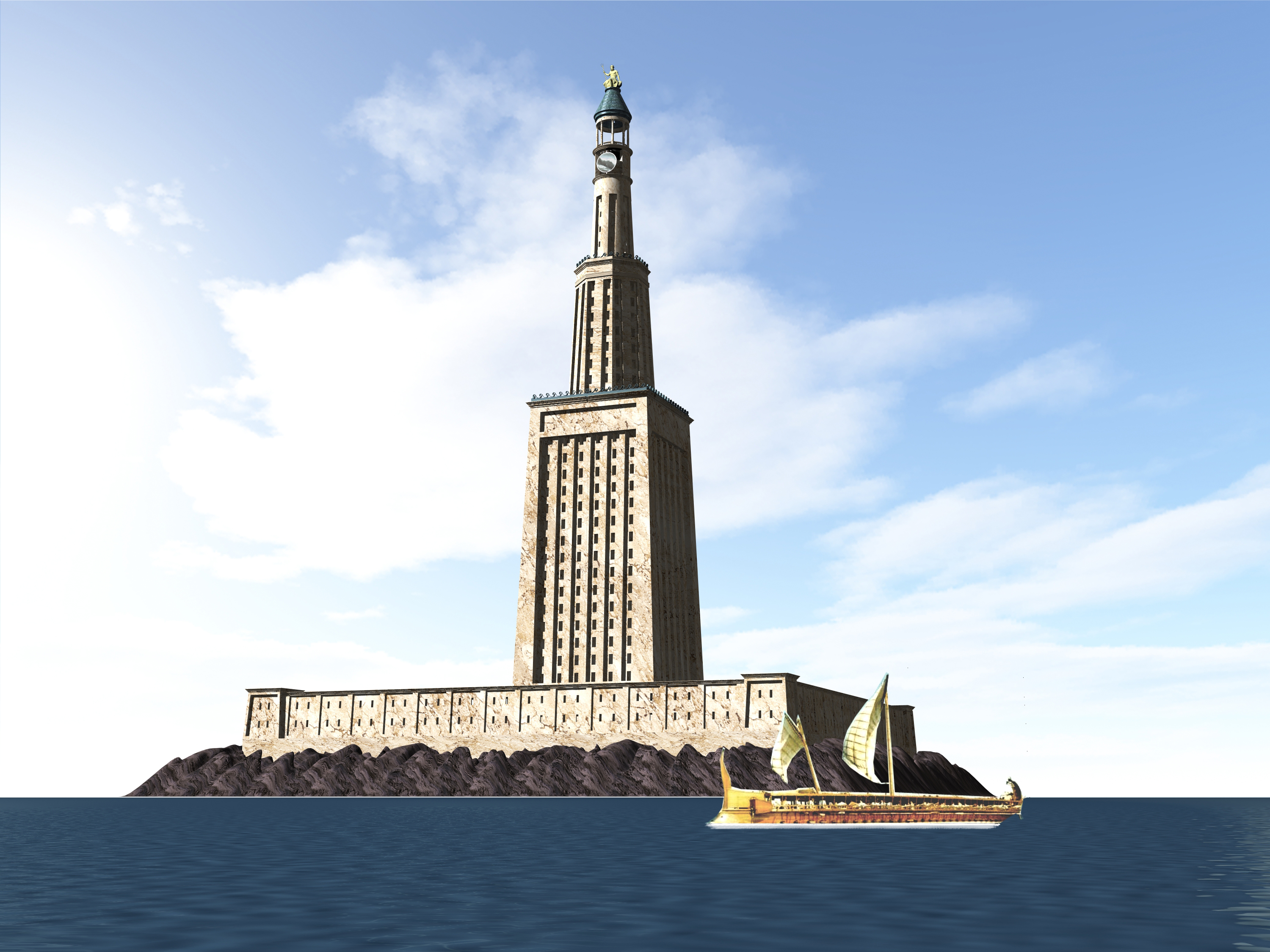
The fabled Lighthouse of Alexandria – a digital reconstruction, based on available archaeological evidence.

But if we accept that the lighthouse is a functional structure – a building specifically raised for the purpose of being a navigational aid, with a light inside it and someone to tend to that light, then how far back can we trace their development?
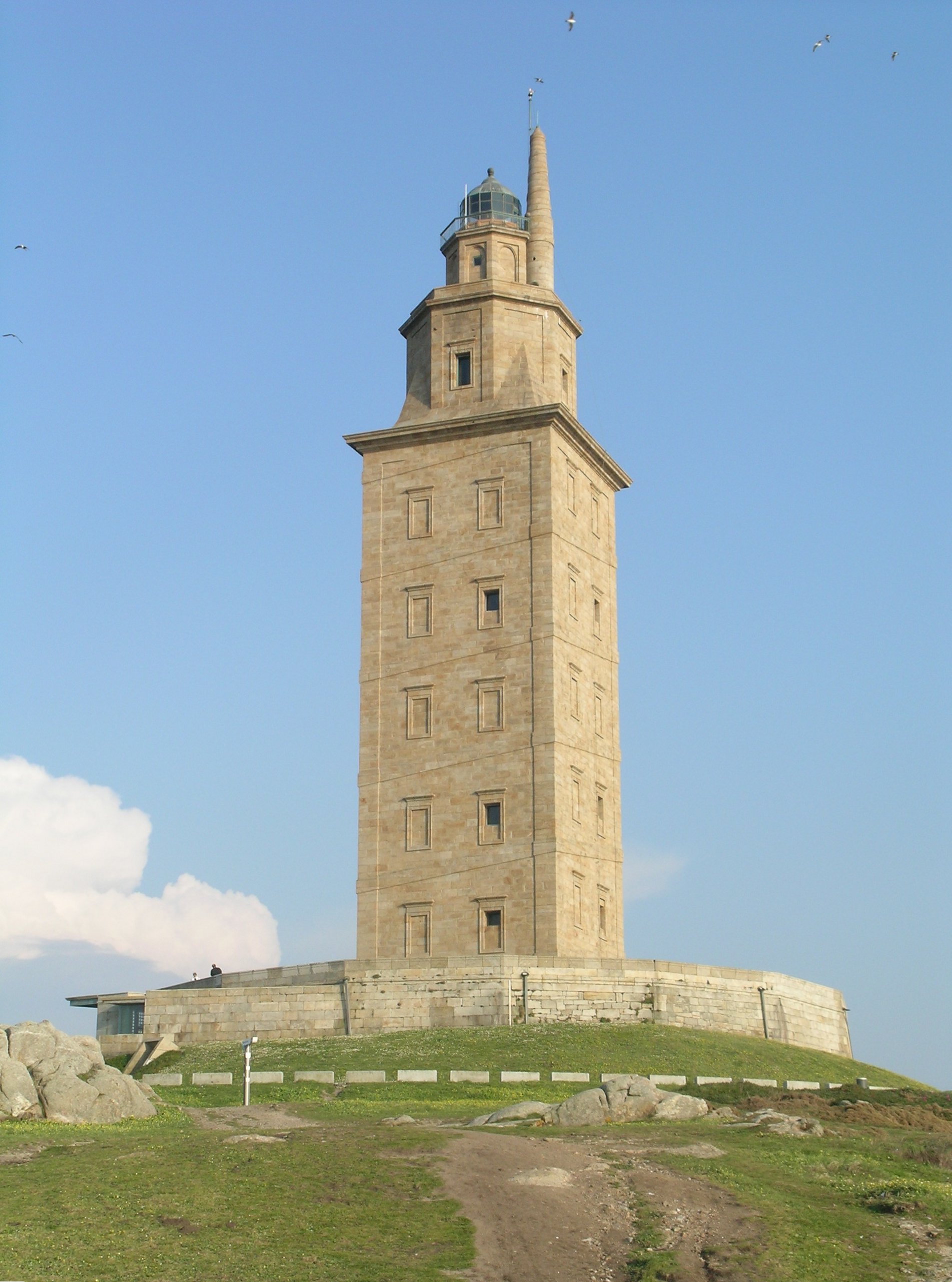
The Tower of Hercules, in Spain. Raised by the Ancient Romans in the 100s, the tower was renovated in the 18th century, and remains in use today as a navigational aid.

Most sources would say the 1600s. Or more specifically, the end of the 1600s.

“Why?” you might ask.

Simply because by the 1680s and 1690s, overseas traffic was increasing greatly. The end of conflicts in Europe such as the Anglo-Dutch Wars meant that there were suddenly loads of sailors sitting around with nothing to do. Some turned to piracy, while others tried to put their seamanship to good use, becoming merchantmen who sailed the high seas doing trade with Europe, the Med, and the American colonies of European powers. The uptick in oceangoing traffic meant that for the first time in a long time, a proper system of lighthouses was necessary to ensure that ships and their valuable cargoes were guided safely back to their home ports.

The First Lighthouses

The first lighthouses, mostly built in the 1690s and during the 1700s, were simple wooden towers raised on clifftops, rocky outcrops or islands off the coasts near shipping hazards like rocks or coral-reefs, or near the mouths of harbours. Their lanterns were little more than candles protected by glass. These early lighthouses were primitive, and were not strong enough to survive for any serious lengths of time. Wooden beams, no matter how securely-anchored or ingeniously dovetailed, could not withstand the force of Atlantic gales, pounding waves or the effects of nonstop dousing by a limitless amount of seawater.

Built by Henry Winstanley in the 1690s, the first Eddystone Lighthouse was a simple, wooden tower which was destroyed in a storm in 1703.

And on top of that – they were made of wood – not the best material for building a structure designed to hold a light, when the only lights available at the time were naked flames. After various early lighthouses either collapsed, were swept away, or got burned down, architects in the 1700s started looking for better designs and more robust materials with which to build them from.

The First Modern Lighthouse: Smeaton’s Tower

The first really successful lighthouse was raised in the 1750s, by architect John Smeaton, on the Eddystone Rocks off the southern coast of England near Cornwall. This replaced two wooden lighthouses built in previous decades, neither of which lasted for any great length of time. Learning from their mistakes, Smeaton looked for inspiration for his new lighthouse in nature.

The old lighthouses had been built of wood – weak – easily rotten – susceptible to both fire and water – hardly an ideal material. So the first change he proposed was to build the new lighthouse in stone. But this would prove useless if he couldn’t get the shape right, since the lighthouse would have to withstand the powerful storms of the North Atlantic, and the English Channel. While wood itself was unsuitable as a building material, it nonetheless served as Smeaton’s inspiration – large trees, which produced the kind of wood used in lighthouses at the time – were very tall – but also thick and broad at the base, with deep roots.

Why should his lighthouse not follow this model?

Smeaton decided that for his lighthouse to survive, it would have to be well-anchored into the rocks which he hoped his beacon would warn against. It would have to have a broad, deep base, with a sharp, upward curve from the ground, on top of which the tower would be built. This would serve to direct the force of any wave hitting the tower from the horizontal, to the vertical, where it would lose all its energy, posing no structural threat to the building.

Smeaton’s Tower. Raised in the 1750s, this lighthouse off the coast of Cornwall is widely considered the first modern lighthouse built with a specific design in mind.

To stop the tower from being blasted apart by the waves like previous, wooden structures had been, Smeaton had the stone blocks (granite) carved so that they dovetailed into each other, locking together like pieces of a puzzle. For extra strength, holes were drilled through the blocks and were further reinforced with rods of marble serving as dowels to stop the stones from splitting apart.

Apart from the stone lighthouses built by the Romans, the Eddystone Lighthouse or Smeaton’s Tower, as it became known, was the first really modern lighthouse to last any decent length of time. From the date of its opening (1759), it remained in continuous operation for over a century, until it was demolished, and replaced by the fourth (and current) Eddystone lighthouse, in 1877.

The Different Types of Lighthouses

Since the beginning, there were always two main types of lighthouses. Either cliffside or island lighthouses, with million-dollar beachfront views, or isolated lighthouses, built on rocky outcrops offshore, or even out in the middle of nowhere! Shore-based lighthouses were the easiest to build, and could become quite elaborate. Lighthouses built out on the open sea on the other hand, needed to be simple, but sturdy. In many cases there simply wasn’t the money, the time, or the space, to build anything more than the tower which held the light itself, and two or three rooms for the keeper and all his necessary supplies and worldly goods, to be housed in.

Shore-Based Lighthouses

Lighthouses built on land near the coast were typically constructed near harbours, fishing or coastal communities, or close to offshore shipping-hazards, to guide sailors along the coast and to warn them of the dangers lurking nearby. Since space was not a problem, shore-based lighthouses could be quite elaborate. Depending on the design and the land and funds available, the lighthouse would be used solely as a beacon tower, with storage inside for equipment, tools and supplies. The lighthouse keeper, and possibly his family as well, would live in the lighthouse keeper’s cottage next door. Boundary walls around the lighthouse-keeper’s property would protect both his dwelling and the lighthouse from waves nearby. Lighthouse keepers and their families would’ve been familiar as members of the local community.

Offshore Lighthouses

Being a lighthouse keeper could be a dangerous, lonely and exhausting job – no moreso than when you were the keeper of a lighthouse in the middle of nowhere! Many lighthouses off the coastlines of England, Ireland, Scotland, the United States, Australia and elsewhere around the world where there were large maritime communities, were manned by keepers who had the unenviable task of tending to a lighthouse from which they could not escape. Many were cooped up in them for weeks or even months on end.

Since they were built out in the open, offshore lighthouses had to be constructed much more differently than land-based ones. They had to be taller, their foundations deeper, their bases had to be shaped in specific ways to absorb the shock of waves, and the space inside had to be very carefully utilised. Unlike a shore station, a lighthouse in the open sea had to contain everything that it might need and be self-sufficient for weeks on end.

In a lighthouse built out in the open sea, space had to be used carefully. The keepers usually only had one or two rooms to themselves for eating, sleeping and activities. The other rooms would’ve been used for storing things like rope, wicks, cleaning materials, food, equipment, lamp-oil, and spares of things required to keep the lighthouse functional.

The Anatomy of a Lighthouse

Regardless of where they were built – all lighthouses had some things in common. The first thing was of course – the light, or ‘lantern’. This was housed in the ‘lantern room’, at the top of the lighthouse, protected by glass windows all around. Another feature of almost all lighthouses was the ‘gallery’, the circular balcony that wrapped around the outside of the lantern room. This allowed lighthouse keepers to maintain the windows and structure of the lantern room in a relatively safe environment.

In some places, a bell or horn was also mounted out on the gallery, and was used to indicate the presence of the lighthouse when it was shrouded in heavy fog, and the light could not easily be seen. The gallery also served as a convenient and safe platform from which the keeper could observe (and possibly, communicate with) passing ships, to warn them of danger. In lighthouses which were out in the middle of the sea, their greater height was used to create extra rooms inside the lighthouse which would be used for storage of long-term supplies like food, rope, wood, lamp-oil, wicks and tools. On shore-based lighthouses, these necessities could be stored in the keeper’s separate quarters or storage-buildings, leaving the lighthouse itself relatively uncluttered.

Lighthouse Development

As the 18th century morphed into the 19th century, lighthouses started becoming more and more sophisticated. Dovetailed stone construction, as pioneered by men like Smeaton, and Robert Stevenson, the famous Scottish engineer, became THE way to build sturdy lighthouses. Stevenson proved this beyond doubt when he raised the famous Bell Rock lighthouse off the coast of Scotland in the early 1800s. Taking years to build, the lighthouse had survived everything that Mother Nature could hurl at it, and despite being well over two hundred years old…the Bell Rock lighthouse remains operational to this day.

Lighting the Way: Beacon Development

But it wasn’t just in terms of construction that lighthouses were changing. They also changed in terms of the lights which they housed.  Early lighthouses used candles, or crude oil lamps. By the late Georgian era of the 1800s and 1810s, more effective Argand-style lamps were being used. These lamps had a cylindrical glass tube, or ‘chimney’ placed over and around the flame. The chimney – like the chimney in a fireplace – drew the hot air created by the lamplight, up the shaft, drawing oxygen with it. This current of air fed the flame, which now would burn brighter than it would’ve done without the chimney. Combined with polished reflectors placed behind the chimneys, these lamps could produce a powerful beam of light once the luminous output had been properly concentrated.

Early lighthouse beacons were little more than this. They were later mounted on rotating platforms or stands, which could be driven around by powerful, mechanical clockwork motors. These needed to be wound up every few hours to ensure their continued operation. By placing different lenses in front of the lamps, different colour combinations of light could be achieved. Together with the rotating lamp-base, keepers could produce distinct and easily recognisable lights which could be seen by ships far away. Red and white flashing light might, for example, indicate a particularly dangerous rocky reef which sailors had to avoid.

Throughout the 1800s, lighthouse beacon design continued to improve. Different configurations of lamps and lenses, reflectors and housings were all built, designed, tested and tried, to improve the amount of light produced, the output generated, and the intensity of the beam thrown out from the top of the tower. The next big development from the Argand lamp came in 1822, when French physicist Augustin Fresnel invented the ‘Fresnel Lens’.
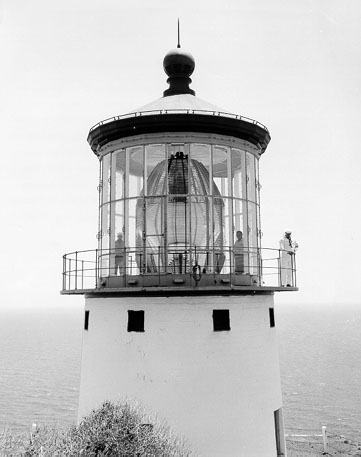
A Fresnel lens installed inside a lighthouse. The distinct, curved and rippled effect of the lens meant that all the rays of light coming from the lamp in the center could be angled and concentrated into a single, focused beam.

The Fresnel lens was not a flat sheet of glass, like a window-pane, which was what other lighthouses had used previously – it was a series of prisms – shaped and ground and arranged in such a way that all the angles of glass directed and concentrated the light from its source (the lamp) into a single, solid, unbroken beam. The shape of these prisms not only concentrated the light, but also magnified the output of the lamps, meaning that even a relatively small light could now throw out a beam that could be seen clearly for miles away!

Changing the Lights

As lighthouse technology improved, not only were towers and lenses upgraded, but so were the lights themselves. Originally they were nothing but fires…then candles…then whale oil lamps. In the Victorian era, lighthouses were mostly oil-fired, first with whale-oil (a holdover from the 1700s), and then eventually, kerosene. None of these were really fun to use – they were either really hot, really smoky, really heavy, or really smelly – remember that the lighthouse keeper had to lug fresh candles, fuel or wicks halfway up the tower every time he had to tend the light! Keeping soot and smoke off of the glass and lenses was a regular chore, as well as filling the lamps and trimming the wicks so that they would burn evenly and not produce excessive smoke.

An improvement in lighthouse technology came around in the second half of the 19th century when it was discovered that combining water with the mineral calcium carbide produces flammable acetylene gas. It was easy to produce, relatively safe, and, once a proper system of drip-valves and vents had been created – relatively easy to use and control.

Originally, acetylene lamps were small things – they were used in miners’ lamps, bicycle lamps and the headlamps of steam trains, but as the technology improved, they were also used in lighthouses, replacing the old oil-burning lamps with their wicks and smoke and soot, with cleaner, brighter, gas-fired lamps, which required less maintenance and were easier to operate. All you needed was enough water, and enough carbide to keep the chemical reaction (and the production of gas) going.

Signalling with Light

The classic lighthouse has a single or double-ended beam of white light, which swings and pivots around in a circular motion, shining out to sea. But as lighthouse technology grew more advanced, additional features were added. As early as the 1810s, lighthouse designers were using coloured lenses to create alternating beams of red and white light. The speed and direction of rotation, the combination of colours produced by the lantern, and the paintwork on the lighthouse tower were all methods used to aid sailors at sea, who could pinpoint their position by observing far-off lighthouses through their telescopes. Lighthouses were marked on maps with lists of their peculiar singularities marked next to them. By comparing what they could see through their telescopes with what they could read on their charts, sailors could navigate safely along the coast, fully aware of what was around them.

With the advent in the late 1800s, of electric light, another feature of lighthouses was introduced, previously impossible to implement – flashing lights! Now, not only could lighthouse lanterns spin and change colours, they could also turn on and off. Different combinations of blinking or flashing lights were used to distinguish different lighthouses, and these specific combinations became known as ‘characteristics’, with each lighthouse having a different one to set it apart from its neighbours. Along with its other features, a lighthouse’s characteristic is also included among its information when marked on charts.

The Heyday of the Lighthouse

The lighthouse reached its pinnacle in the second half of the 1800s. Hundreds were constructed around the world in the early 1800s to protect and guide shipping, and even more were constructed in the second half of the 19th century with the rise of regular, steam-powered ocean-going passenger-ships. Lighthouse keepers, their partners, their families and children all became part of the communities they served. Some lighthouses and keepers became famous for actions or events which they participated in or witnessed. By the end of the 1800s, the great flurry of lighthouse-building had ended. So many had been constructed that there was almost a surplus of lighthouses to be had!

The Evolution of the Lighthouse

As the lighthouse became more sophisticated, robust and prominent, certain lighthouses started being used for more than just warning ships at sea. Due to their unique positions, lighthouses were also used as weather-stations. Records of wind direction and strength, air-pressure, temperature and rainfall were kept and published to try and help predict the weather. With the coming of radio, lighthouses, with their great height, were ideal as broadcasting and receiving stations.

As the 20th century dawned, more sophisticated technology started entering lighthouses. Electrification allowed for much more powerful lights, doing away with oil and gas. Some lighthouses which were too remote continued to be gas-fired, but by the second half of the 20th century, improving technology such as solar-panels meant that even the most remote lighthouse could be electrified, and more importantly – automated. The days of the humble keeper were numbered. Lighthouses could now be operated remotely. In the event that maintenance was required, shore-based lighthouses could be inspected by volunteers or the local coastguard. Offshore lighthouses could be accessed by helicopters, and some lighthouses were modified to have landing-pads on their roofs.

Famous Lighthouses

Throughout their long history, some lighthouses have become famous, even infamous. Here are a few of the more noteworthy lighthouses throughout history…

The Cape Race Lighthouse (Newfoundland, 1912)

Built in 1907, the Cape Race Lighthouse served as both a lighthouse and radio transmission-station. It replaced an earlier lighthouse built in the 1850s.

A lighthouse and telegraphic receiving station, the lighthouse at Cape Race was the first land-station to receive wireless telegraph messages and signals of distress from the sinking Titanic, in April, 1912.

The Smalls Lighthouse (Wales, 1801)

Built on the Smalls – a rocky reef off the coast of Wales, the Smalls Lighthouse was the location of a famous incident in 1801, where one lighthouse-keeper died in a freak accident. The surviving keeper had to tend the light (and store his partner’s lifeless corpse) inside the tower for weeks on end. He was eventually driven insane by the nonstop storms, cabin-fever, guilt over his colleague’s death, and sheer isolation. From 1801 to 1980 when lighthouse automation began in the United Kingdom, this incident required that all British lighthouses be manned by at least three keepers at any one time.

The Bell Rock (Scotland, 1810)

Raised in the 1800s, the Bell Rock Lighthouse off the Scottish east coast, was the first great stone lighthouse to be built since Smeaton’s Tower in the 1750s. It’s design and construction were overseen by Robert Stevenson, a Scottish engineer. The lighthouse was so well-designed that it has remained in use to the present day. Stevenson’s success led to a three-generation dynasty of his family producing lighthouses around the United Kingdom. One Stevenson who did not join in the family business was Robert’s grandson; Robert…Louis…Stevenson…who became a children’s author.

Flannan Isles Lighthouse (Scotland, 1900)

Built in the 1890s, the Flannan Isles Lighthouse is one of the most northerly, and remote lighthouses in the world, near the Hebrides Islands off the coast of Scotland.

Remember how in 1801, a lighthouse keeper serving the Smalls Lighthouse died, and the other one was driven mad? To prevent this from ever happening again, the British government decreed that all lighthouses in the British Isles had to be manned by at least three men at all times.

Such was the case in 1900, shortly after the Flannan Isles Lighthouse was first put into operation. Unfortunately, this safeguard was for naught when, in December of that year, a strange chain of events was put into motion.

On the 15th, the steamer SS Archtor was steaming through the Hebrides. The weather was wild and inclement, but despite the heavy seas, the crew on board noticed that, while they could see the lighthouse clearly – they could not see its light, which should’ve been turned on during the storm to guide ships through the treacherous waters.

When the ship made safe harbour three days later, the crew immediately reported this oddity to the local authority – the Northen Lighthouse Board. Established in the 1780s to regulate the construction and operation of lighthouses in Scotland, the Northern Lighthouse Board was responsible for everything that happened to all the lighthouses under its jurisdiction. The heavy seas continued, and it wasn’t until after Christmas that it was deemed safe enough for the Board to send out a relief-boat to the island to examine the light.

Upon arriving, no signs of life could be seen. No trunks or crates of provisions to be restocked, no flags flying, no lights in the lighthouse, and no response when the ship’s captain operated the vessel’s piercing steam-whistles to try and get the lighthouse’s attention. When the ship docked and the crew went ashore, things only got weirder.

Inside the lighthouse, beds were unmade, the light was found to be both topped up with oil, and in working order, there were no signs of forced entry, and no signs of a struggle. Further examinations of the island revealed significant storm-damage along the western shore. In the end, an official investigation by the Northern Lighthouse Board concluded that two keepers had gone out in the storm to respond to this damage and had been swept away by the powerful waves and storm-surges. The third keeper abandoned the lighthouse in an attempt to rescue his companions and was also lost to the sea.

Point Bolivar Lighthouse (USA, 1900)

The Point Bolivar Lighthouse in Texas, USA, rose to prominence (along with its keeper) in 1900, during the famous Galveston Hurricane.

Inaccurate weather forecasts, and a certain amount of overconfidence on behalf of the local weather bureau resulted in thousands of Galvestonians being caught off-guard when, in August of 1900, a powerful hurricane swept through the Gulf of Mexico towards the US Gulf Coast. Galveston, a low-lying city just nine feet above sea-level, had no flood defenses at the time. As people fled from the pounding rain, rising winds and fierce storm-surges, 125 people, including the lighthouse keeper, his assistant, and both their families – sought refuge in the Point Bolivar Lighthouse – the nearest structure of any significant strength – to Galveston.

Everybody in the lighthouse survived the storm, which all but leveled Galveston in the space of a few hours. The keeper, George Claibourne, repeated this feat when, in 1915, Galveston was hit by another hurricane! This time, fifty people sought refuge in the lighthouse and survived. Claibourne died three years later while on duty.

The Fourth Point Lighthouse (Java, 1883)

Built by the Dutch in 1855, as one of a series of lighthouses along the west coast of Java, Fourth Point was designed to guide ships through the Sunda Strait, which runs between Sumatra and Java, the two biggest islands of the Indonesian Archipelago. Operated by the Schuit family (Gerrit, Catharina, and their son Joseph), the Fourth Point Light was regularly visited in early 1883 by Dutch scientist Rogier Verbeek – a pioneering vulcanologist who came to Indonesia (or the Dutch East Indies as they were then called) to study the region’s dozens of active volcanoes.

Verbeek used the vantage point of the Fourth Point’s lantern-room gallery to observe the region’s most famous volcano of all, through his telescope – thirty miles out to sea – known to the natives as ‘Krakatau’.

Known to history, as ‘Krakatoa’.

In August, 1883, Krakatoa erupted so spectacularly that shockwaves and tsunamis rippled all the way around the world, with huge ocean disturbances reaching as far away as India, Africa, Madagascar, and the Pacific Coast of the USA. The eruption was heard as far away as Australia and the Indian Ocean, where sailors thought the sounds of the eruption were from battleships firing off broadsides!

Verbeek was lucky enough to survive the eruption – thousands did not. Among them were all three members of the Schuit family, who were all killed when a volcano-generated tsunami ripped the Fourth Point Lighthouse off its foundations and washed it away.

It was likely that the Schuits felt safe in their lighthouse and did not wish to leave it. Or perhaps they decided to stay to maintain the light – despite the fact that the volcanic ash was so thick that it turned day into night, with ashy rain so thick that the light was rendered completely useless.
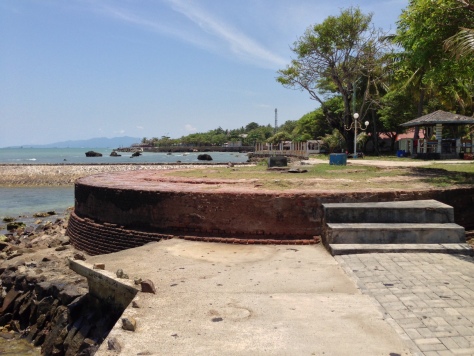
All that remains of the original Fourth Point Lighthouse. It was rebuilt in 1885 in a different location.

One ship which the Fourth Point Lighthouse would’ve been trying to guide was the S.S. Governor-General Loudon. Loaded with passengers (eighty-six in total), Chinese coolies being ferried to Sumatra, and the ship’s captain and crew, the Loudon was sailing to Krakatoa for a day-trip. Ever since the volcano had become more active, tourists and locals alike were dying to get up close and personal with a real spitfire!

As they left the island, the volcano started erupting and the Loudon was soon trapped in a volcanic hellstorm which it could not escape from, with over a hundred people on board. Unable to reach safe harbour because the volcanic storm had destroyed the jetties at the port town of Telok Betong (it’s original destination), it’s commanding officer, Captain Lindemann, managed to ride out the storm, first by steering his ship towards the volcano (to absorb the shock of any waves) and then out to sea (to escape the worst of the eruptions). They arrived safely back in Java battered, filthy, scared out of their wits – but nonetheless, alive.

Lighthouses Today

In the 21st century, lighthouses still exist – although it’s been decades since one was built. The majority of lighthouses around today were the ones built in Victorian times, or constructed in the early part of the 20th century. The vast majority of them are automated, and have been, since the 1970s and 80s. Some have been torn down due to redundancy, and some have been turned into historic monuments and tourist-attractions.

The Gay Head Light was built in 1856. It was moved in 2015 to a safer location, further away from the crumbling coastline of Martha’s Vineyard to protect it from imminent collapse.

Some have been saved from demolition by jacking them off their foundations and moving them further inland, or by maintaining their structure and operation with the help of historical preservation societies. In many coastal communities, the local lighthouse is often seen as a beacon, not only of guidance, safety and hope, but also of local town pride. One example is the Gay Head Light, on Martha’s Vineyard on the American east coast, which was moved away from the crumbling coastline in 2015 to save the lighthouse for the local community.


Share this:

  • Share on X (Opens in new window) X
  • Share on Facebook (Opens in new window) Facebook
  • Share on Pinterest (Opens in new window) Pinterest
  • Share on Tumblr (Opens in new window) Tumblr
Posted in 19th Century, Cultural & Social History, General History, History of Technology
Leave a comment
08/12/2017 by Scheong

A Nutty Pastime: The Preoccupation of Chewing Betel Nuts

On holiday in Southeast Asia, it was my determination to try and find antiques or other collectibles that reflected the culture of the local regeion. In this respect, I was lucky and glad to find an antique which so perfectly tied in with the local culture, and for such a fantastic price.

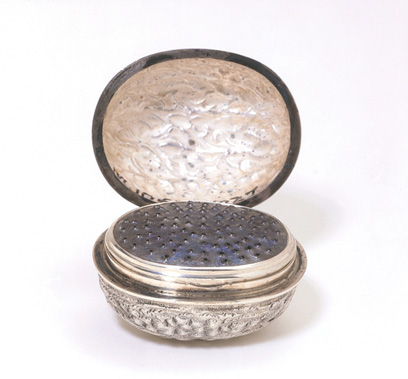
My antique betel-nut set!

The item you see above is a traditional betel or areca nut set, the most common of the many styles of such sets, found throughout Southeast Asia, from India to Indonesia, Vietnam to Singapore. Sets like this were the typical accessories used to enjoy one of the most common pastimes in southeast Asia: chewing betel nuts.

A Note on Terms

Although the correct terms are that the nuts are called ‘areca nuts’ and that the leaves with which they’re used, are called ‘betel leaves’, in common practice, both the nuts and leaves are called ‘betel’, and these are the terms which I will use in this posting, to prevent confusion.

What Are Betel Nuts?

Betel or aerca nuts are a type of berry, commonly found in Southeast Asia. Although it’s not known when the chewing of betel nuts and leaves began as a custom, it has had a long history in India, Burma, Malaysia, Thailand, Indonesia, and other countries in the region. The nuts contain a psychoactive drug, which can make their consumption highly addictive. In many respects, the chewing of betel nuts can be compared in the East, to the European tradition of chewing tobacco.

Why Were Betel Nuts Chewed?

Betel nuts were (and continue to be) chewed because they were addictive, but also because in many parts of Southeast Asia, it was simply the custom to do so – in many cases – for thousands of years! On top of that, the betel nut was considered to have breath-freshening properties – to the extent that in Europe, betel nuts were often ground up, and included in the first, commercially-available tubs of toothpaste, back in Victorian times. All these reasons were why, even in the 21st century – they continue to be a drug of addiction.

What’s the Purpose of the Betel Nut Box or Set?

Betel nut box-sets were extremely common in southeast Asia, made in everything from wood, to brass, silver, pewter and bronze. They can be found all over the region in varying sizes, styles and levels of complexity and detail. The point of these sets was to contain all the necessary ingredients and accouterments for a good session of prolonged chewing.

A betel-nut set, complete with containers for slaked lime (top right), bark, sliced nuts, leaves, tobacco, nut-slicers (left, in the shape of a horse), and the tray to hold everything in-place (above).

A typical set will include the box or framework to hold the accessories, various bowls, cups or smaller boxes, in which the nuts, leaves, areca nut bark, and powdered slake-lime are stored, and last but not least – a set of betel nut slicers or cutters, used to slice the nuts into wafer thin discs, suitable for chewing.

An especially elaborate, solid silver Straits Chinese betel-nut set, from the Peranakan Museum in Singapore

Betel nut sets ranged from the mundane, to the magnificent. The plainest ones were made of pewter or nickel silver. More elaborate ones were made of brass. Those who could afford it, had their sets made of solid silver. Novelty nut-slicers were also popular, and took on many forms. Ones featuring flowers, or animals like dragons, birds, or horses (like the one you see in these photos) were extremely popular.

When Did Betel-Nut Chewing Die Out?

Um…who said it did??

Antique, straits-Chinese spittoon. Blue, enamel-coated steel construction, with hand-painted flowers on the sides. Commonly used among the old Peranakan community by the women for spitting chewed betel nuts into. Dates to the turn of the last century, ca. 1900.

Nope, people still chew betel nuts today, and you can still buy betel nuts today in various Asian countries, although some governments are now trying to stamp out betel-nut sales and chewing. It’s generally perceived as a public nuisance and a public health-hazard. But no, you can still find them, and chew them. That said, the red staining, and the necessity to spit out the chewed mass at the end of the session means that they’re probably going to continue declining in popularity.


Share this:

  • Share on X (Opens in new window) X
  • Share on Facebook (Opens in new window) Facebook
  • Share on Pinterest (Opens in new window) Pinterest
  • Share on Tumblr (Opens in new window) Tumblr
Posted in Antiques, Cultural & Social History
Leave a comment
24/10/2017 by Scheong

Over the Top: The Northwest Passage

Ever since mankind discovered that the Earth was round, and that it could get to one place on the globe by either going east, or west, it has always striven to find the shortest routes to its chosen destinations.

Starting in the late 15th century, when European powers first discovered and began colonising the Americas, interest began to grow about the countries that lay far beyond the great North and South American landmasses: Japan, China, Korea, Indochina and the Spice Islands of the South Pacific, as well as the fabled ‘Terra Australis Incognitia’, which legend held, existed somewhere far beyond the immeasurable horizon. For untold centuries, these mystical lands of mystery had remained largely unseen by Western eyes.

Overland treks to the Far East took months to complete, assuming that you’d get there at all, of course! Sailing from Europe to Asia took just as long, going past Spain, past the Rock of Gibraltar, down south, hugging the coast of Africa, and then either hooking around into the Indian Ocean, or risking a dangerous passage through the torrential storms that lurked around Cape Horn. Only the bravest sailors with the biggest balls ever reached the Orient, and made it back alive.

European Interest in the Far East

The East had much to offer the West. Porcelain, ivory, silk, tea, and exotic spices like pepper, mace, ginger, nutmeg, cinnamon, and other commodities like rubber, tin and exotic fruits such as bananas and coconuts. For centuries, these commodities were hideously expensive. Lavishing money on any one of them was considered a sign of almost obscene wealth. And anybody who could get their hands on commercial quantities of these products and ship them back to Europe in a timely manner could make themselves fortunes and fortunes on top of more fortunes in gold and silver!

It was for all these reasons – the desirability, the danger, the long waiting-times, and the sheer risk involved, that ever since mankind first became aware of the Americas, that he has tried to find ways around them. A sea-route through or around the Americas would cut a trip from Europe to Asia by weeks, and allow for relatively fast and efficient trade. But in an age when most of the world remained unmapped, how was this to be done?

Remember please that this is a time before great arctic and antarctic exploration, a time before coast-to-coast mapping, a time before GPS, satellite imagery and photographs from space. Nobody knew what lay at the extremities of the Earth. But somehow, they were going to have to find out!

What is the ‘Northwest Passage’?

The Northwest Passage is the name given to a collection of potential or theoretical sea-routes that might, or might not, exist between Europe, and Asia, going along the top of the North American continent, through the Arctic Ocean, and past the northern border of what is today, Canada. Once mankind had become fairly proficient with sailing and navigation, and had started getting a better idea of how the world was shaped, he almost immediately wanted to try and tackle this transportational and geographical nightmare head-on!

A History of the Northwest Passage

The Northwest Passage as we understand it today was first thought of back in the 1400s, shortly after knowledge of the Americas started being spread around the courts and cities of Europe. Eager rulers, kings and princes commissioned sea-captains to provision their ships, round up their crews, and sail off into the wide blue yonder, to find a viable passage up and over the North American continent to the riches of the far-off Orient. Throughout the 16th and 17th centuries, voyages and expeditions which departed from Canada, and the northern regions of what would become the United States, and from Europe, all attempted to map and plot both the frozen wastes of the far north, and to find a way through it which was viable enough to become a regular shipping-route.

Persistence in finding the Northwest Passage, should it exist, lasted for several lifetimes. By the 1700s, dozens of expeditions and voyages had tried, and failed to find a way through the frozen north between the northern Atlantic, and Pacific, oceans. The vast majority of these expeditions were beset by all the usual problems of the era: weather, food, and disease. The freezing temperatures, the lack of food and adequate equipment, and the scourge of scurvy from a lack of fresh fruits and vegetables, which were difficult to keep in an edible condition on a voyage lasting several months, meant that even the most determined adventurers either had to turn back, or died before they got the chance to. Even before the turn of the 19th century, attempts to find the Northwest Passage, and the grisly fates which awaited those who were foolhardy enough to try, had become part of common folklore.

The most legendary of all these voyages is one which may not even have ever taken place: The Voyage of the Octavius.

The Octavius, as far as ghost-ships go, has to be one of the greatest maritime tales out there, up alongside the Flying Dutchman and the Mary Celeste herself! So what happened?

The story goes that in 1775, the whaling ship, the Herald encountered a seemingly-abandoned three-mastered schooner, bobbing off the west coast of Greenland. It being the 11th of October, the weather was already solidly set into winter, and the crew on the Herald were surprised not to see anybody on board, tending the sails, steering the ship by the helm, or even just standing on-deck! After hailing the ship and receiving no reply, some of the Herald’s crew lowered a boat, rowed across, and boarded the vessel and started to investigate.

What they found was the entire crew – captain, his wife, child, and all the deckhands and sailors, stone-dead and frozen in their bunks, berths and cabins, their frigid corpses preserved by the winter cold. In all, the boarding-party came across twenty-eight dead bodies.

Despite what you might think, during the days of sail, it was not uncommon for vessels to come across other vessels in the open sea, which had been completely abandoned. This happened so often that there were actually recognised rules, regulations and procedures for salvaging vessels, sailing them to major ports, and then putting forth a salvage-claim in order to earn some extra money.

What made the Octavius different from other ships was what the Herald’s crew supposedly found in the captain’s cabin. Apart from the body of the captain himself, they also came across his log or journal. The last entry was dated in November, 1762! If this was correct, then the Octavius had been floating around in the North Atlantic for over a decade! Further examination of the extremely fragile logbook revealed that the ship had sailed to China, and was attempting to sail home again to England via the supposed ‘Northwest Passage’. The ship, like many before it, became frozen in the ice, locked into a white, shivering prison that wouldn’t release it for months on end. It was this mention of seeking, and then apparently finding, a navigable Northwest Passage, which made the story of the Octavius so famous.

Apparently too freaked out by what they saw to take anything from the ship, let alone try and salvage it, the crew of the Herald upped anchor and sailed off without so much as attaching a towline to the Octavius, leaving it to float off into the mists of history from whence it came.

So, is the story true?

Probably. Probably not. The first record of any sort of event like this happening doesn’t make its way into a source of any kind until 1828, when a similar tale appeared in an American newspaper in Philadelphia. Similar stories popped up throughout the 1800s and the early 1900s, likely based off of the 1828 version. In all likelihood, something like the Octavius did happen, once upon a time, and the story had been told, retold, mixed and muddled with other ships and other stories for two-hundred odd years that the truth, if it ever existed, was lost to time.

Whether or not the story is actually true, its very existence proved a point: People were fascinated about the possibility of the Northwest Passage and about ships which had supposedly found it, and sailed it; so much so that people were willing to believe these stories even if they were apparently baseless and purely anecdotal.

Finding the Northwest Passage!

As the 18th and 19th centuries progressed, greater and greater importance was being placed on trying to find the Northwest Passage, if indeed, it existed at all. Remember that much of the world was uncharted at this point and most people in Europe, the Americas and the Pacific knew little, if anything about the lands beyond those in their immediate surroundings. This is how myths like the ‘Island of California’, ‘Atlantis’ or ‘Skull Island’ with King Kong, or even Australia, came to be.

The Age of Reason, and the Age of Enlightenment were all the rage in Europe at the time. In the 1700s, more and more things were being examined not religiously or spiritually, or taken at face value. People wanted proof! They wanted facts! They wanted to study and understand everything about everything that they could. “Here be Monsters!” was no longer acceptable on a map. You had go out there and find out all you could about these monsters first! Likewise, writing down on a map that there was a ‘Northwest Passage‘ north of Canada was also not acceptable. You needed proof! And the first people to find definitive proof of such a waterway would make international geographical history!

So, who do you ask to search for the nearly impossible?

Captain James Cook.

Although he didn’t discover Australia, Captain (or more correctly, Lieutenant) James Cook was famous in Britain as being a bit of a whiz when it came to navigation and cartography. He filled in and found out more places in the South Pacific than almost anyone else at the time. He mapped and plotted and charted every little sandbar that he could find during his voyages. And he almost always came back to England as a scientific and exploratory hero. If anybody could find the Northwest Passage, it was Cook!

The chaps at the Royal Society in London and other great learned institutions certainly seemed to think so…so much so, that they begged Cook to come out of retirement to do so!

Cook’s Voyage Northwest

Any country which found a viable way to, and through the Northwest Passage would gain considerable prestige. Because of this, it’s perhaps unsurprising that Cook’s last voyage was somewhat of a secret. Of course nobody could hide the fact that a world-famous, celebrity explorer was going off on another voyage, but they could at least hide the reason for the voyage. The public and press were told that Cook and his crew were returning a Tahitian native whom they had befriended, back to his home-islands in the South Pacific, and while there, would explore more of the islands in that region.

The Tahitian, Omai, had spent two years in England previous to 1776, and although he was a smash-hit among the gentry, aristocracy and the intelligentsia, the time had come, he decided, to go home. Cook agreed to arrange his passage and, on the 12th of July, 1776, Omai, Cook and his crew, set sail for the South Pacific.

Omai arrived in Tahiti in August, 1777, a year and a month after leaving England. Cook saw his friend off, and then set sail northwards for North America, and the hoped-for Pacific entrance to the Northwest Passage. On the way, he stopped at, and named, a cluster of volcanic islands. His charts called them the ‘Sandwich Islands’. Today, we call them ‘Hawaii’.

Despite his persistence, Cook wasn’t able to find any definitive evidence of a Northwest Passage, although he did spend several weeks mapping the entire Pacific coast of the North American continent. Sadly, Cook never returned to England – he died in Hawaii during the voyage, in 1779.

Finding the Northwest Passage: 19th Century Explorations

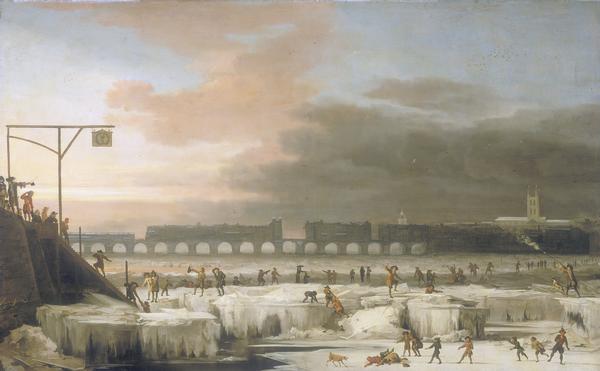
Attempts to find the Northwest Passage continued after Cook’s death in 1779. But it was very tricky going. Europe – indeed, most of the world, in the 1600s and 1700s experienced what was called the ‘Little Ice Age’, a period in history (approx 1600-1850), when the world on a whole was much colder than it is today. So cold, in fact that slow-moving rivers (like the Thames in London) would freeze solid! In London, you could even go skating on the Thames in winter time, and people held ‘Frost Fairs’ on the river, to make the best of a bad situation, and have a bit of fun!

‘The Frozen Thames’, a painting from 1677. The structure in the background is Old London Bridge.

Unfortunately, while the Little Ice Age meant that you could go skating on the Thames every winter, it also made exploring the Northwest Passage extremely difficult – because with dropping temperatures, winters were longer, and harsher, making traversing the frozen north extremely difficult. Many expeditions were lost, had to turn back, or even had to cancel their expeditions altogether. Providing exploratory crews with suitable ships, enough food, and adequate supplies was hampered by the fact that nobody knew how long it would take to explore the Northwest Passage. They could be gone for a year…two years…three years…five years! The uncertainty meant that only the bravest of sea-captains agreed to take on the challenge.

The Fateful Franklin Expedition

One of these sea captains was Sir John Franklin.

Admiral Sir John Franklin (1786-1847), was the head of one of the most famous – and tragic – expeditions to the Northwest Passage during the 19th century. Tragic, because most people expected that if an expedition was going to succeed, then it was going to be Franklin’s!

The crew were all stout and sober men, and their two ships – Erebus and Terror – were modern, sturdy, reinforced, and had the latest motive technology on board: a couple of these newfangled steam-engine contraptions! They also had vast quantities of every possible type of equipment they could need, and large stores of canned food, which would last much longer than other types of preserved food, and which would remain edible for years on end, if necessary.

The Erebus and the Terror, moored off the New Zealand coastline in 1841, before their fateful trip to the Arctic…

Armour-plated against the ice, and with steam-powered engines, the two ships were expected to be no match for something as pesky as ice! Their reinforced, iron-clad bows were expected to be able to smash through the ice, and their steam engines were expected to force them through with no problems at all! No more reliance on wind, and currents, no more being hemmed in by frozen wastelands – The Franklin Expedition would charge ahead full of that courage, zeal and confidence that seemed to permeate every aspect of the Victorian age!

The ships in the Franklin expedition were not fast by any means – they maxed out at about 4kn. (four knots, or four nautical miles an hour) each, and each ship was fitted with just a single screw propeller. But they were able to cover significant distances. Leaving England on the 19th of May, 1845, they arrived in Greenland about two months later. Here, they offloaded some crew, dispatched letters back to England by the next available ship, took on extra provisions, supplies and equipment, and then headed for Canada, the cold white north, and hopefully – the fabled Northwest Passage of dreaded mythology and legend!

The crew of the Franklin expedition left Greenland in late July, 1845, heading for Canada. Here, they sailed through the waters surrounding the province of Nunavut, and started heading…northwest. In the winter of 45-46, they made landfall at the tiny Beechey Island, east of the current hamlet of Resolute – one of the most northern settlements in all of the Canadian arctic. From there, they sailed for King William Island. By now, the ships are well within the bounds of the Arctic Circle.

Despite their modern technology, steam-powered machinery and self-assured preparedness, the expedition starts getting into trouble. By September of 1846, both the Erebus and the Terror have become locked in hard by ice off the coast of King William Island. Unable to make any progress until the ice released their vessels, the crew (approximately 130 men and officers), decided to set up camp nearby, and try and weather it out.

Their preparations were no match for the ferocity of Mother Nature, however. The two expedition ships remained trapped in the ice. unable to move, the men were forced to abandon them, and continue on foot to what they hoped, would be the nearest civilisation. On the 11th of June, 1847, Franklin himself died, the remainder of his expedition party eventually succumbing to starvation, hypothemia and frostbite, with some of them even resorting to cannibalism to try and survive. By the end of 1848, there were hardly any of them left.

The details of the fate of Franklin, his crews and his two ships were gleamed by British explorers in the years after his expedition, when they went in search of his ill-fated party. They encountered native Inuit people who related these tales to them, explaining what had happened and what they had witnessed. It was clear that, even in the age of steam and canned food – the Northwest Passage would not be so easily conquered.

In fact, finding the Northwest Passage proved so difficult, that it would be sixty years, and another century later – before it was achieved at all!

Roald Amundsen and the Passage

The man who finally broke through the Northwest Passage, and who finally made history, was a Norwegian – Roald Amundsen! Instead of going all-out, like Franklin had done, Amundsen decided on a different approach – using small ships, and fewer crew. This would, he believed, make travel easier, and safer. Without bringing along absolutely everything, including the kitchen sink, Amundsen believed that travel through the arctic would be sped up and the risks involved with being overburdened, would be minimalised.

The Gjoa, photographed at the time of Amundsen’s great 1903-1906 NW. Passage Expedition.

Amundsen made history in the early 1900s, finally breaking through the Northwest Passage during his expedition of 1903-1906. During this epic trek, he and his crew learned valuable tips from the local Inuit people, who showed him how to stay warm, the best types of clothing to wear, and the most efficient ways to travel across the ice and snow. Amundsen’s tiny wooden vessel – the Gjoa – the first ship to successfully traverse the Northwest Passage – remains a national treasure of the Kingdom of Norway, and is on public display at the Norwegian Maritime Museum in Oslo.

The Northwest Passage Today

Throughout the 20th century, more explorers and navigators attempted to breech the Northwest Passage, all with varying degrees of success and failure. But what about now?

Actually, it’s pretty easy to navigate the Northwest Passage today. Thanks to global warming, and the resultant reduction in polar ice, dangerous sea-routes once frozen shut for centuries, have now become navigable by modern shipping. It is still dangerous to go there – you need a special ship with reinforced bows and strengthened hulls to make it through safely – but it is possible. As yet, the Northwest Passage is only sparsely used, however.

This is largely due to safety concerns raised by the Canadian government. Since it’s nominally a Canadian waterway, Canadian officials would be in charge of the safety of any vessel passing through the Passage. To ensure the safety of the vessel and crew, rescue-stations and other facilities would have to be constructed along the course of the Passage. These would only be practical if enough ships passed through the area to make their construction worthwhile. Until they are, people sail the Northwest Passage at their own peril, with the very real risk that if something goes wrong – they’d be entirely on their own, since the nearest major settlements would be too far away to easily contact.


Share this:

  • Share on X (Opens in new window) X
  • Share on Facebook (Opens in new window) Facebook
  • Share on Pinterest (Opens in new window) Pinterest
  • Share on Tumblr (Opens in new window) Tumblr
Posted in Cultural & Social History, General History
2 Comments
22/09/2017 by Scheong

Neither Highborn Nor Low: A History of the Middle Class

It’s an unfortunate element of human existence that we are selfish and self-centered. Even those of us who don’t consider ourselves to be so…are. We’re always looking out for Number One. Numero Uno. But at the same time, we’re also jealous and envious, thinking of other people. What’s on the other side of the fence? Why is their grass greener? How can we keep up with the Joneses? What’s the latest way in which we can prove that we’re better than everyone else, or if not everyone else, then at least somebody else!

For a long time, this wasn’t really possible. Global society was greatly, and brutally divided into two very distinct classes: The Haves, and the Have-Nots, and for a long time, it remained like this. As times advanced and society changed, however, something called the ‘Middle Class’ started to emerge. Aspirational and ambitious, they were eager to carve out a niche for themselves, and to prove to everyone around them that a third, middle class, neither high, nor low, was now firmly in existence.

But where did the middle class come from? What defined someone as middle-class? And more interestingly – did anything exist before middle class?

Most historians will say that the Middle Class was a product of the Victorian era. Mass production and manufacturing jobs gave rise to a clerical and labouring class, but in this posting, I want to see how far back we can actually trace the existence of a ‘middle class’, and what defined a ‘middle class’ throughout history…

The Medieval Yeoman

Probably the first type of ‘middle class’ was that of the Yeomanry. In Medieval society, which was highly, highly hierarchical, everybody was expected to know their place, and there were a great many places to be had. At the top was the king. Then below him came lesser royals. Then came noblemen and aristocrats. Below them came lower orders of noblemen, then the clergy comprised of bishops, abbots, priests and monks.

Below them came the higher orders of the military, then the lower orders of military, and below them came…everyone else – the various classes of European peasantry, ranging from freeholders, cottagers, villeins and right at the bottom – the serfs, propping the whole damn thing up!

So who were the yeomen?

The word ‘yeoman’ referred to a middle-ranking officer in the navy and it’s believed that the term is a corruption of the two words ‘young man’ (since it was mostly younger, stronger men who manned the ships of the Royal Navy). As the Middle Ages progressed, the term extended to mean any middle-ranking person in society who was not nobility, but who was also not dictated to by the nobility. A yeoman was his own person, and his own master. Most yeomen were farmers or free landowners who had the freedom and privilege to work, sow, harvest, and build whatever they desired on their own land. In the Middle Ages, land more than most other things, was what defined you as having ‘arrived’ at a certain station in life. The more land you owned, the more control you had, and the more power you had that came with it.

The yeomanry were a station or class of people who were beholden to nobody and nothing, except the law of the land. They were not peasants who worked their lord’s estate, they were not tenant farmers who had to pay rent to the landlord for the privilege of farming on the lord’s land. A yeoman and his family owned their own land, worked their own land, employed their own staff, labourers and servants, and were what we’d probably call a ‘gentleman farmer’ – a reasonably well-off, hardworking and industrious individual, who was working to support his family and immediate associates.

A variation of the yeoman existed all over the world in one way or another. Independent, smallholding landowners who tried to beat out an existence, however meagre, from the land they owned, confident that they had to answer to no higher power than the law of the land.

The ‘Middling Sort’

By the Renaissance era of the early 1400s and 1500s, life had moved on. Yes, most people still lived off the land, but the Renaissance – the ‘Rebirth’ of a Europe shattered by war, plague and conquest, to say nothing of the power-vacuum created the the implosion of the Roman Empire in 476AD – had done much to help create a new society.

Starting in the Italian City-States, spreading to France, the Prussian principalities, and further afield to Scandinavia and the British Isles, the Renaissance was the flowering of European culture which for the first time really made celebrities out of craftsmen. Carpenters became cabinetmakers. Builders became architects. Painters became artists. Masons became sculptors. Writers became poets, philosophers and great thinkers.

The destruction of Europe wrought by the Black Death meant that people began to realise that life was short, unpredictable, and dangerous. The most should be made of it, while it existed. For the first time, commerce, self-preservation, self-interest and making money, began to seriously trump over thoughts of the Afterlife, the Church, religion and faith. The Church could not solve all your problems, so people started looking for ways to solve them themselves!

One of the ways to do this was to make money. To make a comfortable living. To be well-off enough to support yourself and those whom you cared for.

In cities like Florence, Rome, Naples and Venice, Italian merchants who started out as silversmiths or goldsmiths began to branch into the business of lending money. To make themselves known to the public, they set up shop in grand squares or busy streets, sitting behind wooden benches known as banca. At these ‘banca’, merchants would lend money, write out terms of repayment, secure the deposits of customers, and calculate interest rates. Suddenly, a new profession had been born. That of the…

Banker.

The people who patronised these bankers were merchants and craftsmen. People who were not poor, but not excessively wealthy. People who had a bit of money and who were trying to make it in this new world. In England, this new merchant-trader class of craftsmen and small-businessmen became known as the ‘middling sort’. It’s the first time in history that the term, or an approximation of the word ‘middle’ was ever used to actively describe a class or group of people.

What differentiated the ‘Middling Sort’ of people from others was that they were commercially-minded. They weren’t just subsistence existence clingers-on to the fringes of society. They were in it to make money, make profits, and do well for themselves! The middling sort were people with skills, trades and crafts. They were watchmakers, jewelers, bankers, printers, bookbinders and shopkeepers.

The phrase ‘middling sort’ lasted from the 15oos all the way up to the mid-18th century. In 1745, the first-ever appearance of the term ‘Middle Class’, was written down.

The Rise of the ‘Middle Class’

Most people would say that the ‘Middle Class’ didn’t show up until the Victorian era. But as we’ve already seen, the very origin of the term dates back to the 1700s, well before Queen Victoria was ever born, let alone before there was an era named after her. But what WAS the Georgian and Victorian ‘middle class’? How did it differ from other classes? Why?

The Victorian Middle Class

By the 1800s, a class or group of people now existed which was solidly in the middle of the social spectrum. They were well-to-do, comfortably off with good earnings. They were not titled, excessively wealthy, land-owning aristocracy or gentry, and neither were they what the Victorians liked to call ‘the working-poor’.

So. Who were the Middle Class? What made them middle class? Why and how did they define middle class in the 1800s?

Victorian society around the world, from London to Paris, New York to San Francisco, Singapore to Sydney was defined by a lot of things. There were always small variations from place to place. But in general, back in the 1800s, to be considered ‘Middle Class’, you had to have certain things…

  • You had to be a homeowner. The middle-class didn’t do anything as crass as RENT property! Oh God no! During the Victorian era, thousands of easily-constructed, mass-produced homes were produced for the new ‘middle-class’. They were compact, comfortable, affordable family-homes.
  • You had to be white-collar, or an artisan of some kind. A teacher, a banker, a silversmith, jeweler, or stockbroker. The middle-class were independently wealthy, and hardworking. They didn’t rely on handouts and charity from anybody!
  • You had to keep servants! The ability to pay for domestic (ideally, live-in) servants was one of the biggest signs that you had arrived! Employing housemaids, butlers, valets and cooks were what solidified you as being ‘Middle Class’. To answer the door yourself, or to do your own cooking and cleaning was something that only poor people did! In Britain, domestic service was the biggest employer during the 1800s.
  • Nicknacks! The Victorian obsession with nicknacks, tchotkes, dust-collectors and bric-a-brac was a direct result of the Middle Class. It proved that you had the extra, disposable income to buy cute, pretty, decorative things for the home. It proved that you could go shopping, and that you had free time to blow on pointless fripperies!
  • Entertaining! Being middle-class has always meant that you had at least some free time. Free time to have fun, free time to make fun. Free time to entertain others! Parties, luncheons, and dinners were one of the biggest preoccupations of the Victorian middle-class, in their attempts to emulate the heady lifestyles of European aristocracy, or American old money.

Mrs Beeton’s Book of Household Management

Of all the thousands, millions, billions of books produced every single year, and out of all those printed during the Victorian era, one of the most famous has to be Mrs. Beeton’s Book of Household Management.

First published in 1861, and continuing to be published today, ‘Beeton’s Household Management‘, as it was also called, strove to be the be-all-and-end-all, the absolute, total, and only strategy guide and walkthrough that you would ever need, to be a successful middle-class Victorian!

…So what is it?

In the 1840s, 50s and 60s, the growing Victorian middle-class wanted to prove that they had left the gutter and the poorhouse far behind. They were self-sufficient, with their own homes, steady incomes, dutiful wives and with their own broods of cheery, chubby-faced, healthy, perky children running around at their feet.

But the problem was that to have the money and occupation to make yourself ‘middle-class’ wasn’t enough – not in the highly judgmental world of the Victorians. Oh no! You had to be SEEN, and had to ACT like you were middle-class, as well! And for a whole group of people who had never been born into this way of life and had only climbed up to it through their own graft, this was intimidating!

Part of it was the whole thing about ‘keeping up with the Joneses’, and the other part was, I suspect – sheer insecurity. Having attained middle-class status, the new Victorians were determined to bloody well stay there, and if they could, climb higher! Under no circumstances at all could they possibly go backwards – something which was very possible in the Victorian world – a time before widespread government financial and social aid.

‘Beeton’s Household Management’, and books like it (such as ‘Cassell’s Household Guide’, published in 1869), therefore existed to show these new, aspirant and determined middle-class Victorians how to lead comfortable, frugal, economical lives. And it showed them how to entertain, how to keep staff, how to cook, how to clean, and how to manage the running of their homes.

In looking through the contents of a copy of ‘Household Management’, you will find instruction on, or commentary relating to…

  • The mistress of the house.
  • The master of the house.
  • The servants (the hiring, firing, discipline, wages etc).
  • Medicine.
  • Cooking.
  • Cleaning.

‘Household Management’ therefore served as much more than a simple cookbook – it aspired to be nothing less than the ultimate how-to guide for the aspirational Victorian middle-class, who aspired to be as much  like their much-revered upper-class rivals as it was possible for them to be.

Why did this matter so much?

Today, ‘putting on airs and graces’ as they might’ve said 150 years ago, smacks of snobbery and self-aggrandisement. It sounds snooty and stuck-up. Given that the Victorian era is generally seen as moralistic, straitlaced and stuffy, why did this culture of showing off among the middle-class exist?

It existed because of the social climate of the age.

Remember that this was a time before widespread government financial support. If you were poor, if you were out of a job, if you were in straitened circumstances, then you were pretty much on your own. There was no such thing as the welfare state, free healthcare, pensions for disabilities or unemployment, and government employment schemes…beyond the dreaded and hated workhouse.

Therefore, people who had managed to attain the Middle-Class status which so many people dreamed of reaching, wanted to be sure and bloody well certain, that everybody else knew about it! It was a sense of pride that these people had about themselves, that made them want to do this. They had made it! They had secured for themselves a comfortable existence, and having secured this existence, they wanted to show that they were not working-poor, or ‘vicious, semi-criminal’, as Henry Booth put it, in his famous 1890s map of London poverty. They were self-sufficient, well-to-do, independently wealthy, comfortably-off, white-collar, respectable citizens!

And don’t you DARE suggest that they were anything less!

It was to ensure that people didn’t suggest this, that the middle class turned to guidebooks like Beeton’s Household Management, to ensure that they didn’t put a foot wrong, and suddenly be accused of being nothing less than mutton dressed as lamb.

The Middle Class and Consumerism

Although the Victorians didn’t really invent the concept of a ‘middle class’, what they did invent was the concept that it’s the people who make up the middle class, and above, which buy the majority of consumer-goods. Part of being middle-class has always been owning stuff! Owning stuff, especially stuff you don’t need, has always shown people that you were comfortably off, and had money to burn on things that weren’t absolutely essential!

The Victorians took this whole ‘owning trinkets and nicknacks’ thing to absolutely insane levels. Victorian households were notorious for their shelves, cases, cabinets, whatnots and display-units, which were crammed to bursting with brassware, silverware, porcelain, books, pressed flowers, jewelry, family heirlooms and countless other things.

Times may have changed from the 1800s, but one thing which hasn’t is our insatiable desire to own things which we consider ‘must-have’ or ‘status’ items. These have changed over the years, decades, and even centuries. What were some of these items? Let’s find out…

A Fine Watch

For much of history, owning a fine timepiece has always been a mark of respectability, prosperity and class. This became especially true in the Victorian era, when industrialisation made possible the mass-manufacture of increasingly accurate, increasingly elaborate, complicated and more highly-embellished timepieces than at any other time in history.

To own a gold pocketwatch in the 1800s, was the Victorian equivalent of owning a luxury automobile today. They were the ultimate status symbol. If you couldn’t own a gold watch, then you might own the next best thing – a gold-filled pocketwatch. Or if not that, then maybe a watch made of sterling silver. I have read articles which have proposed that of all the ‘gold watches’ ever made, only a microscopic amount were ever actually solid gold – the vast, vast majority of the others actually being gold-filled (gold-filling being a type of heavy, gold-plating of precious metal onto a base-metal case of brass).

Everybody who could afford a gold watch probably went out and bought one, unless they preferred silver. Those who did not, but who were still eager for the gold ‘look’, invariably purchased gold-filled watches instead.

A Sewing Machine

Ever since Isaac Merritt Singer manufactured the first really successful lockstitch domestic sewing machine in the 1850s, for much of history, owning a sewing machine was one of the most important indicators of social rank, for both men, and women.

In Victorian times, sewing machines were HIDEOUSLY EXPENSIVE. Frightfully expensive! So expensive that most people couldn’t afford them! To own one at all, almost everybody who bought one, unless they were really, really rich, had to pay via installments, or what was called ‘hire-purchase’. Singer knew this, and offered payment plans on its machines via hire-purchase for much of its existence, all the way from the 1850s up until the 1950s and 60s…a testament to just how long a good sewing-machine remained an expensive, luxury item.

Robust, beautiful and easy to use, a domestic sewing machine could be found in millions of homes around the world as men and women strove to save money and make and repair their own clothes and fabrics. This is a Singer 128 from the 1930s.

In an age when people on a whole owned fewer clothes, and when all women were expected to know how to sew and make clothes, and when men were expected to do absolutely everything they could to prolong the lives of the clothes they did have, to own a sewing machine – like I said, a big expense in those days – was a big indicator of your social status. It suggested that you had taste, it suggested that you were creative, it suggested that you had skills, or perhaps spare time to acquire them, or practice them, and use them! It also suggested that you made enough money to splurge on something as costly as a sewing machine!

A Fountain Pen

By the early 1900s, with more products available to a growing number of people who were able to buy them, one of the most aspirational things you could own before the Second World War, was your own fountain pen!

Extremely expensive (about $5.00 for a fountain pen at a time when a cheap pocketwatch was only a dollar!), owning one of these self-filling, no-dip, no-mess, no-fuss writing instruments was something that most people could only dream of. They were the sorts of things you got for birthdays, Christmas, work-promotions, or if you mowed every lawn within a three-block radius of your house every weekend.

Fountain pens were considered luxury items when they first came out, and their praises were sung upon high by such luminaries as Mark Twain, Sir Arthur Conan Doyle, and even Anne Frank, who brimmed with pride when she received one as a gift from her grandmother.

A personal fountain pen remained a must-have accessory for the well-to-do right into the 1950s. During the Second World War, with materials like rubber, steel, plastic, and nickel in short supply, fountain pens became scarce. What few pens which were manufactured were almost exclusively for use by the armed forces or government, and civilians were encouraged to do everything they could to keep the pens which they did have, ‘fighting-fit’, by cleaning them regularly to avoid expensive repair costs.

The Family Car

By the 1920s and 30s, more and more companies were producing more and more of these newfangled ‘auto-mobile’ thingies. And all around the world, people started becoming motorists!

At a time when almost every car was a handmade, coach-built, custom-tailored machine which one used to swan around in within the bounds of their country estates, a car for the masses was unthinkable, but companies such as Ford in America, Fiat in Italy, and Austin and Morgan in the United Kingdom, fought to make reliable cars something that everybody could buy! This might not have happened at all if Henry Ford hadn’t gone to court and sued over the infamous ‘Selden Patent’.

The Model T Ford was one of the first mass-produced production-line cars, manufactured for the ordinary working man. This 1910 model features a folding hood, space for passengers, a folding windscreen – and headlamps fired by acetylene gas (produced by water and calcium-carbonate – stored in the brass cylinder on the running-board)…you would light those by hand with a match, if you wanted to go driving at night!

The patent was named after lawyer George Selden, who, along with cronies, declared that they had invented and filed a patent for the automobile!

This meant that everybody else who built automobiles using internal combustion engines had to pay them royalties!

Ford proved that this was a falsehood and the case collapsed, which allowed the American (and by extension, global) motor-car industry to grow.

The result was that by the 20s and 30s, owning a motor-car was part of the middle-class dream. Having a nice car and being able to drive where-ever you wanted was part of the privilege of having a good job, a stable family and a nice house. These days, most people consider owning a car to be as part of everyday life as owning a pair of shoes.

Exotic Foods, Drinks and Spices

From the medieval Yeoman all the way to the present day, what you ate on a regular basis said as much about your social status as anything else. What foods were considered ‘luxurious’ or ‘special’ or ‘treat’ foods rose and fell with the times, sometimes flipping entirely on their heads.

Chocolate, sugar, salt, and various spices like nutmeg, cinnamon, ginger, pepper and saffron were all considered ‘luxury goods’ at one point or another. Spices were expensive and used rarely. Chocolate, imported from South America or Africa, was a rare treat, as was sugar, grown in the Caribbean in sugar-cane plantations.

Right up to the Victorian era, easy access to spices and flavourings were seen as a sign of wealth and prosperity. Sterling silver nutmeg-graters like these became common in the 1700s. Owning something this expensive meant that you could clearly afford the spice that it was intended to grind, as well!

By the 1700s, sugar started being harvested in Europe, extracted from the more widely-available sugar-beet. By the Victorian era, access to sugar (and by extension – chocolate), had become much more democratic.

As did the consumption and availability of tea.

Introduced to Europe at the end of the 1600s, tea was a huge luxury. Imported from Asia, it was so expensive that it was housed in lockable tea-caddies and the whole act of preparing, serving and drinking tea became something akin to a religious ceremony because of how costly it was. Sea-captains made big money by sailing to China, picking up the first crop of each season, and then flying back home across the waves to Europe.

‘China clippers’ were ultra-fast sailing ships, designed to whisk back and forth between Europe and Asia, to deliver the first crop of tea to Europe every year. The first ship carrying the first harvest of tea was always bound to get the highest price paid for its goods – so competition was fierce!

Seafood, like lobsters and oysters were once considered peasant food. They were so plentiful that everybody from the Romans to the Edwardians ate them around the clock with almost no thought for the consequences. The consequence now of course, is that rampant overfishing has led to them being rather more expensive these days than they were back in Edwardian times, when scoffing them down at dinner was almost commonplace.

A Solid, Dependable Bicycle

For a long time if you were a kid, owning your own bicycle was a big status symbol. I don’t know a single kid who didn’t have one. I had one when I was a boy! The modern bicycle as we know it today was invented in 1885, by John Kemp Starley, an English bicycle designer who wanted to create something safer and easier to ride than the ‘penny-farthing’ or ‘high-ordinary’ bicycle of the 1860s and 70s, which was notoriously unstable, difficult, and dangerous to ride.

A Chinese-made ‘Flying Pigeon’ bicycle. If it looks oldschool, that’s because the design has barely changed since the 1930s.

In Europe and America, bicycles were seen as cheap, fast, efficient ways to move around. In Asia, in countries – especially China – bicycles were seen as democratic and equalising – anybody with a decent sense of balance and a half-decent income could ride, and own one. Along with the Butterfly sewing machine, the Flying Pigeon roadster bicycle was seen as one of the biggest social markers in Chinese culture in the decades after the Civil War. In China in the 1970s and 80s, to own both these items – a means of making a living, and a means of getting around – meant that you had officially arrived in the new Middle Class of the People’s Republic of China.

The Middle Class and the Modern Era

In the modern world, most people would like to consider themselves middle class. Most people would define this by the type of house they live in, the number and type of cars they drive, the kinds of electronics they have, and probably, by how many overseas holidays they take.

The Middle Class has often been described as aspirant, showy, and with a magpie-like desire to hoard, display and demonstrate. To show that they have ‘arrived’. Like Hyacinth Bucket (Pronounced ‘Bouquet!’), lord help us if the Middle Class be seen as anything lower than, and only equal or higher than, what they are.

Did the Victorian era create the Middle Class? I don’t think it did. But I do think that the sentiments and temperaments, the attitudes and actions which define the middle class to this day, originated, or were at least greatly strengthened, during the Victorian era – and they’re markers and attitudes which persist to this day.


Share this:

  • Share on X (Opens in new window) X
  • Share on Facebook (Opens in new window) Facebook
  • Share on Pinterest (Opens in new window) Pinterest
  • Share on Tumblr (Opens in new window) Tumblr
Posted in Cultural & Social History
Leave a comment
05/09/2017 by Scheong

Cute, Miniature Carriage Clock (France. Ca. 1950)

The things you find at the flea-market…

This petite little carriage clock…the one on the right…was so small and cute! I picked it up at my local flea-market over the weekend, and I think it’s just adorable! It’s French, with an eight-day mechanical hand-wound movement, made sometime in the postwar era, ca. 1950.

Mechanically speaking, there’s really nothing special about it. It’s exactly the same as the one next to it…which is a more conventionally-sized carriage-cock…except that it’s smaller! All the parts have been miniaturised to fit into this little clock-case.

A typical mechanical carriage clock will have an eight-day movement, so that it may run for seven days, and require winding once a week.

Miniature carriage clocks like this are nothing new. But on the other hand, they aren’t exactly common. Most people who envisage carriage clocks picture the much bigger ones (‘bigger’ being about the size of a house-brick). It was the size, more than anything else, that drew me to this piece. I felt it was something different and special, and that was what prompted me to buy it.

It didn’t come with a key when I got it. But to my good fortune, I was able to scrounge one from a box of keys belonging to the watchmaker whom I took it to, for an opinion on its age, quality and condition.

The back of the clock. To operate it, you open the glass door and use the double-headed key to wind it and set the time. The setting-arbour is at the top, the winding arbour is at the bottom.

Carriage clocks have fascinated me for years. I just love everything about them. The fact that they’re made of brass, the fact that they’ve got glass panels on them, the fact that you can see all the gears and cogs and wheels clicking and ticking and turning away inside the case. The fact that you can see the escapement mechanism tick-tick-ticking away at the top of the clock through the viewing window. And the fact that it’s such a simple, uncluttered, elegant design. And the carrying-handle on top is always useful for carrying the clock and moving it around, without the risk of dropping it!

A Brief History of Carriage Clocks

The carriage clock was invented back in the 1790s by famed Belgian watchmaker Louis Breuget.

Do you own a mechanical watch? See that little spring inside it that expands and contracts as the watch ticks?

That’s called a Breuget overcoil hairspring.

He invented that.

And he also invented the carriage clock – some say – on the orders of Napoleon himself, who required a portable, and highly accurate timepiece, to carry with him on his long military campaigns.

Originally, all carriage clocks came with their own carry-cases. These were little wooden boxes, usually lined with leather (without) and felt or velvet (within) to provide protection to the clock when it was being transported. Today, an antique carriage clock with its original carry-case can command a high price – often the boxes were broken, worn out, or just disposed of.

Carriage clocks were almost all made in France. A microscopic number were also made in England, and some modern ones are made in Asia, but for quality and reliability, the best were almost invariably French; and manufactured in such large quantities that most of the clocks (apart from the really high-quality ones from famous makers or retailers) were unmarked.

The Heyday of the Carriage Clock

The carriage clock really came to the fore in the period 1800-1950, although they’re still very popular today, this period was when they were really en vogue. It was highly fashionable and desirable, to own a carriage clock during this period – and a vast variety of them were made in all sorts of sizes and designs. Oversized ones, regular sized, miniatures (like this one), and even, believe it or not, sub-miniatures, which were even SMALLER than this!

Carriage clocks came in a wide variety of case-styles and mechanism styles. All kinds of features were possible: Alarms (like an alarm-clock), minute-repeaters (which strike the hours, quarters and minutes at the press of a button), and strikers (which struck the hours and half-hours automatically).

Carriage clocks were popular as gifts, or just as fashion-accessories. Something for a gentleman to put on his desk. Or for a lady to have on her dressing-table. Or for a family to put in pride-of-place on the mantlepiece over the living-room fireplace.

Carriage Clocks Today

You can still buy new mechanical carriage clocks, and there are companies which still make and sell them. That said, the best are still considered to be French. As one article put it: “There’s only two kinds: Good, and Better”, so if you stick with French manufactured ones, you really can’t go wrong – after all – it’s where they were invented, two hundred years ago. And where else would be more knowledgeable on how to make good ones? Two centuries of practice has to count for something!

Naturally, antique carriage clocks are also very popular. Just be aware that with antique ones, you do need to be careful. Check for things like loose, cracked or broken glass panels. Depending on the competency of your watchmaker/clockmaker, he may be able to cut new panels and replace the damaged ones. Check also for things like rust, corrosion, and worn out parts – especially the balance-mechanism at the top of the clock. If that’s shot, you’ll need to get a replacement balance. That affects the clock’s value and desirability. If that doesn’t matter to you – then you can get a very nice antique carriage clock at a marked down price. It’s all a matter of luck, and observation.

When you buy a carriage clock, make sure you have the key that goes with it. All carriage clocks come with a double-head key. One end is for setting the time, the other is for winding up the mechanism. Assuming that the clock is in working order with sufficient oil, and you’ve wound it up and it won’t start, lift the clock up by its carry-handle and give it a slight, oscillating twist or wiggle. This will set the balance-wheel spinning, and the clock should start ticking away at once. If this doesn’t work, then the mechanism’s been gunked up by dust and grime. Send it to your watchmaker!

Special Thanks

Thanks to Philip Gore of Ferntree Gully Watches & Clocks, for providing the key, and an expert opinion on the age and quality of my latest horological acquisition! 🙂


Share this:

  • Share on X (Opens in new window) X
  • Share on Facebook (Opens in new window) Facebook
  • Share on Pinterest (Opens in new window) Pinterest
  • Share on Tumblr (Opens in new window) Tumblr
Posted in 20th Century, Antiques, Cultural & Social History
2 Comments
19/06/2017 by Scheong

Two Teeny Two-Tone Two-Blade Tiny Knives!

Try saying that ten times in a hurry!

Now that’s done with, aren’t these the cutest little things you’ve ever seen in your life?

What you’ve got here are two tiny little two-blade folding penknives, probably from the late 1800s or very early 1900s. Their bolsters are nickel silver, and their scales are fitted with panels of ivory, and mother of pearl. I purchased them during separate visits to my local flea-market, separated by several months. They’re also made by two different manufacturers. The Mother-of-Pearl one is made by Southern & Richardson, a rather substantial manufacturer of cutlery based in Sheffield in the 1800s and first half of the 20th century. The second one, I think, was made by James Macklin & Son, a jewelry firm based in Salisbury. That being the case, I imagined that these date from around 1880-1910.

What Are They?

They’re called penknives. The original form dates back to probably the 1600s or 1700s, and they were originally used to cut the points on quill pens prior to writing, hence the name. When cheap, wood-sheathed graphite pencils became available in the 1800s, they were also used for sharpening pencils (pencil-sharpeners not being common until the early 1900s), and the blades were also used for cleaning dried ink out of the nibs of steel dip-pens in an attempt to prolong their useful lives.

Why are they so SMALL?

Basically because…they didn’t need to be any bigger! They were only designed to do a handful of tasks, and as a result, their size reflected this. They were meant for small, delicate, fiddly tasks, and this is why their blades aren’t larger than about an inch or two. Anything bigger would simply have been overkill. Like trying to slice a carrot with an axe.

In the accessory-obsessed world of the Victorians, pocketknives of all kinds were considered part of life. Men carried them in their pockets, women carried them in their handbags. They were used for cutting paper, string, fruit, opening parcels, cutting thread, sharpening pencils and a whole host of other everyday tasks.

What would these knives have been used for?

Almost anything! In the days of quill pens, almost everybody who wrote had to carry a pen-knife to cut the points of their feathers into writable quill-points. In time, these blades were used for just about anything else that you’d need a knife-blade for in everyday situations. When cheap, steel nibs became available (about 1835, 1840-ish), the main task of the pen-knife – cutting pen-points – became obsolete, but people still carried the knives, likely out of habit and because they were useful. This is how in some parts of the world – particularly the United Kingdom – people call small, folding knives ‘penknives’ as well as ‘pocketknives’, and the two terms are generally used interchangeably.

Are these knives practical?

That depends on what sort of practicality you’re after, but I would say, yes. For most everyday knife-tasks short of stabbing a yak in the eye, knives like this, petite as they are…

…are nonetheless, suitable for everything from opening parcels, cutting string, cleaning your fingernails, cutting paper, thread, opening food-wrappers, slicing open those pesky packets of ketchup that you get at cafes, and opening plastic wrapping. Their small size means that they’re not really considered a weapons-threat, and if nothing else, they’re a hell of a conversation-piece!

Are they difficult to look after?

Not really. Once you’ve given them a dose of oil they’ll pretty much sleep through the night.

But apart from that, cleaning and sharpening them is done the same way as with any other slip-joint folding knife, except in miniature! The only thing you might want to be careful of is to not apply too much pressure to the blade when sharpening them – obviously, they aren’t as strong or as snap-resistant as the blades of larger-sized pocketknives.

Why did you collect them?

Well, they’re tiny, and I thought they were cute. They were also cheap, and old, and useful. And I like antiques which are useful. That, and I’m always groping around for a pocketknife at some point or another during the day whenever I go out. And I got tired of not having one. These two are actually so small that they fit in my wallet! To me, that’s definitely got to be a plus, considering that I have very limited space when it comes to what I can carry when I’m out on the town.

They’re so cute!…Gimme!

No! Bugger off! Go get your own knives!

Awww…where do I get one?

Search places like eBay, or your local flea-market or antiques shop. Miniature, small or medium-sized slipjoint pocketknives were very common during the 1800s and for most of the 20th century, so finding them in good condition for cheap is generally not that hard. Just make sure that the knives are in good condition. Check for rust, broken springs, broken blades, cracked or loose scales, and firm opening and closure.

Discard any knives with broken blades, excessive rust, or with loose or damaged springs. The springs are what keep the knife open when it’s open, and closed when it’s closed. A weak or defective spring (the spring is that long, flat piece of steel on the backside of the knife) is a safety risk. The last thing you want is the blade opening or closing on you accidentally, and you ending up with a nasty cut!

How much do they cost?

In my experience, vintage and antique pocketknives can usually be picked up for anywhere from $5.00 to $30.00. I paid about $15 or $20 for each of these. Larger, more fancy or complex knives might command more, but honestly, they’re so common that high prices on antique pocketknives really isn’t a thing.

How do I clean or restore them?

Good question! I’ll write about that in a followup posting. It can get fairly involved…


Share this:

  • Share on X (Opens in new window) X
  • Share on Facebook (Opens in new window) Facebook
  • Share on Pinterest (Opens in new window) Pinterest
  • Share on Tumblr (Opens in new window) Tumblr
Posted in Antiques, Cultural & Social History, General History
Leave a comment
23/05/2017 by Scheong

Chopsticks: Ubiquitous Asian Eating Utensils!

Chopsticks! Every Chinese, Japanese, Korean, Hong Kong, Vietnamese or Thai restaurant, household, or person, is likely to own at least one of these!…Or should I say two?

For about 9,000 – that’s NINE THOUSAND – years (go ahead and count them, I’ll just wait here!), the people of Asia have been cooking with, eating with, gifting, giving, receiving, presenting, and even burning, chopsticks.

The Birth of Chopsticks

Early chopsticks were no more simple than a pair of conveniently straight twigs, cut or broken to the right length, although that said, they weren’t actually used for eating.

The first chopsticks used in Ancient China were cooking utensils, not eating utensils! They were purposefully made to be longer, thicker, and oversized in their dimensions when compared to modern chopsticks, so that they could be used to cook food with. Turning over barbecued pork, fried fish, cracked eggs, fishing ingredients out of stews and soups, and retrieving food from the heat of the fire, were all made easier (and safer!) by using chopsticks. The oldest pair of cooking chopsticks found in China were 26cm long, and made of bronze!

Centuries later, chopsticks started being used not just for cooking food, or tending to the fire, but also, for eating! This finally took place in the Han Dynasty (206BC-220AD).

By the 300s and 400s, eating with chopsticks, or ‘Kuaizi‘, in Chinese, had become firmly established. Since they made eating easier, safer, cleaner and faster, and because they were chiefly made of bamboo (a plentiful supply of which grows almost all over China!), the Chinese characters for ‘Kuaizi’ utilise both ‘kuai’ (‘fast’ or ‘quick’), as well as elements of ‘zi‘, or ‘zhu‘ (‘Bamboo’).

Over the succeeding centuries, these fast bamboo sticks started spreading around Asia. Japan, Korea, Thailand, Vietnam, and other countries in the region with dealings with, or large migrant populations of, Chinese people (such as Singapore, Malaya, Indonesia, etc), all started using chopsticks, and it was at this time that each country developed their own distinct styles, sizes, shapes and materials for making chopsticks. More about that, later.

Why are Chopsticks called…Chopsticks??

When the Chinese first started having dealings with Europeans in the 16th and 17th centuries, there was a lot of mixing and mingling of words, as two cultures which had never before seen each other, tried to find ways to communicate. In order to indicate haste or urgency, the Chinese might use the term ‘kuai-kuai!‘ (‘quickly!’ or ‘Hurry up!’). Between them, the Chinese and the English morphed this into the pidgin word ‘chop-chop!’ (if you have any grandparents around, they might still use this word today!).

William Dampier – An English explorer, writer, and wordsmith-extraordinaire (among others, he gave us Barbecue, Cashew, and Avacado!), is the man we have to thank for the word ‘Chopsticks‘.

Born in 1651, and dying in 1715 (yes, the word ‘chopsticks’ is over THREE HUNDRED YEARS OLD!), William Dampier was an English sailor, explorer and writer of the second half of the 17th century. In an age when most people were born, lived, married and died in the place of their birth, Dampier was a notable exception – among his other achievements, he sailed AROUND THE WORLD THREE TIMES – a not-unimpressive feat in the 17th century, considering that they had next to no reliable navigational instruments, nor accurate charts to guide their way! – and he also wrote a number of highly popular and well-published works about his travels. He was also the first Englishman to sight a country in the South Pacific then called ‘Nova Hollandia‘ – New Holland.

…today, we just call it ‘Australia’.

But yes, William Dampier, a 17th century writer, rogue and world-traveler, among his many other accomplishments – gave us the word ‘chopsticks’, or at least, he was the first person to write the word down, after he observed the term being used by English sailors who dealt with Chinese merchants.

What are Chopsticks Made Of?

Chopsticks can, and have been, made of a wide variety of materials for centuries. Bronze, brass, gold, silver, ivory, plastic, bamboo, a wide variety of woods, stainless steel, glass, porcelain, and even bone!

These days, chopsticks are most commonly made from bamboo, wood, porcelain, plastic, stainless steel, and silver. What materials are used to make them differ from country to country. For example, in China, bamboo and wood are most common. In Japan, lacquered wood chopsticks speckled with things like Mother-of-Pearl, abalone-, or seashell, are very popular. Restaurants will often use cheap, mass-produced plastic ones which are easy to clean and sort, or even disposable bamboo ones which you can just snap in half!

An antique Chinese ivory trousse, or portable eating-set.

All these materials have their different qualities, pros, and cons.

Wooden and bamboo chopsticks are cheap, and disposable. They can be easily made, easily thrown out, and easily fashioned into any variety of styles and shapes. They can suffer from cracking, breakage, splitting and other problems if used for many years, though.

Porcelain chopsticks are slick, brightly painted, colourful and long-lasting. They’re dishwasher-safe, and go nicely with your best china! But, as with anything made of porcelain – they are easily broken. Best to keep these out of the way of the kids!

Metal chopsticks are easily cleaned, long-lasting, nigh indestructible, and can be made in many different styles and patterns. However, the slick, smooth surface of the chopsticks may make picking up certain foods tricky. And look out for your fingers – steel or other metal chopsticks can conduct heat! Ouch! Korean chopsticks are commonly made of metal.

Chopstick Etiquette

Just as with European-style cutlery, chopsticks come with their own etiquette and codes of use. These vary from country to country around Asia, but if you follow the basics, you ought to avoid strife pretty easily. In general…

  • Do not wave your chopsticks around.
  • Do not point your chopsticks at anybody.
  • Do not drum or rap your sticks on the side of your bowl (beggars do this to get attention from passers-by!)
  • As appealing as it might be, do not spear your food – chopsticks are meant for picking up your food, not harpooning it! Not everybody follows this rule – it depends on the food being served!
  • Do not hover over food with your chopsticks. It’s distracting and rude.
  • When you’ve finished with your chopsticks, or want to put them down, rest them HORIZONTALLY across the edge of your plate, or rim of your bowl, or use a chopstick-rest (if provided).
  • DO NOT stick your chopsticks upright in your food. This resembles sticks of incense used to pray to the deceased, and is considered HIGHLY offensive!

The minutiae of chopstick etiquette changes from country to country, but those are the basics.

Different Types of Chopsticks?

To uncultured, back-alley swine like…us…chopsticks are just…chopsticks, right? I mean how much could there POSSIBLY BE…to a pair of sticks!? Right?…

…right?

Actually, chopsticks differ considerably from place to place around Asia. This is dictated by regional styles and tastes, as well as local customs, and the type of food served in each country.

Chinese Chopsticks

Chinese-style chopsticks are the most common type that most of us will be familiar with. Typically long, thick and kinda chunky, with square-sectioned ends, and rounded, blunt tips, sometimes with corrugations in them, to make it easier to pick up food. Due to the Chinese preference for large, circular tables for group dining-sessions, Chinese chopsticks are typically the longest, so that you can reach far into the middle of the table to help yourself from the communal dishes which have been placed there.

Japanese Chopsticks

Thin, tapering, and with sharp points, these chopsticks were designed to reflect the largely seafood-based diet of Japanese people. Long, thin chopsticks could easily be used to pick out fish-bones, to pick up sushi without crushing it and mashing up the rice and fish (nobody likes to eat mangled-up sushi!), as well as eating udon and soba noodles which are typically thick and chunky, without crushing the strands. As far as chopsticks go, Japanese-style ones are also usually the shortest, and thinnest that you’ll find.

Korean Chopsticks

Korean chopsticks are usually made of metal, and are flat, and rectangular in cross-section. Korean chopsticks are somewhat unique in that they will usually come in sets along with matching spoons – not something you usually see in Chinese or Japanese dining outfits.

Poison, and Silver Chopsticks

Of all the myths and legends about chopsticks, this has to be the most persistent one. And sadly, it’s also the one which has not a single leg to stand on!

People will often tell you that Chinese, Japanese and Korean royalty and aristocracy used to eat their dishes only with silver chopsticks, because if there was poison in the food, the silver would react to it, and turn black, warning the diner that they were about to be poisoned! This was such a persistent myth that it was believed not only in China, but also Japan, and many other chopstick-wielding countries, and communities, around the world, for CENTURIES!

I mean, c’mon! It’s gotta be right, yeah?

Uhm…nope.

My own pair of sterling silver traveling chopsticks, on their little silver chopstick-rest. So far, I haven’t been poisoned! Chaining together pairs of silver chopsticks to prevent loss has been practiced for centuries. 

The reason for nope, is because while it sounds great in theory, the fact is that LOADS of things make silver tarnish! Salt, sulfur, human sweat, humidity, carbon…any food with high levels of sulphur in it, like eggs, certain vegetables, meat and so-on, would cause silver to tarnish! Remember those grand country-house TV shows like Downton Abbey, or Upstairs, Downstairs, or You Rang M’lord?, and how the footmen are forever polishing the master’s silverware? That’s because if you didn’t, after just a few uses, his lordship’s favorite silver salver, serving bowl, meat-platter or silver jug would be black as soot from all the tarnishing!

Because so many things make silver tarnish, making chopsticks out of silver to detect poison would’ve made absolutely no sense at all!

That’s not to say that chopsticks were not made of silver. They most certainly were – and they still are today! But they were never made to detect poison – the reactive nature of silver would’ve made such a thing just far too unreliable to be worthwhile!

How To Use Chopsticks?

Yeah, yeah, yeah, alright, whatever, smartass! But how do you USE these fakakte contraptions!?

Ah! A very valid question!

To uninitiated savages, it can seem wondrous that anybody could ever possibly use two sticks in order to eat everything from rice, to noodles, dumplings to buns and rolls, vegetables, meat…even dessert! But the simplicity of chopsticks is what makes them so cool! Once you’ve mastered the basics, you’ll start seeing chopsticks everywhere, and you’ll be using them to eat everything! Apart from regular meals, they’re also great for eating stuff that you don’t want get on your hands, like Cheetos, chocolates, nuts, olives, and any other fiddly finger-food or snack, that leaves residue on your digits, which might otherwise be vitally engaged in other activities like typing, surfing the web, or long sessions of late-night gaming.

So, how do you do it?

First, you need a pair of chopsticks!

…If you don’t have any chopsticks, then find two sticks of equal length and thickness. Try a pair of unsharpened pencils, the concept is basically the same.

Tap your sticks or pencils or thermometers, knitting-needles or whatever other form your chopstick stand-ins happen to take, on a flat surface like a tabletop, to even up the tips. Then, hold them in your right hand (left-handed or right-handed, chopsticks are traditionally held in the right hand), as you would a pen, or pencil for writing.

Slip your middle finger between the sticks, and then marvel in wonder as the tips spread apart.

Grip the top stick (between your middle and index fingers) between your thumb and index finger and pivot it back and forth, using your middle finger as the pivot-point. This will allow the chopsticks to operate as a pair of tweezers, for picking up food. The lower chopstick rests on your ring-finger, and does not move.

If this is too fiddly, another way is to simply slide your middle finger in and out of the gap between the two sticks. This will allow the top stick (still gripped by your thumb and index finger) to open and shut, in the same way as the first method.

With enough practice, you’ll soon be using a pair of chopsticks like a pro, operating them like your own little pair of tweezers, which is how they’re supposed to work, by the way! Once mastered, you’ll be able to use them to pick up everything from dumplings and fish-balls, buns and rolls, to rice, peas and all other kinds of small, fiddly little nibbly bits!

Chopstick Culture

Given that so many people, and countries around the world, use chopsticks, it’s perhaps unsurprising that there’s quite a bit of chopstick culture. Little nuances and differences that vary from place to place. Chopsticks are popular as souvenirs, gifts, and presentation-pieces. Shops in Chinatowns and Asian countries around the world sell sets, or individual pairs of chopsticks for everything from daily use, formal table-settings, and even for gifts or presentations.

In the 21st century, folding, extendable, two-part screw-open, and even miniature chopsticks are becoming increasingly popular for people who travel, or who like to take their own chopsticks with them when they eat (for example, if they’re at work, or going to a party, or have to take food with them on a trip). They can easily be purchased online for a minimum of expenditure.

Custom-made chopsticks of different lengths, sizes, materials, decorations and engravings are also popular as gifts or splurge-items, so that you end up with something truly unique. In some countries, like Japan, it’s common for people to all have their own individual pairs of domestic chopsticks at home, and each person gets to own and use a pair which they personally picked out.

Antique Chopsticks

Given that they’ve been around for centuries, it’s probably unsurprising that there are a lot of antique chopsticks out there in the world. How do you look for them? What do you look for? How much do you pay??

Where to Find them?

Antiques shops, especially in Asian countries, eBay, or other online antiques dealers, will typically sell them. The trick is knowing what’s a genuine antique, and what’s just a distressed reproduction. Unfortunately, Asian antiques have a horrible reputation when it comes to unscrupulous and worthless reproductions and fakes.

What’s a real pair of Antique Chopsticks look like?

Well…they’re first and foremost, eating utensils; therefore, a real pair of antique chopsticks will have signs of use, whether they’re made of silver, bone, ivory, porcelain or even just wood. Bite-marks, dents, chips, wear, worn-down lacquer, faded paint, uneven lengths or warping and bending, are all indications of a long life. They’ll also have other indicators, like staining, cracks and discoloration, either from contact with food/mouths over the years, differing methods of storage, and climate changes throughout their lives.

How Much do Antique Chopsticks Cost?

It depends on their age, condition, and materials. Chopsticks which are especially old, elaborately decorated, made of a special material like ivory, or which are unique in some other way, will command a premium price. As will ones which come in pairs, or larger sets. A single pair can easily be purchased pretty easily for under $100, whereas sets, pairs made of rare or luxury materials, or especially old chopsticks, will sell for much more. How much you pay will also depend on their condition, and how well-decorated the are, or aren’t.

Can you use Antique Chopsticks?

Sure, why not? People use antique silverware don’t they? Just steer away from anything which might be easily damaged or excessively fragile, and do be careful how you wash them. Chopsticks made of hardwearing materials like bone, ivory, porcelain or metal (usually silver) are generally alright for everyday use. Wooden chopsticks can warp, crack and break over time, so any beautifully-carved antique sandalwood chopsticks that you inherited from your great-grandmother, or picked up at the Dongtai St. antiques market in Shanghai should probably be kept for display-purposes only!

What are Antique Chopsticks Made Of?

Just about anything! Bone, wood, ivory, silver, brass, bronze, jade, pewter, bamboo…the important thing is knowing the difference between modern chopsticks made of these materials, and antique ones, and being able to recognise signs of authenticity, and knowing what material your antique chopsticks are made of. How to tell apart bone from ivory, for example, or how to recognise silver tarnish, how to read hallmarks, how to differentiate brass and bronze, and so on.

Why is this important? Because it affects how much you’ll pay for them. A pair of solid silver antique chopsticks can sell, depending on size, weight and decoration, for hundreds of dollars. A pair of pewter ones? Not so much. Antique bone chopsticks would likewise sell for only a few tens of dollars, whereas ivory chopsticks would likely go for more – more still, if they’re part of a set.


Share this:

  • Share on X (Opens in new window) X
  • Share on Facebook (Opens in new window) Facebook
  • Share on Pinterest (Opens in new window) Pinterest
  • Share on Tumblr (Opens in new window) Tumblr
Posted in Chinese History and Legend, Cultural & Social History, History of Food
5 Comments
11/05/2017 by Scheong

Edwardian-era lorgnette-style Opera Glasses, ca 1900. Stewart Dawson & Co.

My latest budget win at the local auction-house, and addition to my collection of antique optical equipment. It was different and low-priced enough that I decided it to be worth the risk to bid, and I’m very glad I did!

So what are they?

They’re a pair of Victorian/Edwardian-era opera glasses, of a style common between about 1860-1920. They would be made of brass, which was then plated heavily in nickel, and then polished to a shine. They were then coated in a light, custard-yellow resin, and the nickel stars and bands of ivy-leaves would’ve been inlaid into it.

The glasses are a style known as ‘lorgnette‘ glasses (pronounced ‘lorn-yette’), and come from the French word ‘lorgner‘ (‘to leer’ or ‘to ogle’). They come with a folding, double-extending handle, mounted on the right side of the frame, secured by a screw. Some of the star-and-ivy decorations on the handle are missing, but given that they’re 100+ years old, and on the most-touched part of the opera-glasses, that’s hardly surprising!

Who Made These Glasses?

In most cases, antique opera glasses are a real puzzle. It can be almost impossible to date them because they were made for such a long time, and styles barely changed. Fortunately, I know who made these glasses, and therefore, I can date them fairly well.

The eyepieces are labelled with the manufacturer’s mark:

“STEWART DAWSON & CO” / “LONDON & PERTH”

With this information, I was able to track down the manufacturer and retailer.

Stewart Dawson is Mr. David Stewart Dawson, born in Aberdeenshire, in Scotland, in 1849. After making a success of his trade as a watchmaker in Liverpool (where he established his first company in 1871, at the tender young age of twenty-two!), he migrated to Australia in 1886, where he settled in Sydney. Expanding on his craft, Mr. Dawson became a manufacturing jeweler, as well as an importer and retailer of luxury products, such as watches, rings, jewelry, silverware, carriage-clocks, and opera-glasses (popular gifts and accessories in the late-Victorian era).

Mr. Dawson became extremely, extremely wealthy. By the time he died, he had branches of his jewelry shops in Melbourne, Sydney, Perth, Auckland, Wellington, Dunedin, and even London! He also had several grand houses located in Sydney, New Zealand, England, and even in the Principality of Monaco (specifically in Monte Carlo!).

Dawson was a staunch supporter of the Allied war-effort in the 1910s, and also a shrewd businessman. By the time he died in August of 1932, at the age of approximately 83, he would’ve been one of the wealthiest men in Australia! Little wonder, if he made beauties like this!

The S. Dawson & Co’s shop in Wellington, NZ. This building is still standing today.

How Old Are these Opera Glasses?

Unfortunately, opera-glasses are very difficult to date with precision. Given the events of Mr. Dawson’s life, I’d say they were made between 1890-1910, which would make them late-Victorian or Edwardian. The material on the surface doesn’t look like celluloid, and the floral embellishments with the ivy-leaves suggests a nod to Art Nouveau, which would’ve been en vogue during the 1890s and the first decade of the 20th century. 1900, give or take a handful of years, is likely when they were made.


Share this:

  • Share on X (Opens in new window) X
  • Share on Facebook (Opens in new window) Facebook
  • Share on Pinterest (Opens in new window) Pinterest
  • Share on Tumblr (Opens in new window) Tumblr
Posted in Antiques, Cultural & Social History, Entertainment History
Leave a comment

Post navigation

← Older posts Newer posts →

Advertisement

Pages

  • About the Blog
  • About the Blogger
  • Article Sources
  • Contact the Blogger
  • External Links
  • Selling on eBay!
  • The Encyclopedia Sherlockia
    • Entries A-C
    • Entries D-F
    • Entries G-I
    • Entries J-L
    • Entries M-O
    • Entries P-R
    • Entries S-U
    • Entries V-Z

Recent Posts

  • LET THERE BE LIGHT – Retrofitting a Vintage Flashlight
  • SOUTHERN SOURCES – The Origins of Modern Chinese Food
  • A PROFUSION OF PERANAKANS – How Many Are There?
  • STEPPING OUT – A Colonial era Export Silver & Malacca Walking Stick
  • TWENTY PIECES OF SILVER – A Victorian-era Peranakan Silver-Coin Belt from the Straits Settlements (ca. 1898)

Categories

  • 17th Century
  • 18th Century
  • 19th Century
  • 20th Century
  • Antique & Vintage Sewing Machines
  • Antique and Vintage Silverware
  • Antiques
  • Chinese History and Legend
  • Creative Writing
  • Criminal History
  • Cultural & Social History
  • Edwardian Era (ca. 1901-1914)
  • Entertainment History
  • Fountain Pens and Typewriters
  • General History
  • Great Disasters
  • Historic Structures & Buildings
  • History Bits
  • History of Clothing
  • History of Communications
  • History of Food
  • History of Technology
  • History of Transport
  • History of Warfare
  • Household History
  • Imperial History
  • Medieval Period
  • Musical History
  • RMS Titanic and Other Ships
  • Sherlock Holmes
  • Sight Unseen
  • The Great Depression (1929-1939)
  • The Jazz Age (1919-1929)
  • The Peranakan Straits Chinese
  • The Victorian Era (1837-1901)
  • Tudor, Stuart and Georgian Periods (1500-1800)
  • Uncategorized
  • Videos
  • WWI (1914-1918)
  • WWII (1939-1945)

Recent Comments

  • James M McArthur on STEPPING OUT – A Colonial era Export Silver & Malacca Walking Stick
  • Dave on LET THERE BE LIGHT – Retrofitting a Vintage Flashlight
  • Oscar on LET THERE BE LIGHT – Retrofitting a Vintage Flashlight
  • Don Lampery on The Wonky Wertheim Winder
  • Sandra Blaney on Old School Lift-Arm Lighter. Ca. 1932

Archives

  • April 2026
  • February 2026
  • October 2025
  • June 2025
  • March 2025
  • December 2024
  • September 2024
  • August 2024
  • July 2024
  • May 2024
  • April 2024
  • March 2024
  • October 2023
  • September 2023
  • August 2023
  • June 2023
  • March 2023
  • February 2023
  • January 2023
  • December 2022
  • October 2022
  • September 2022
  • August 2022
  • July 2022
  • April 2022
  • March 2022
  • January 2022
  • December 2021
  • November 2021
  • October 2021
  • September 2021
  • August 2021
  • July 2021
  • June 2021
  • May 2021
  • April 2021
  • March 2021
  • February 2021
  • January 2021
  • December 2020
  • November 2020
  • October 2020
  • September 2020
  • August 2020
  • July 2020
  • June 2020
  • May 2020
  • April 2020
  • March 2020
  • February 2020
  • December 2019
  • November 2019
  • October 2019
  • September 2019
  • August 2019
  • July 2019
  • June 2019
  • May 2019
  • April 2019
  • March 2019
  • February 2019
  • January 2019
  • December 2018
  • October 2018
  • September 2018
  • August 2018
  • July 2018
  • June 2018
  • May 2018
  • April 2018
  • March 2018
  • January 2018
  • December 2017
  • November 2017
  • October 2017
  • September 2017
  • August 2017
  • July 2017
  • June 2017
  • May 2017
  • April 2017
  • March 2017
  • February 2017
  • January 2017
  • December 2016
  • November 2016
  • October 2016
  • September 2016
  • August 2016
  • July 2016
  • June 2016
  • May 2016
  • April 2016
  • March 2016
  • February 2016
  • January 2016
  • December 2015
  • November 2015
  • October 2015
  • September 2015
  • August 2015
  • May 2015
  • April 2015
  • March 2015
  • February 2015
  • January 2015
  • December 2014
  • September 2014
  • August 2014
  • July 2014
  • June 2014
  • May 2014
  • April 2014
  • March 2014
  • February 2014
  • January 2014
  • December 2013
  • November 2013
  • October 2013
  • September 2013
  • August 2013
  • July 2013
  • June 2013
  • May 2013
  • April 2013
  • March 2013
  • February 2013
  • January 2013
  • December 2012
  • November 2012
  • October 2012
  • September 2012
  • August 2012
  • July 2012
  • June 2012
  • May 2012
  • April 2012
  • March 2012
  • February 2012
  • January 2012
  • December 2011
  • November 2011
  • October 2011
  • September 2011
  • August 2011
  • July 2011
  • June 2011
  • May 2011
  • April 2011
  • March 2011
  • February 2011
  • January 2011
  • December 2010
  • November 2010
  • October 2010
  • September 2010
  • August 2010
  • July 2010
  • June 2010
  • May 2010
  • April 2010
  • March 2010
  • February 2010
  • January 2010
  • December 2009
  • November 2009

Meta

  • Log in
  • Entries feed
  • Comments feed
  • WordPress.org
May 2026
M T W T F S S
 123
45678910
11121314151617
18192021222324
25262728293031
« Apr    

Mailing List & Newsletter

Advertisement

Top Posts & Pages

  • The Infamous IMCO - Lighter of Mystery!
  • A Classic of Luxury and Status: The Montblanc Meisterstuck 149 - Part II - Spotting Fake Montblancs
  • Luxury Sterling Silver Toothpick
  • A Vanishing Culture - The Intricate World of the Peranakan
  • Scuttling Along...
  • Family Heirlooms: Grandmother's Antique Silver Peranakan Nyonya Belts
  • LET THERE BE LIGHT - Retrofitting a Vintage Flashlight
  • Confucius Say! - The Four Wise Ivory Monkeys!
  • Showing your True Colours - The Naval Origins of some Popular English Phrases
  • The Montblanc Meisterstuck No. 146 Sterling Silver Le Grand Solitaire Pinstripe. Ca. 1992.

Subscribe to Blog via Email

Enter your email address to subscribe to this blog and receive notifications of new posts by email.

Join 53 other subscribers.
Proudly powered by WordPress | Theme: Dusk To Dawn by WordPress.com.