Throughout History

A blog about antiques and history!

Category Archives: Cultural & Social History

29/01/2021 by Scheong

Shave the Victorian Way: An Idiot’s Guide to Straight Razor Shaving

Aaah, January, 2021! Time for new years’ resolutions, like saving money, earning more, losing weight, eating healthy…yeah, how about we set a more realistic goal? How about we learn about the most cost-effective, money-saving, and coolest way for the average guy to achieve a crisp, clean, comfortable shave?

In this posting, I’ll be going over what I deem to be the ‘Idiots’ guide to straight razor shaving‘ – a posting dedicated to explaining to you how to start on straight razor shaving, and how to get the best results, what to do, what not to do, what to be aware of, and what to avoid. Everything that follows is written on the assumption that you’ve never done this before, but might possibly be thinking of trying to!

Everything written here comes from over 12 years’ personal experience as a straight razor user. All the tips, tricks, advice, and techniques used are ones which I myself have used for over a decade without incident.

So, let’s begin…

What is a Straight Razor?

A straight razor, also known as a straight-edge razor, or more ominously, as a ‘cutthroat’ razor – is a thin, flat, very sharp blade affixed to a pair of scales (what some people call the ‘handle’) by a set of pins and rivets, and which may be sharpened and reused endlessly.

Razors of one kind or another have been around for literally thousands of years, but the conventional cutthroat razor with which most of us might be familiar with today is an invention of the 1600s, when the first such razors were invented in Germany, whereafter, the basic design was spread throughout Europe, being refined and improved as it went.

The Parts of a Straight Razor

So that you know what’s going on, let’s first go over the parts of a straight razor.

First, we have the blade, which is the main metal component. Flat, thin and very sharp. At the top of the blade we have the spine and at the bottom we have the edge.

When purchasing a straight razor, it’s good to know the razor’s size. The size of the razor is determined by the size of the blade, which is traditionally measured from spine to edge in 8ths of an inch. Razors traditionally went from 4/8 (half-inch wide) to 8/8 (one inch wide). Some go wider, some go narrower. Most razors will fall somewhere between 4/8 and 8/8, though.

At the farthest end of the blade, we have the point and at the other end, the tang. To reduce weight and improve the shaving experience, the vast majority of straight razors are hollow-ground, meaning that their blades have a concave cross-section. Grinding out the excess metal makes the blade lighter, easier to sharpen, and easier to use.

The blade is attached to the scales by rivets or pins, and are held in place by collars and washers. Most straight razors have two pins, but some will have three, for extra strength. Scales are made of almost anything you can imagine. In my time, I have seen scales made of horn, ebonite, celluloid, wood, bone, ivory, mother of pearl, and even sterling silver!

The blade’s tang is where you will find the maker’s details. The company that made the razor, and where it was made. You might also find some corrugations on the tang, next to the blade. These are gimps, designed to give you better grip on the steel. Some blades have upper gimps, some have lower gimps…some even have both!

Next to the gimps (if there are any), there are the transverse stabilisers. These are angular grooves or ridges punched into the blade when it was formed. They are designed to act as a finger-guard, but also to stop the blade from cracking from overzealous stropping or sharpening.

At the far end of the scales, away from the tang is the wedge which is used to hold the scales apart, so that the blade can rest between them when it’s not being used.

What are Straight Razors Made Of?

Straight razors are made of a variety of materials. The main components are the scales, the blade, the pins and the washers. Pins and washers used to be made of brass (to prevent rusting), but nowadays, stainless steel is also available. Blades were traditionally made of carbon steel (and most still are). In modern times, some are made of stainless steel.

Assorted antique straight razors with original ivory scales. Due to the expense, razor scales made of ivory were always kept as thin as possible.

Scales, the two straight pieces which house the blade when it isn’t being used, have, as mentioned above, been made out of almost every material imaginable. Razors with rare or expensive scale-materials, such as mother of pearl, ivory, sterling silver and horn, command a premium on the antique market. Most razors these days have scales made of celluloid or some other variety of hard, wear-resistant plastic.

Blade Shapes & Points

Straight razor blades come in a wide variety of shapes and styles. Almost all modern straight razors are what’s called ‘hollow-ground’ – this means that the sides of the blade are ground into a concave shape. This keeps the razor light, but also makes it easier to sharpen and shave with, without all the excess metal on the blade getting in the way.

Razors range from wedge blades (no grinding), near-wedge, quarter-hollow, half-hollow, full-hollow, and extra-hollow. Straight razors with significant hollow-grinding are called ‘singing’ or ‘ringing’ blades, because of the bright metallic ringing sound that’s created when they’re struck, tapped or shaved with. This was meant to be a sign of craftsmanship, because it reflected the quality of the steel used to manufacture the blades.

An ivory-scaled Bengall with a square-point blade, and a worn-out German blade with a barber’s notch in the tip.

Along with grinding, blades also differ in their points – the tip of the blade opposite the heel. Points vary between round, square, French, Spanish, and barber’s notch. The majority of modern razors are round or French-point. Spanish, squared-off and notched points are only ever found on antique blades. Round and French-point blades became the most popular because they came with the lowest risk of accidentally nicking yourself with the tip of the razor while shaving, due to their rounded-off ends.

Straight Razor Accessories

Just like how fuel alone isn’t enough to make a car run (hey, you also need oil, water, air for the tires, and keys to start it, right?), a straight razor on its own is not enough to start shaving. For a traditional, straight razor shave, you will need, at a bare minimum:

A Leather Strop

A strop is the long, flat piece of leather upon which straight razors are ‘stropped’ (more about this later). A good strop should be made of smooth leather, free of blemishes, and at least 2-3 inches wide, and at least 12 inches long. These are easily available from shaving-supplies shops, online, on eBay, or if you’re a leather-worker – heck, you can even make your own, if you want to!

The point of the strop is to realign the very fine edge of the blade, before and after each use of the razor. As straight razors are, quite literally, razor sharp, the blade comes to a very very fine point at the edge – fine enough to be warped and bent by stubble when it’s being used to shave with. Eventually, this edge will become so jagged that it won’t cut anymore. To smooth the edge, stropping is essential.

My restored, 1920s razor strop. The casing is sterling silver.

The strop should be held tightly in one hand, and the blade placed flat down on the strop. You strop spine-first, back and forth, on both sides of the blade, making sure to roll the blade on the SPINE and NOT on the EDGE – otherwise you’ll undo all your hard work and dull the razor all over again. This should be done at least 20 times, covering the full width of the blade, to get the best results.

To avoid flexing the blade, any pressure applied (although this should be minimal) should be applied to the spine of the blade, not the edge – again, to prevent flexing, rolling or curling over the edge. The whole point of stropping is to straighten the edge so you can shave with it again – if you apply pressure to the edge or curl it over, you’ve just undone all your work. Whoops!

The most traditional kind of strop is the ‘hanging strop’ – you know, it hangs on a hook or a ring or nail on your bathroom wall and you just yank it up and out and strop and then drop it back when you’re done. If you don’t want to use that, you can also buy an adjustable ‘paddle strop’, which you hold in one hand and strop with the other. Paddle strops are usually adjustable, so that you can dictate how tight, or loose, you want the leather to be before you start stropping.

Honing Stones

One of the main reasons why I got into straight razor shaving was to have the ability to reuse my razors over and over and over again. Never having to throw them out, never having to buy new ones, and never having to worry about where I’m going to get new blades, or how much they’re going to cost.

To achieve this end – it’s important to know how to sharpen your razors.

I mean, you don’t have to. You can get somebody else to sharpen them for you, but if you can learn this skill yourself, it’s a lot easier, more fun, and saves you money in the long run.

To sharpen your razors, you will need at least two sharpening stones. A coarse or medium-grit one, and a fine-grit one. I use an old medium-grit oilstone, and a 1,200-grit Japanese water-stone for my razors and these work excellently. Whatever you decide to use will be up to you, but make sure that the stones you buy are quality, and meant for sharpening fine-edged knives and razors. Don’t buy one of those cheap knife-sharpener gizmoes at your nearest kitchen-supplies store – you’re wasting your time, and money.

Assuming you have your stones, you can start sharpening. Place the medium-grit stone in its holder or base (or if you don’t have one, then a small, damp towel will do) – this will hold the stone in place, and stop it from sliding around. Spray the top with water, and commence sharpening.

Lay the blade flat down on the stone. Raise the spine slightly, until the blade is at about 10-15 degrees, or less – and draw the razor across the stone, from heel to point, edge-first. Flip over to the other side and draw it back, again, from heel to toe. This is one pass. Repeat at least 20 passes on the medium stone, and then at least another 20 on the fine stone afterwards, to sharpen your razor, and then strop afterwards, to smooth the edge.

If you have trouble with maintaining the slight angle that you need to sharpen your blades, one common trick is to ‘tape’ the spine. Get some masking tape the length of the blade (about three inches), tape it over the spine of your razor, and start sharpening. The tape raises the angle of the spine slightly, and gives you the right angle-of-attack. It also stops the spine from scraping on the stone, and wearing down the metal. Simply peel off the tape once you’re done sharpening.

If you want a slightly higher angle of attack, use two strips of tape instead of one.

If you’re unsure about how many times to strop, or hone your razor-blade – remember: More often is better than not enough. Shaving with a blunt razor is not only incredibly uncomfortable (razor-burn from a blunt straight razor is an absolute pain in the ass) – it is also extremely dangerous (they don’t call them ‘cutthroat’ razors for nothing!).

Bowl, Mug, or Scuttle

Now that you’ve honed, stropped and prepped your blade, the next thing to look at is what you’re going to make your lather in. Traditional wet-shaving always involved hot water, and a good-quality shaving-soap or cream with which to turn into a hot, smooth, sweet-smelling lather.

This is usually done in some type of vessel – either a bowl, a mug, or a scuttle. Bowls are wider and give more range of movement, scuttles and mugs are smaller, and take up less space. Scuttles have the advantage of drainage-holes and lots of hot water to keep things from getting too soggy, but still nice and warm, and mugs have the advantage of being able to hold them in one hand while lathering with your brush with the other.

Which one of these three options you choose is really up to you, and your own personal circumstances. What you’re comfortable with, what you like, what you can afford, and what you think goes best with your other accessories.

A Shaving Brush

The next shaving accessory you’ll need is a traditional shaving brush. In times past, these were usually made from badger-fur, because the bristles of badger-hair retained water and were thick, soft and strong. Some brushes these days are made from synthetic fur, but the best ones are still made from badger.

A shaving scuttle (filled with water) and shaving brush, on the right.

Shaving brushes vary greatly in size, style, knot-size, and the length of the bristles. The type of badger-hair used also plays a part – they can be stiff, medium, or soft. The type of brush you choose is partly up to personal choice, but also what kind of lathering agent you choose to use.

Usually, soft creams work better with soft bristled brushes. Firmer soaps, which need a bit more friction to work a lather with, typically require brushes with stiffer bristles. Brushes range in size from tiny little travel-sized ones, all the way up to larger full-sized brushes which come with their own stands.

An Alum-Block, or Styptic

Hopefully, you’ll never need to use either of these, but they’re good to have around.

Alum blocks and styptic pencils exist to deal with any minor nicks, cuts or razor-burn that you might get from shaving. They help to sterilise the area, close the pores and reduce bleeding. I keep a block of alum on standby, but I’ve hardly ever had to use it. Hopefully, neither will you!

Aftershave Lotion

Aah, aftershave. Refreshing, sweet-smelling, cleansing…I never use it. I’ve never had the need to take my shaving routine that far. I may start using it in the future, but for the time-being…no.

That said, some guys do enjoy the scent and feel of aftershave on their faces after a good, crisp shave. Again, as with soaps vs creams, the aftershave you choose is largely a matter of personal preference.

Back in the Victorian era, aftershaves were developed when it was discovered the alcohol-based lotions could kill the bacteria that would cause infections introduced to the body via razor-cuts during your morning shave. To guard against these possible infections, aftershaves were marketed as the necessary, final step in the perfect shave. To make them sound less medicinal and more sartorial in nature, aftershaves were often scented to act as both a preventative, and also as a cologne.

Preparing to Shave

You have honed and stropped your razor, and have managed not to warp or fold over the edge. Excellent! Now begins the most perilous, or most pleasurable, part of the straight razor experience: Actually shaving with it!

First, you need hot water. Fill up your basin with hot water – as hot as you can comfortably stand. Soak your brush in the water and get it nice and warm, and then fill your scuttle, mug, or bowl with water, to heat it up.

Pour out most of the water from your mug or bowl (but keep as much water as you can, inside your scuttle), and then add in your cream (if you’re using a block of shaving-soap, it should already be inside there. The hot water will melt the soap and cause it to stick to the inside of the scuttle, mug or bowl, and prevent it from sliding around). You don’t need much shaving cream, a fingernail-sized dot will do.

Fish out your brush, shake off the excess water, and start lathering up the cream or soap. A good lather is like egg-whites – thick, fluffy and dense. If it’s all sloppy and wet, you’ve got too much water. If it’s not forming, then your lather is too dry. Adjust the water accordingly. Shaving scuttles have holes drilled into the soap-dish on top, which allows any excess water to drain away into the jug underneath. If you have trouble regulating how much water you need, try using a scuttle – it’ll do the regulating for you, and make things esier!

The water should have warmed up your bowl, mug or scuttle, and your brush, making the lather nice and warm. While it was soaking, you could also use some of the water to moisten and soften your stubble, or you could let the lather do that.

Once you’ve worked up a lather, massage it into your stubble and face using the brush, using circular motions to spread it around evenly. Paint it on smooth once it’s applied, and then you can start shaving.

Proper lathering is essential for a straight razor shave – the blades are designed to glide across a smooth, wet, lubricated surface – trying to shave without at least first wetting your face in hot water – will be a truly unforgettable experience…and not for the reasons that you might like. Without sufficient slickness, the blade will drag, scrape, and even cut you if you’ve not prepared yourself in the correct way.

Shaving with a Straight Razor

Shaving with a straight-edge razor can be unnerving if you’ve never done it before – after all – you’re about to put three inches of lethally sharp steel against your throat with nothing to stop you from reenacting a scene from a certain Stephen Sondheim musical – but provided that your razor is as sharp and smooth as possible, and you’ve prepared your skin properly, there’s really nothing to worry about.

The first thing to do is to get the right grip on the razor. Open it and swing the scales around so that the blade and scales are perpendicular to each other. Grip the blade across the tang, with two fingers on either side of the scales, and using the thumb to hold everything in place.

Rest the blade flat against your skin, and raise up the spine slightly, so that you have an angle of about 20-30 degrees. This is your angle of attack.

Now, using LIGHT, GENTLE, SHORT STROKES – start shaving.

Straight razors are meant to be, quite literally – razor sharp. This means that the razor should be sharp enough to cut through all your stubble without you having to force it, press it, push it, tug it or wrestle with it in any way whatsoever. The correct amount of pressure to use is none at all. The weight of your hand and the razor alone, should be enough to cut through whatever you need to shave off.

If it isn’t – then your razor isn’t sharp enough, or hasn’t been stropped properly. Try sharpening and stropping it again.

If it is, however – then the blade should glide through with no problems. As it cuts, you should feel minimal resistance, and a soft prickly sensation and scraping noise, kind of like buttering toast. The scraping noise is the sound of the blade cutting dozens of tiny hairs all at once.

Stretching the Skin

As you shave, it’s important to stretch your skin, so that your stubble stands up straight, and is therefore easier to cut. You can do this in a number of ways. Moving your jaw, tightening your facial muscles, puffing out your cheeks, or angling your head will all achieve skin-tightening in one way or another. You can also use your non-razor hand to stretch the skin as you go along.

Direction of Growth

It’s important to know, as you shave, the direction of your stubble-growth. This way, you’ll know whether you’re shaving with, against, or across the grain. With the grain means shaving in the same direction as your stubble-growth, across means shaving perpendicular to it, and against, means…against the grain!

However you choose to attack your stubble, it’s important to apply as little pressure as possible, and to use light, short strokes. Cover a couple of square inches at a time. Naturally, shaving is much easier on flat surfaces, so to get the best shave, divide your face up into – and shave primarily on – as flat a series of surfaces or facets as you can find. Manipulate your jawbone as necessary to achieve this.

Shaving in Passes

Thanks to multi-blade cartridge razors and electric shavers, most people these days are used to shaving everything off in the space of a minute, with multiple blades scraping off one’s stubble in an instant…actions which can lead to razor burn, cuts and even ingrown hairs – nasty!

Our grandfathers got around these issues by shaving in passes – doing one full shave with a single blade, lathering up, and then doing another shaving session or ‘pass’, again with a single blade – to catch anything that wasn’t shaved off the first time. In most instances, two or three passes is the norm.

Shaving in this manner is safer, and less irritating to the skin – useful, if you have dry or sensitive skin which doesn’t hold up well to abrasions or excessive friction. Also, since you’re not literally trying to pull your stubble out by the roots, you’ll have fewer instances (if any) of ingrown hairs and reduced chances of razor burn. If you’ve never had razor burn before, count yourself lucky, because it stings like an absolute bitch!

Manipulating the Blade

As you grow more proficient with using a straight-edge razor, you’ll become more adventurous in how you handle it. Eventually, you’ll find out more about exactly what a straight-edge razor can do, and how to hold and direct the razor to achieve the results you want it to.

For example – resting your fingers against, or gripping the spine of the blade will give you a much higher level of control – especially around fiddly areas such as the upper-lip and the side of the mouth – places where long, swift, sweeping strokes aren’t possible. Holding the razor like this also gives you more control in how you shave with the razor – allowing you to do several short, quick strokes to scrape away irritating fuzz, when full single strokes are impractical.

Exactly how adventurous and proficient you get in manipulating your blade to do what you want, is largely up to practice, and learning exactly how your hand and the razor interact with each other. Some movements are easier than others – find the ones that work for you, and practice them when you shave.

Finishing your Shave

Once you’re done getting off as much stubble as you can with your straight razor, wash off the soap and stubble, and then dry off your face – and your razor. The vast majority of straight razors are made of high carbon steel – which is very sharp, but which can also rust very easily – so be sure to keep them dry as much as possible. Ideally, razors should be stored in a cabinet or storage-case, to prevent them from getting damp, and rusting out the blade. Also – make sure you dry out any water between the scales, or else it’ll get on the blade when you close the razor, and start rusting it out even more.

Once you’ve dried your razor, make sure that you strop the razor once more – just a light stropping – that way you won’t have to do it as much the next time you start to shave. Ideally, you should strop at least once with every shave (most people do it twice, just out of habit – at the start, and end of the shave).

And there you have it! A straight razor shave.

Razor Maintenance and Care

Given proper care, a straight razor will literally last for centuries. Every single razor in my collection is an antique from the 1800s, and they’re all in fantastic, usable condition.

To keep your razors in that condition, proper maintenance is essential.

When not in use, razors should be kept dry, and closed.

When sharpening or stropping, light pressure should be applied, with even force across the width of the blade. This prevents wear and tear on the blade-edge, and the spine, ensuring that the blade lasts for as long as possible.

Razors should be sharpened periodically. When you want to do that is up to you. It could be every month, every three months, six months, even once a year. Exactly when you do it is entirely up to your personal circumstances. You’ll know when to sharpen your razor when stropping alone doesn’t get it up to shaving-sharpness anymore.

Buying Antique Straight Razors

One of the great joys of mastering the art of using a straight-edge razor is being able to start a collection of antique razors.

Because straight razors can literally last for centuries, there’s billions of them out there ready to be snapped up for very little money, if you know where and how to look for them.

If buying a brand-new razor – which can cost several hundreds of dollars – doesn’t appeal to you – then you can just as easily buy a vintage razor for a few bucks, learn to sharpen and strop it yourself, and teach yourself how to use it. If you can be proficient with something that cheap, you’ll have no problems learning how to use better-quality razors which would cost many times more.

So, what do you need to know to buy an antique straight razor?

Checking the Blade for Defects

The most important part of the razor is the blade. When examining an antique razor, make sure that the blade does not have any chips, cracks, dents, dings, nicks, or deep rusting. Any one of these defects will render a blade unusable. Do NOT buy a razor with any of these issues – it is not worth your time.

Next, examine the blade for surface rusting. Light surface rusting is very common on antique razors which haven’t been stored properly. With the right rust-removers, polishes and abrasives, these patches of rust may be removed, and the razor rendered serviceable once more. To prevent injury, always polish, sand or buff the blade from spine to edge.

Avoid any blades which are “smiling” or “frowning”. A ‘smiling’ blade is one where the heel and toe of the blade have been worn away, causing the blade to ‘smile’ (have more metal in the middle, than at the extremities). A ‘frowning’ blade is the exact opposite: A blade with plenty of metal at the toe and heel, but less metal in the middle.

Smiling and frowning blades are the result of improper and overzealous sharpening, which has caused the blade to wear down unevenly. This would cause the blade to become harder to sharpen, harder to strop, and of course – harder to shave with. Do not buy any razors with misshapen blades. They’re simply not worth your effort to try and restore.

Check the Scales for Damage

As mentioned earlier, the ‘scales’ are the two flat panels which make up the ‘handle’ of the razor, into which the blade is placed when not in use.

Scales can be made of almost anything. Mother of pearl, ivory, bone, wood, sterling silver, celluloid ebonite, horn, stainless steel…the list is almost endless.

Regardless of what kind of materials the scales are made of, however, an equal amount of attention should be paid to the scales, as to the blade. Check for defects such as chips, cracks or nicks. Some scales made of natural materials (ie – bone, ivory, horn, etc) may have very thin hairline cracks, as a result of their advanced age – provided that these are not compromising their structural integrity, you can generally ignore them, and use the razor anyway. What you don’t want are scales with so much damage that they’re in danger of falling apart.

Cracks are most common around the stress-points. On scales, the stress-points are the holes which were drilled to drive through the rivets that keep the razor together. Minor hairline cracks are rarely an issue – but large cracks that go all the way through should be avoided.

Another issue is to make sure that the scales have not warped. This happens when, due to improper storage, heat, cold, or other factors, the scales have started to misshape, bend or otherwise deform. Do not buy a razor with these defects! Warped scales are a terrible safety hazard. If the blade does not reliably seat itself between the scales every single time you close the razor, if the blade strikes the scales whenever you try and close it – then don’t buy the razor. The last thing you want to do is to break the blade, or even worse – cut yourself, because the scales got in the way of a moving blade.

Prices for old Razors

The prices for old straight razors vary greatly. Anything made in Sheffield or Solingen is generally excellent quality, and well worth whatever you’re comfortable with paying for it. Razors can be picked up for as little as $10-$20 for a bog-standard mass-produced one, up to $50 for razors with more expensive materials for their scales, such as ivory, silver, or mother-of-pearl. On sites like eBay, restored razors sell for between $100-$200 apiece, again depending on age, condition, materials and completeness.

Straight razor sets – and sets do exist – are the cream of the crop when it comes to antique straight razors. Straight razors were most commonly sold in sets of two, three, four, and seven matching razors. While they can all be tricky to find, especially in good condition, for good money, the hardest and most expensive to procure are the complete, seven-day, seven-piece razor sets, which typically come in a wooden, felt and silk-lined case, complete with matching razors with the days of the week engraved along the spines.

My antique seven-day straight razor set. The grey block next to it is my ca. 1900 “Perforated Razor Hone”, which is excellent for freshening up your blades when they’ve gone a bit dull.

Such sets are extremely hard to find, and very expensive. Most sets are incomplete, broken, or irreparable, and prohibitively expensive. This means that sets which are complete can fetch several hundreds, or even thousands of dollars, because of their condition and rarity. Back in the Victorian era, they were considered status symbols, because they suggested that the person who owned them not only had the money to buy one, but also the manservant whose job it was to sharpen and maintain these razors on a regular basis for his employer.

Other Antique Shaving Accessories

Other antique shaving accessories are easily found on eBay, or at flea-markets, antiques shops and fairs with few problems. Check any honing stones for cracks or chips – ignore any which have those – check any strops for damaged leather, and discard any which have cuts, scraps or tears, and make sure that any bowls, scuttles or mugs you buy don’t have any huge cracks in them. You should always buy your brush brand-new, however. Last thing you want to think about is what kind of gunk might be hiding inside the knot of your brush…

Old lathering mugs and scuttles are cheap and easy to find in good condition. Old strops are a bit harder, but if you’re persistent, you can find them. Or, as I said earlier – if you’re good with leather-crafting, you can even make your own. The perforated razor hone (see photograph above) was all of $20.00 and it’ll last forever!

Concluding Remarks

Straight razors have been used for hundreds and hundreds of years. Variations of the straight razor have existed since antiquity. The straight razor’s ability to give clean, fast, thorough shaves, to cut through entire beards, if need be, and to shave off more in one go than almost any other shaving device, is what has kept it in its position as being the most highly regarded of all the shaving methods developed and invented throughout history.

The fact that shaving with a straight edge requires skill, practice, judgement and a certain amount of bravery, is what makes it appeal to guys, who feel like they might have something to prove – or who want to try and master a new skill – because not just anybody has the courage, patience, or can master the techniques required to shave effectively with a three-inch long open blade at the drop of a hat.

Mastering the use of a straight razor is one of the greatest accomplishments you can achieve, and once reached, is an achievement which nobody can take from you, and which you can use for the rest of your life.

And you can brag about it to your friends, which is pretty cool…!!


Share this:

  • Share on X (Opens in new window) X
  • Share on Facebook (Opens in new window) Facebook
  • Share on Pinterest (Opens in new window) Pinterest
  • Share on Tumblr (Opens in new window) Tumblr
Posted in Antiques, Cultural & Social History
2 Comments
15/11/2020 by Scheong

A Weird Flex – Status Symbols Throughout History

You know…when you’re stuck at home in lockdown, with nothing to do but watch Youtube videos about the Cinnamon Challenge, or how to tune a ukelele, or how to sing Christmas carols in LOLspeak – a skill which will surely impress all four of your grandparents come Christmas time – you start going a little stir-crazy, and you start thinking about the weirdest, craziest shit that you wouldn’t otherwise think of.

As I sat here at my desk, randomly watching another video of “Ten Celebrities Who Had it all and Blew it!…AGAIN!” or whatever, other, asinine twaddle people upload on the internet these days…my mind started wandering…as it’s want to do…to all kinds of random thoughts – like – what would people be buying other people for Christmas this year? Or for birthdays? Or anniversaries, or whatever? What kinds of desirable consumer-goods are there out in the world today which people just have to have? The latest iPhone? A new laptop? A sparkly purple pimp-mobile with tricked out chrome rims?

And I started to wonder…what were the biggest status symbols of times past? What did our ancestors wish they had, or did have, and used, to show off their status in the world, to other people, and to the higher-ups around them?

In this posting, I’ll be looking at some of the most common, uncommon, strangest, or most unlikely status symbols that have existed throughout history! These aren’t in any sort of order, but I’ll try and include as many as possible…

Status Symbol: Land
Symbolises: Wealth & Connections

Since the dawn of humanity, right up to the present day – ownership, control, use, and monetisation of pure, and simple land, has been a symbol of wealth, power, status and influence. From the lowest freeborn peasant, to Lord Muchstuff to the manor born, and even His Majesty King Morestuff, land has been important. From Ancient Rome to Medieval Europe, and even right up to the modern day – land has been important. Back then, they called it “freeholding” – today, we call it – “real estate” – but it’s still land.

In medieval times, in theory, the entirety of a kingdom’s land was the sole ownership of the king himself. The king gave parcels of land to nobility, clergy, the warrior aristocracy, lesser royals, or close friends and advisors, as gifts for them to own – either outright – or to rent. A nobleman who owned the land bore allegiance to the king (his “liege lord”), and was in charge of collecting the king’s taxes on the land he controlled, protecting the king’s subjects who lived on the land, and of upholding the laws and the King’s Peace.

Land – especially large parcels of it – were status symbols because if you owned land, it meant that you were in the good graces of the king, who thought enough of you to sell you or let you rent, in some cases, several thousand acres of his own kingdom. Being a landowner also meant that you could use the land to make money – either by farming, or by renting it out again to tenant-farmers, who farmed the land for you – paid you rent and taxes, and who did all the hard labour.

In many of the most essential ways – ownership of land, the status it brings, still exists today. The bigger someone’s house is, or the grander their address is, the more impressed we are. Would you prefer to receive an invite to a party at someone’s apartment? Or an invite to a party on someone’s private estate?

Status Symbol: Libraries & Books
Sybolises: Education

Apart from land, one of the greatest status symbols of history was literature: Physical books, scrolls, maps and documents. Whether or not they were accurate, reliable or even truthful, was rarely the point – the contents were not nearly as important as was the mere fact of personal ownership!

During the medieval era, and for a significant chunk of the Renaissance in the 1400s and 1500s, books were prized, treasured, intensely valuable possessions. Since all books had to be written out laboriously by hand using a quill pen and expensive paper or vellum, producing a book of any substantial size, regardless of its contents – was a very expensive, and time-consuming process. Paper had to be sourced, ink had to be ground up and diluted, quills had to be collected, dried, cut and shaped, and then you had to have the time, and the knowledge to write the contents of the book itself!

Because of this, owning books was a sign of extreme wealth, since having gone to all that effort to make one book – a writer was going to be sure to sell it for as much money as they could! But owning a book – or to be more precise – an entire library of books – indicated, not only great wealth – but also education. At a time when most people couldn’t read, and never had the chance to – books, scrolls and other documents, symbolised access to education and higher learning, at a time when most people had neither the time, funds, or resources to learn how to read or write.

The status of books died away somewhat by the 1500s and 1600s, with the steady spread of the printing press, which made books significantly cheaper and faster to produce, but their status remained high enough that many grand country houses built in the 1600s, 1700s, and even the 1800s, were constructed with expansive libraries and reading-rooms to show off the owner’s wealth of collected knowledge.

Status Symbol: Obesity
Symbolises: Ease of living

For millennia throughout human history, one of the most prominent status symbols ever was obesity. At a time when growing, farming, hunting, catching, preparing and preserving food was extremely labour-intensive, and when physical labour such as tree-felling, lumberjacking, mining, farming, and other occupations burned up precious calories, obesity of any kind was virtually unheard of. Because of this, obesity, and pale skin were considered signs of wealth, privilege and plenty. Not for nothing is the Chinese God of Prosperity – Cai Sen – (often mistaken for Buddha) – traditionally depicted as being good-natured, happy, and extremely obese!

A cartoon of George IV, who was as famous for his gluttony as he was for his womanising, literally bursting out of his breeches

To be able to achieve such awe-inspiring obesity, you had to have not only enough food to eat, but enough servants to do all the work which you therefore wouldn’t need to, allowing you to live a life of luxury! This also meant that you could stay indoors, away from the sun while enjoying the high-life. This preference for pale skin and rich living can be seen in figures such as Queen Elizabeth the First, who famously slathered white lead makeup on her face to appear pale and beautiful, and in the fairytale “Snow White” where she is described as having hair as black as ebony, lips as red as blood, and skin as white and pure as snow.

Status Symbol: Gout
Symbolises: A rich diet & access to expensive foods

Gout is a condition where hard lumps of crystalised uric acid (lumps known as tophus or tophi) build up in a person’s joints – in particular, the toes and knuckles (but most commonly in the big toe), caused by a heavy diet of red meat, sugar, salt, and excessive consumption of alcohol and other rich, fatty foods. As such foods as sugar, chocolate, and cakes were rare, and beef and mutton were expensive, being able to eat as much of this stuff as you wanted, to the extent that you could contract gout from it was seen as a sign of extreme affluence!

Despite the, at times, excruciating pain, which could render a gout-sufferer all but immobile for days, or even weeks on end, until the tophi broke up or were dissolved (usually aided by applying heat to the affected joints) – gout was seen as a huge status-symbol – it was almost fashionable to try and get it, because it proved how immensely privileged and wealthy you had to be! Because of this association with wealth, privilege and a rich diet, for centuries, gout has been known as “The Disease of Kings“.

‘The Disease of Kings’. Gout was so unbearably painful that it was nigh impossible to walk. Sufferers had their feet bandaged to control the swelling, and elevated on pillows or ‘gout stools’ to relieve the pressure on the joints. There was really nothing else to do except to wait for the attack to pass…which could take up to TWO WEEKS to go away!…Ouch!

One of the most famous sufferers of this ‘royal disease’ was His Royal Highness, Prince George, Prince of Wales, the Prince Regent – later known as George IV. Famous for throwing extravagant banquets, George IV was a lecherous whoremonger, known for chasing two things: Food, and women. His waistline exploded and his obesity shot up. This on its own would’ve been bad enough, but his nonstop indulgence caused agonising flare-ups of gout, which would’ve been treated by warming, resting and elevating the foot, and by taking copious amounts of painkillers – usually in the form of tincture of laudanum – a mix of opium and alcohol – the most common painkilling drug of the era.

Status Symbol: Sugar, Chocolate, Jelly, Ice-Cream, etc.
Symbolises: Extravagant living!

In medieval times, and even for hundreds of years afterwards, certain foods were so hard to obtain or hard to produce that they were – right up until the modern era – considered luxuries. Anybody who could afford to eat these foods were living high on the hog! Here’s a list of some of the various foods that were once considered to be highly desirable status foods!…and they’re not always the ones you might expect.

Sugar

For centuries, access to sugar was incredibly rare. Extracted from sugar-cane, grown on large plantations in tropical climates, and processed into raw sugar-crystals before being exported, sugar was a supreme luxury in the Renaissance era, when getting to enjoy it in Europe meant that it had to come on the most amazing, round-the-world voyages from the Far East, or the Caribbean. As late as the 1700s, King George III declared that in the event of war with the American colonies, the French, or the Spanish, and their colonial possessions in the new world, Britain could lose just about anything except its sugar plantations – the enormous amounts of money that sugar brought to Britain were too valuable to risk falling into enemy hands!

Sugar did not start becoming cheaper until the 1800s, when it was discovered that sugar could also be extracted from the much more easily-grown sugar-beet, which could be cultivated in more temperate climates. Before this time, sugar had been so rare that only those with significant wealth were able to afford it.

Chocolate!

Some are convinced that it’s evil in physical form, others are sure that this is the very food of the gods themselves! For centuries, chocolate has been one of mankind’s most sought-after treats, but for much of history, chocolate was nigh on inaccessible, and even when it was, it would be centuries before it could be enjoyed by the masses.

Harvested from enormous cacao-pods grown in tropical countries, chocolate comes from the cocoa beans stored inside the pods. And here’s something you may or may not know: Chocolate in its raw state tastes disgusting!

It’s bitter and rank and nigh inedible! And even if you could get a hold of it, the processes to extract chocolate from the beans were extensive!

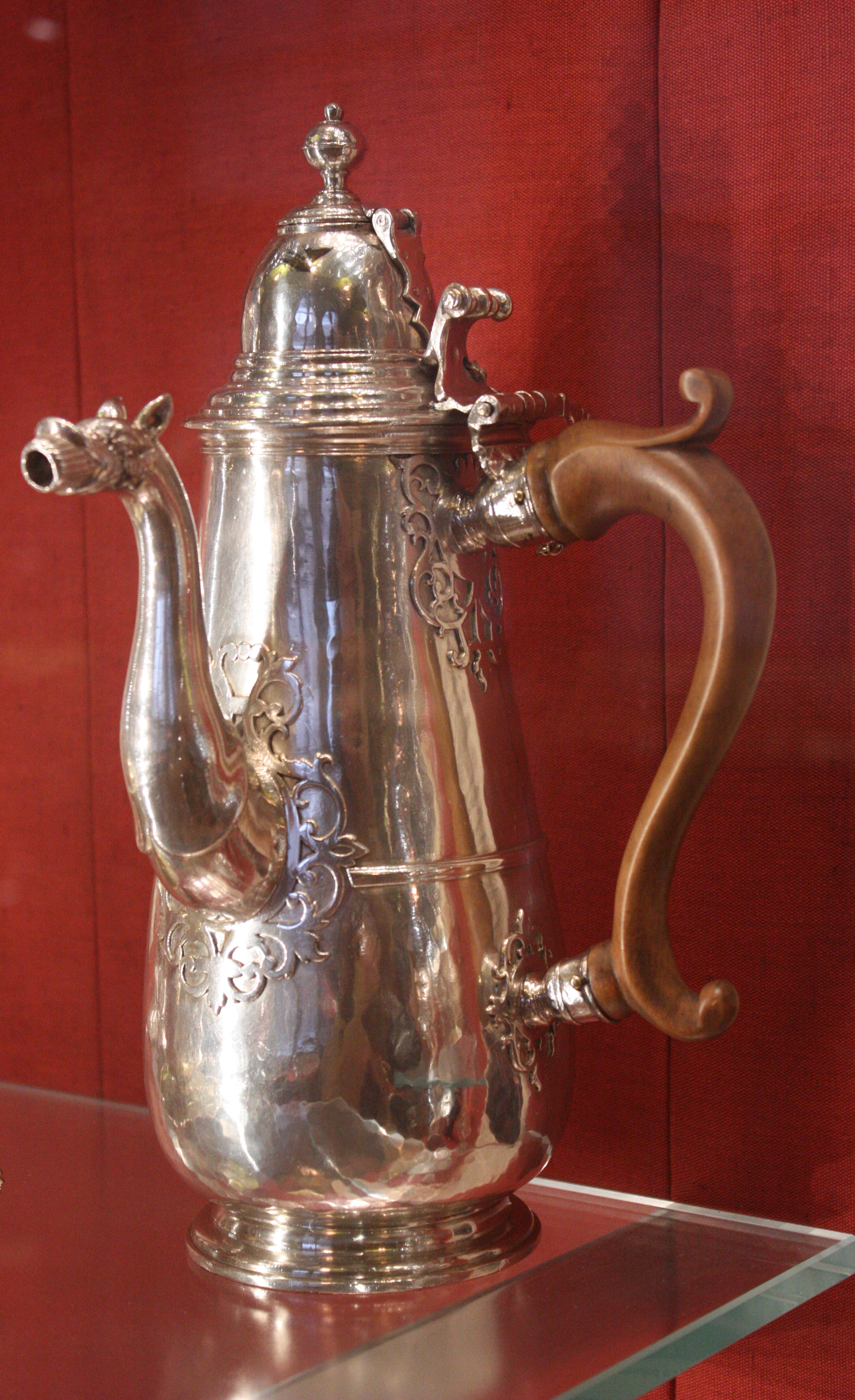
A solid silver chocolate pot. The hinged finial at the top is for inserting a molinillo – a long, elegantly-carved wooden whisk – into the pot. Molinillos were used for whipping, mixing and frothing up the delicious, delicious hot chocolate! Mmmm…

First, the beans have to be dried, then crushed, then ground up, and finally, the pure cocoa has to be mixed with other ingredients to make it palatable – such as sugar, water, eggs or milk. Since sugar was already so expensive, combining sugar AND chocolate was considered exceptionally extravagant.

For centuries, chocolate wasn’t even a food – it was a drink! From the 1500s until the 1800s, chocolate existed in only one form: as drinking-chocolate. What we’d call today – hot chocolate. The only way to physically eat chocolate was to incorporate the cocoa and sugar mass into something else – like a cake, pie, tart or a tray of cookies. Eating chocolate on its own did not happen until the Victorian era. Only when this became possible, and mass production of the first chocolate bars began, was chocolate finally democratised to the peasants and plebians!

Pineapples

Introduced to Europe in the late 1500s and early 1600s, the humble pineapple was the latest fruit from the New World to capture the imagination of the old. Nothing like it had ever been seen before, and because pineapples were very difficult, indeed, almost impossible, to grow in a European climate, getting your hands on one was no mean feat!

To grow pineapples in Europe, the only way to do it was to cultivate the plants in a large, glass greenhouse, usually on the private estate of some wealthy landowner. The warm, humid micro-climate inside a greenhouse allowed pineapples to grow, and owning and getting to eat pineapples was an enormous luxury! Greenhouses designed or built specifically for growing pineapples became known as ‘Pineries’. Because why not?

King Charles II, the ‘Merry Monarch’, being presented with a ‘pine apple’ in 1675

Just being able to see, and hold a pineapple – never mind eating one! – was such a rarity that wealthy people used to – and I’m not making this up – RENT – pineapples from other people! Yes indeed! You could go up to a guy, a friend of yours, perhaps, whom you knew owned a pineapple, and you could ask to borrow or rent it! You know, to have it as a centerpiece at your latest dinner-party or banquet! Showing off a physical pineapple showed that not only were you rich enough to rent one, but that you had connections to people who could grow them – a massive brag back in the 1700s!

Jelly & Ice-Cream

In an age before freezers, refrigerators and instant-foods, both jelly and ice-cream were considered extreme luxuries. Jelly – produced by boiling out the gelatin from the hooves of animal-trotters – took hours to create, with the gelatin being continually boiled, skimmed, refined, and boiled again, to extract pure gelatin, which could then be flavoured, shaped and coloured to produce jelly.

Ice cream, made from eggs, cream, sugar and flavourings, was another extreme luxury. Sugar was expensive, and without freezers, the only way to produce ice-cream was to place it in a bath of salt and ice – two more very expensive commodities – which again, increased the price (and status) of ice-cream.

It wasn’t until the mid-1800s that ice-cream could be produced relatively easily at home, or on an industrial scale, with the invention of hand-cranked ice-cream machines, which whipped the mixture inside a metal canister surrounded by ice and salt. This process made ice-cream cheaper, faster to produce, and better-tasting, as the aerated mixture (caused by the constant stirring and freezing) was lighter, and smoother on the tongue.

Status Symbol: The Fountain Pen.
Symbolises: Modern Technology and Taste!

Since the dawn of writing, thousands of years ago, mankind has struggled and striven for countless lifetimes, to produce a writing instrument which contained its own ink-supply, and which could operate independently of a separate inkwell. After many false starts and mistakes…and a lot of mess…the fountain pen finally came of age in the late 1800s, with visionaries such as George Parker and Lewis E. Waterman creating the essential elements that would make the modern fountain pen possible.

While fountain pens in the early days were laughably simplistic items, comprising little more than a cap, a nib, feed, section to hold it all together, and a tank for the ink – they were incredibly expensive, and were considered real luxury items! Owning one of these newfangled “reservoir pens” as they were originally called, was a mark of pride and distinction!

Fountain pens have remained a status symbol for over 100 years. The Montblanc Meisterstuck No. 149, AKA, the Diplomat, has been the most famous pen in the world since its creation in 1952

From the late 1800s until the middle of the 20th century, most fountain pens were expensive, and while cheap “third-tier” pens did exist, the cost of a new fountain pen was often out of the reach of most people, which is why institutions like schools, banks, hotels, etc, continued to rely on old-fashioned dip pens, well into the 20th century. They were simply cheaper, easier to use, and easier to replace.

Although ballpoint pens have largely usurped the fountain pen’s throne since the end of the Second World War, fountain pens are making a big comeback in the 21st century, and there is an avid global community of collectors, users, repair-technicians and manufacturers still thriving today.


Share this:

  • Share on X (Opens in new window) X
  • Share on Facebook (Opens in new window) Facebook
  • Share on Pinterest (Opens in new window) Pinterest
  • Share on Tumblr (Opens in new window) Tumblr
Posted in Cultural & Social History
1 Comment
19/02/2020 by Scheong

Roll up! Roll up! The History of Freak Shows and Circus Freaks!

Once upon a time, it was a common cry across the fairgrounds and carnivals of the world! A suited man in a top-hat and cane, bellowing through a big, shiny brass horn:

“Roll up! Roll up! Ladies and gentlemen, boys and girls! Come on, come all! See the Fat Boy, the Crab Family, the Lion Boy and the smallest man in the world! See the Elephant Man and the Limbless Wonder, the Rubber Man and the Teen Titan! Pay only a penny to gawp and ogle at these wonders of human perversion!”

But what was the reality of life in a circus sideshow? What did being a freak-show entertainer actually entail? In the 21st century, such entertainment is rare, but it still exists in one form or another, and most likely – it will always exist, because humankind has always had a fascination with the bizarre and the abnormal, the strange, the rare and the wonderful!

In modern times, freak shows tend to have an entirely negative perception by the general public, but was this always the case? In this posting, we’ll be exploring the reality of life ‘on the road’ as a traveling showman and as a freak show or sideshow attraction, as well as getting acquainted with some of the most famous sideshow acts in history!

What Is a Sideshow?

A sideshow was the name given to any secondary or side-act performed or exhibited at a fairground which was not part of the main event or main performances being held at the circus during the time of its stay. Sideshows could be anything from someone walking on coals to sword-swallowing, breathing fire or juggling any number or range of strange or even dangerous objects. Or, it could completely depart from the realm of ‘normal’ entertainment – and enter the realm of the freak show!

A ‘freak show’, as the name suggested, was a variety of ‘freaks’ who traveled with the circus as performers and exhibitors, displaying themselves for the amusement, shock, education or sometimes, just the sheer wonderment – of the paying public – and paying public, is the key here – if you wanted to see one of the freaks, or meet them, touch them, ask them questions or take photographs of them – you were obliged to pay them for it – this wasn’t some free exhibition! Displaying themselves to the public was their job, and like all employees, the freaks expected to be paid for their time and effort!

What is a Freak Show?

A freak show is similar to, but not the same as, a sideshow. A sideshow is any type of sideline attraction at a fairground. A freak show is a type of sideshow focusing on ‘freaks of nature’ – human beings which were in one way odd, different, strange or otherwise mentally or physically deformed or handicapped in one way or another.

How Long have Freak Shows Been Around?

Honestly? Probably since the dawn of time.

The modern idea of the ‘freak show’ dates back at least to the 1630s, and by the 18th century, traveling freaks (either individuals, pairs or small groups), who exhibited themselves at shows around Europe, started becoming common. It became common for freaks to entertain royalty and nobility, and from as early as the 1600s, the position of ‘Court Dwarf’ started to spread around Europe.

What is a Court Dwarf?

A court dwarf was a little person, or person who grew up with one of any of the many forms of dwarfism, who were employed by royal and imperial courts throughout Europe in the 17th and 18th centuries, to act as entertainers and companions to the ruling monarch and their family. In a sense, these were the first type of ‘freak show’ to ever officially exist.

Count Jozef Boruwlaski. His walking-stick and hat (on the table) and his suit, are on exhibition at the Durham Town Hall in Durham, England, the town where he died.

Due to their rarity, dwarfs were actively traded among royal and princely families, and a dwarf could be given as a ‘gift’ from one ruler to another, as a sign of goodwill. Their unique appearance made court dwarfs very popular, and dwarfs often attained great wealth from the sizable stipends paid to them by the rulers whom they served. This practice lasted for over two hundred years, and the last official court dwarf was, Josef Boruwlaski, a Pole born in 1739. Although he had no official aristocratic title, his position as a Court Dwarf led to the nickname of ‘Count Jozef’.

Daniel Lambert. Weighing over 700lbs, he was the fattest man in recorded history at the turn of the 19th century.

A musician and entertainer, 3ft 3in ‘Count’ Jozef Boruwlaski died in 1837 at the impressive age of 97. He was most famous, in his day, for his meeting with Daniel Lambert – the 700-pound former prison-guard who was the fattest man in the world up to that point in recorded history. The official meeting of the world’s largest, and smallest men was reported widely in English newspapers at the time.

A statue of Count Jozef Boruwlaski, the ‘Durham Dwarf’ as he became known – the last official Court Dwarf in the world.

The Beginnings of Freak Shows

Count Boruwlaski and his contemporaries, such as Mr. Lambert, did exhibit themselves and did earn money from it. Indeed, ogling at Daniel Lambert’s gigantic obesity was highly fashionable in Georgian-era high-society…so fashionable in fact, that Lambert had to discontinue the practice, because it gave him absolutely no privacy!

However, the days of the court dwarf were numbered, and Boruwlaski is widely considered to be the last of his kind. He lived so long that he outlived all other court dwarfs, and after his death at the dawn of the Victorian era, the practice was discontinued. The death of the ‘Durham Dwarf’ effectively marked the end of one era of freak shows, and the beginning of another era – the professional, commercially-minded and enterprising freak-show operator and performer!

And for this, we must largely thank…one man. And that man is the incredibly flamboyant Mr. Phineas Taylor Barnum!…Better known as P.T. Barnum, arguably the most famous 19th century showman ever!

P.T. Barnum and the Greatest Show on Earth!

Born in 1810, Barnum’s actions basically gave rise to the world’s first official freak-show, as we might recognise it today. In 1841, Barnum purchased an old exhibition building on the corner of Broadway and Ann Street in New York City. Naming it “Barnum’s American Museum”, it served as a showcase for all the weird and wonderful things that he could find, with which to shock and amaze the paying public!

Not all of Barnum’s exhibits were entirely truthful – for example there was the “Feejee Mermaid” (a monkey and a fish sewn together!) or Joice Heth – purported to be the nursemaid of George Washington. Aged 161, Barnum passed her off as the “oldest living person in the world!”…when she died, an autopsy revealed that her age was closer to 80, rather than 160-odd.

But, in among the frauds and fakes, the half-truths and outright lies, Barnum’s American Museum did host some real and actual human oddities, and some of them became world-famous in their time! From the smallest man in the world to the dog-faced man, the lion boy and the camel woman, Barnum and his collection of freaks and sideshows shocked, wowed and amazed the public. In the 1840s, 50s and 60s, a good day out in the Big Apple was not considered to be complete without a visit to the museum.

Famous Freak Show Acts and Performers

One of the reasons we know so much about Victorian-era freak shows is because they were heavily promoted and advertised. There is a huge wealth of information out there documenting everything about them – photographs, advertising posters, postcards, newspaper articles, diary entries, and even biographies and autobiographies, written by the freaks themselves, or by the people who knew them.

So, who were these people, and what were their histories? Here, we’ll have a look at some of the most famous freak show attractions of all time.

NAME: Charles Sherwood Stratton.
BIRTH-DEATH: 1838 – 1885.
STAGE NAME: General Tom Thumb.
CLAIM TO FAME: Smallest man in the world.

Born on the 4th of January, 1838, Charles S. Stratton is arguably the most famous circus freak who ever lived. He was also related to P.T. Barnum – they were distant cousins. When Barnum heard about his newborn cousin and his diminutive size, he couldn’t help but try to convince the boy’s parents that the child would be perfect for his American Museum. After working out a deal with Stratton’s parents, Barnum taught young Charles the elemental aspects of showbiz! Singing, dancing, how to be witty and smart and funny. Stratton’s father assisted with his son’s adjustment to the world of the circus, and accompanied Charles around, to aid in his adjustment.

Charles Stratton and his wife

Stratton became famous for impersonating famous ‘small people’ from history and mythology such as Napoleon Bonaparte, and Cupid, the baby angel of love. Once he’d started working at Barnum’s Museum, Charles Stratton was just four years old and was barely over two feet tall.

Stratton proved to be a natural comedian, and in 1856, when Stratton was eighteen, Barnum took him on their first European tour. By now, Stratton had attained the nickname of ‘General Tom Thumb’ and used this as his stage-name. Stratton’s popularity was astronomical, and he was soon more famous and more popular than almost any other big-name celebrity of the mid-1800s! He met Queen Victoria and Prince Albert Edward while he was in London. Queen Victoria was at first enraged, but then charmed, by the dwarf’s inability to walk backwards with ease (it was considered impolite to turn your back on the monarch) and she thought that everything about Stratton was adorable and comic, and invited him back to Buckingham Palace a number of times.

Back in America, Stratton’s fame only grew stronger when he met President Lincoln and Stratton notoriety made freak shows and sideshows widely socially-acceptable for the first time in history. People started treating circus freaks as entertainers and people, professionals who deserved respect, and not as oddities to be ogled at and degraded.

In 1863, Stratton married Lavinia Warren. Like everything else about his life, P.T. Barnum hammed this up for the press like it was going out of style. Stratton’s wedding photographs appeared in newspapers and magazines…and you could even gather a collectors’ set of them! His wedding was attended by thousands of people, and to greet all the guests who came to his house afterwards, Charles had to stand on top of a grand piano just to shake all their hands!

Stratton became obscenely rich from his freak-show appearances. He owned two houses, bailed out his cousin P.T. Barnum when the latter hit financial struggles, and even bought himself his own private yacht! Unfortunately, Stratton’s life was all too brief, and he died aged 45, in 1885, shortly after suffering a stroke.

NAME: Wilfred Westwood
BIRTH-DEATH: 1897 – 1939.
STAGE NAME: N/A
CLAIM TO FAME: Circus Fat Boy

A staple of freak shows almost from day one was the classic ‘circus fat boy’ – typically an extremely obese, prepubescent child (usually a boy, although circus fat girls also existed – Wilfred’s older sister Ruby was a circus fat girl), whose job it was to shock and wow audiences with his gigantic size! Numerous sideshow fat boys existed throughout history, but one of the best documented was young Wilfred Westwood.

A native of New Zealand, Wilfred was the second-last child born into a large family, in 1897. Including his parents, there were nine people! Wilfred had an older sister (Ruby, also a circus fat-child), an older sister Eva, three older brothers, and one younger sister, Loyis Westwood. Together, Wilfred and Ruby brought the Westwood family incredible fame, and they toured Australia, New Zealand and several other countries besides. As early as 1900, when Wilfred was just three years old, newspaper articles were being written about him and his sister, as circus-promoters and journalists started trying to publicise the ‘giant children’.

Wilfred Westwood, aged 11, 1908. Weight: 308lbs.

By the age of 11, Wilfred weighed over 300lbs, and yet, despite this, he wasn’t even the largest circus fat-boy in the world…around the same time, John Trunley, the ‘Fat Boy of Peckham’, weighed over 350 pounds!

John Trunley (he’s the one on the right, in case you were wondering).

Trunley and Westwood were far from the only circus fat boys, but they were possibly, the most famous. In the 1800s and early 1900s, when infant and child mortality was as high as 25 or even 30%, and when millions of children were underfed and chronically malnourished (a public health-concern that caused the British government to start free school meals for underprivileged children) – children of incredible obesity were something to be celebrated and admired! At a time when the health-effects of extreme obesity were poorly understood, fatter children were seen as well-fed, healthy children, who were just a little bigger than the others.

Trunley became a watchmaker in later life, and died in 1944. Westwood became a glass-blower, and was killed in a car-crash in 1939.

NAME: Stephan Bibrowski
BIRTH-DEATH: 1890 – 1932
STAGE NAME: Lionel the Lion Boy!
CLAIM TO FAME: Hypertrichosis.

Born in Poland in 1890, young Stephan was abandoned by his mother almost since birth, when he started exhibiting symptoms of the phenomenally rare genetic condition known today as ‘Hypertrichosis’ or ‘Wolfman syndrome’, where the entire body – save the hands, and feet – are covered in hair!

Stephan’s mother believed that she had been a victim of ‘Maternal Impression’, also known as ‘Monstrous Birth Syndrome’, a popular (but unfounded) medical theory that had existed since at least the 1600s. Never heard of it? Not surprising.

The theory of maternal impression, or the ‘Monstrous Birth’ theory was the belief that if an expectant mother experienced some kind of trauma, her child would bear the marks of that trauma upon birth. In Bibrowski’s case, his father was attacked by a lion, which led his mother to believe that it was life-scarring event that led to her giving birth to a ‘lion’ of her own.

Lionel the Lion Boy!…Aged five, in 1895.

Young Stefan was taken in by the famous Barnum & Bailey Circus (yes, that Barnum), and by the age of 11 in 1901, he was touring Europe and America, billed as “Lionel the Lion Boy!” Apart from appearing as a sideshow, Lionel also performed acrobatic feats to impress the audiences who came to see him.

By the late 1920s, Lionel, or Bibrowski, started getting tired of the circus-life. He retired, and moved to Germany. He died in Berlin in 1932, at the age of 41. Cause of death: Heart attack.

NAME: Chang & Eng Bunker
BIRTH-DEATH: 1811-1874
STAGE NAME: The Siamese Twins
CLAIM TO FAME: Conjoined Twins

Ever heard the term ‘Siamese Twins’, referring to conjoined twins? Ever wondered where the term came from?

You have P.T. Barnum and Chang and Eng Bunker to thank for that!

Chang and Eng Bunker

Born in Siam (Thailand), Chang and Eng were of mixed American-and-Siamese heritage, and moved to America when they were still children. In later life, they adopted the more English-sounding surname ‘Bunker’ as part of their Americanisation. Chang and Eng started touring in 1829, and toured and exhibited themselves on and off for the rest of their lives, stopping in 1839. They had by this time become fluent in English, and took the time off to build a home for themselves, get married, and even raise children, but ten years later, they found themselves getting bored with ‘retirement’, and in 1849, they returned to the touring circuit through the 1850s and 60s.

The Bunkers were noted slaveholders in the years leading up to the Civil War, and in the period of Reconstruction that followed, much was made of this in the public press, which earned them great public backlash from the audiences who came to witness their performances. Depression and declining health led to the twins’ death within hours of each other, in 1874.

Apart from their fame in giving rise to the term ‘Siamese twins’, Chang and Eng Bunker hold another distinction – they were one of the longest-lived sets of conjoined twins in history – a record not surpassed until 2012!

NAME: Joseph Carey Merrick
BIRTH-DEATH: 1862 – 1890
STAGE NAME: The Elephant Man
CLAIM TO FAME: Proteus Syndrome (?)

By far the most famous freak show exhibitor in history (apart from Tom Thumb), has to have been Joseph Carey Merrick – better known as the Elephant Man.

Born in 1862, Merrick had a brutally hard and incredibly short life. His mother, one of the few people to care for him, died young, leaving him in the care of his father and stepmother. Repulsed by his appearance, they abandoned him, whereupon, Joseph was taken in by his uncle, a barber and hairdresser.

Joseph Merrick – the ‘Elephant Man’

Numerous attempts to find Joseph meaningful work (from hawking wares to rolling cigars, and even sweeping the floor of his uncle’s barbershop) all ended in failure due to his increasing deformities. Young Merrick ended up in the workhouse at least twice in his life, before finally deciding to turn his attention to the world of the circus freak!

Circus freaks were a world apart from everybody else in polite, straitlaced, and morally-upright Victorian society. They were a society of outcasts and misfits – the perfect place, Merrick reasoned, for someone like himself.

With the assistance of an understanding circus manager, Merrick started out on his career as a circus freak. In this role he remained for a few years, occupying a room behind a shop across the Whitechapel Road from the London Hospital. It was from this hospital that Frederick Treves, a noted surgeon, would come to meet Merrick. He studied his deformities and even had him photographed and examined. Merrick left London and traveled to Europe, where his fortunes took a downturn yet again.

Merrick had made a considerable amount of money from selling copies of his biography, which he sold alongside his freak-show act. The (slightly fictionalised) account of his life detailed his birth and upbringing, and the belief that he was the result of maternal impression. Mugged and robbed while in France, Merrick had lost almost all the money he’d made during his time as a circus-freak and returned to London almost penniless, arriving at Liverpool Street Station in 1886.

Joseph Merrick’s skeleton at the London Hospital

In an incident dramatically recreated in the 1980 film ‘The Elephant Man’, Merrick collapses from exhaustion, and only Dr. Treves’ business-card, in Merrick’s coat-pocket, gives a clue to his identity.

After a great deal of campaigning, fundraising, and philanthropic donations, enough funds were raised for the Elephant Man to live indefinitely in the London Hospital in Whitechapel. ‘The London’ was founded in the 1700s as a charity hospital, providing free healthcare to the impoverished and destitute. It survived entirely on public donations, and the physicians who worked there did so voluntarily, giving up a few days a week from their Harley Street addresses to tend to the sick and dying in the East End. In many respects, the London was the best place for Merrick. It was used to dealing with the very worst of the human condition – attempted suicides, alcoholism, industrial accidents, and infectious disease – which also meant that it was one of the most advanced medical centers in the world at the time. It was to the London Hospital that Jack the Ripper’s victims were taken, in 1888, for their autopsies.

Despite this background, the hospital had a strict policy of not admitting ‘incurables’ – those who had conditions which could not be treated, and which would only be a drain on the hospital’s already limited funds. It took a lot of convincing of the hospital’s board to allow Merrick special dispensation for his unique condition. It was more than obvious that he would not survive without round-the-clock medical care, and once enough funds had been raised, a two-room suite was laid out for him on the ground floor of the hospital. Here he would live for the rest of his life.

Merrick’s health improved, and it was during this time that Treves photographed Merrick once more, and interviewed him extensively about his life. Meeting the ‘Elephant Man’ became highly fashionable, and many of London’s wealthiest residents – including the future Queen Alexandra – would visit him at the hospital.

Joseph Carey Merrick – the Elephant Man – died in 1890. The autopsy on his disfigured body was carried out by the man who had come to know him better than anybody else – Sir Frederick Treves. Treves’ examination and the subsequent certificate he filled out, listed the cause of death as ‘Asphyxiation. It was Treves’ own theory that Merrick – who was unable to sleep lying down due to the contortions of his body, and the weight of his head – had slumped backwards against his bed during the night. This had caused his neck to break, cutting off his airway and resulting in death.

He was 27 years old.

To this day, Joseph Merrick’s skeleton is still held at the London Hospital.

The Public Perception of Freak Shows

The public tolerance of freak shows has waxed and waned over the years, decades, and even centuries and at various times they were celebrated, reviled, condemned and promoted.

The majority of freak-show managers and circus ringmasters looked upon running freak shows as being a social service. They were providing entertainment and education to the masses, as well as ‘shock-value’, indulging mankind’s fascination with the bizarre and unusual. At the same time, they were also providing misfits and people with horrible disfigurements or medical conditions, with a home, a family of sorts, a camaraderie, and a social network which gave them a living, a form of security, and a sense of belonging.

A lot of circus-freaks turned to their chosen occupation, usually as a last resort, to make the most of a bad situation, or simply to wow people with what they were. In an age before social security, government pensions, advocacy groups, effective medical treatment, and the countless other facilities and organisations available to people with severe disabilities today, being a circus-freak was, more or less – the last half-respectable occupation open to people who would otherwise have found themselves on the street.

Freak-shows have never really gone away. They still exist, and in some cases, have simply switched mediums. There’s no shortage, in the 21st century, of TV shows depicting all kinds of modern-day ‘freaks’ from ‘Freaky Eaters’ to ‘Hoarders’ and ‘Most Shocking’, which featured its own ‘circus fat boy’ – Dzhambulat Khatohov.

More Information?

https://timespanner.blogspot.com/2012/06/foxtons-perfect-young-giants-wilfred.html

https://www.thesun.co.uk/news/5847964/fat-boy-of-peckham-victorian-freak-show-career/

https://www.thevintagenews.com/2018/08/23/elephant-man-joseph-merrick/


Share this:

  • Share on X (Opens in new window) X
  • Share on Facebook (Opens in new window) Facebook
  • Share on Pinterest (Opens in new window) Pinterest
  • Share on Tumblr (Opens in new window) Tumblr
Posted in 19th Century, Cultural & Social History
Leave a comment
05/02/2020 by Scheong

Everything Stops For…The History of Tea

As the old Jack Buchanan song goes: “When the clock strikes four, everything stops for tea!”.

But – why does it? In this posting, we’ll be looking at the history of, arguably, the world’s most popular beverage – tea – and everything that goes along with it. What tea is, where it comes from, how it came to be, the customs surrounding tea and its consumption, and the utensils and paraphernalia used around the world in the consumption of tea!

Due to tea’s extensive history and variations, there’s no way that I’ll cover everything in just one posting, so I may do another one at a future date. So if something you wanted to read or know about isn’t included here, then it may be included in a possible follow-up posting later down the line.

Not for All the Tea in China!

Tea as we think of it today, was first cultivated in China as early as 4000B.C., but it was not harvested for its beverage qualities – instead, it was eaten as a vegetable! Tea was not consumed as a beverage until sometime between 300-500A.D. However, the first incarnation of tea was prepared very differently from how we think of it today.

During the Chinese Tang Dynasty (618-907A.D.), the accepted practice was to crush and grind tea-leaves in a pestle and mortar. The crushed leaves were beaten and ground up until they had been reduced to powder. This allowed the powdered leaves to be compressed into bricks or cakes, which would be easier to pack, and easier to transport, keeping their flavour for longer over long trade-journeys, which in those days could take several days, weeks, or even months!

When it came time to drink the tea, the cake or brick was simply crumbled into powder again, and water was added on top to dilute it. In Chinese, this was known as “mocha”. When the Japanese adopted this practice, they also took the Chinese loanword along with it, and ‘mocha’ became the Japanese ‘Matcha’. This remained the norm until the 1300s, when the practice changed yet again, to steeping dried tea-leaves, instead of tea-powder, much as how we do today.

Tea on the Move

For centuries, tea remained a largely Chinese secret. Tea was traded, along with silk, porcelain and valuable spices, around Asia, and along the fabled Silk Road network. However, things started to change in the 1500s and 1600s, with Dutch sailors exploring the Far East. It was at this time that Europeans were first exposed to the beverage of tea.

Like anything new – tea, coffee, chocolate, kale juice and quinoa – tea was first consumed for its medicinal properties, either real, or imagined. In Europe, where the main beverages were beer, ale and wine, due to how polluted the water was, tea was a welcome and surprising change, and slowly, it spread around Europe.

Enjoying a Cuppa

Tea is believed to have been brought in England in 1661. Why such a precise date? Because that’s when a Portuguese woman named Catherine of Braganza sailed from her homeland to wed England’s King Charles II. Famously barren, Catherine produced no children, and this left Charles unable to sire a legitimate heir to the throne, however, the queen did give birth to something arguably much more important than children – British tea-culture!

As part of her dowry, Catherine brought to England, not only gold, silver and jewels, but also exotic spices and expensive teas. Noble families, wishing to ingratiate and imitate their new queen, took to copying her drinking habits, which included consuming tea – but not only consuming it, but also enjoying it, and making an event of it – We have Queen Catherine to thank for the very British custom of ‘taking tea’.

In its early days, tea was extremely rare in Britain, and prohibitively expensive! China had a stranglehold monopoly on the substance, and the one-and-only port in China which was open to foreign traders, and therefore, the only port open to exporting tea, was the port of Canton in southern China.

Because of such restrictive trading regulations, the amount of tea that Britain (and other European countries) could import each year was very small, and this drove the price up to such an insane level that only the nobility could afford it. Tea was drunk sparingly, and the whole custom of preparing, and serving tea was a ritual presided over almost exclusively by the women of a household. Servants were rarely, if ever, permitted to touch tea, and the dried tea-leaves, imported all the way from China, were locked inside elaborately decorated tea-caddies, lined with foil paper to protect the flavour, and which were made of anything from wood inlaid with ivory, to tortoiseshell, and even – if you could afford it – solid silver!

The Word ‘Tea’

‘Tea’ is believed to have been a corruption of ‘te’, the word used for the beverage in the Chinese port of Xiamen, one of the first to open to trade with the West (particularly, the Dutch, who were the first to import tea to Europe). In most Asian languages (including Chinese and Japanese), the word for ‘tea’ is ‘cha’.

China from China, What Else Could be Finer?

What else, indeed?

The Chinese had been creating hard-paste ceramics…what we call ‘porcelain’ today…since at least the 6th century. Hard-paste porcelain was tricky to make – it required a very high firing temperature, and the mixture of various powders used to form the paste from which the porcelain was made had to be carefully measured and prepared. The best quality porcelain-clay preparations were often left alone to age…in many cases, for several decades!

After the maturation or ‘souring’ process, during which the clay-mix had been left to rest, the clay had to be rehydrated before it could be worked. To do this, potters simply opened their flies and pissed into it! The urine reintroduced moisture into the clay and made it more plastic, which made it easier to shape and mold into whatever it was that you were trying to make!…Don’t worry, the firing process killed off any bacteria in the clay, rendering the porcelain clean and sterile when it was removed from the kiln.

Chinese porcelain was heavily imported by Europeans in the 1600s and 1700s, along with tea, but transporting porcelain such long distances was expensive, if only for the fact that trying to transport crates of chinaware on a rocking, rolling sailing ship is a recipe for disaster. Because of this, there were numerous attempts to recreate Chinese-style porcelain in Europe – particularly in Britain, and the Low Countries.

Actual porcelain ceramics are made using a mixture of fine clay powder, sand and a tiny amount of the secret ingredient – soapstone – basically talcum-powder. Working this mixture created a type of porcelain which could be shaped, and fired and made into ceramics which were crisp, white, incredibly thin to the point of translucency…and, most importantly, where tea is concerned…shatter-resistant!

One of the reasons why European attempts to recreate Chinese porcelain failed was because of this one element. They had no resistance to thermal shock – the sudden change in temperature caused by pouring boiling hot tea into a cold, porcelain tea-bowl or teacup. People who couldn’t afford fine china bought the cheaper, lower quality ceramics, which the wealthy bought the more stable, thinner, stronger and more suitable expensive china. This is the supposed origin of poor people adding milk to their tea first, whereas wealthier drinkers added milk afterwards…or not at all! The cold milk took the sting out of the heat of the tea when it was poured into the cup, so that the porcelain wouldn’t crack under the temperature-change.

Eventually, Europeans did manage to create their own form of porcelain, independent from Chinese ceramicists – it was called bone china. Depending on the recipe used, bone-china clay was comprised of china-stone powder (a type of granite), china-clay (kaolinite), and, depending on the formulation of the recipe – anywhere from 30-60% bone…as in actual bone. The bones of dead animals were cleaned, crushed, ground up into powder, and this was added to the mixture. The translucency, thinness and strength of bone china (four bone-china cups can hold up a car, in case you’re wondering), are all due to the addition of bone-powder into the clay mix.

Types of Teaware

When the custom of tea-drinking was introduced to Europe in the 1600s, Chinese porcelain came along with it, and these were the vessels first used to prepare and drink tea. The earliest European teaware, manufactured in the 1700s, closely imitated Chinese teaware, both in size, style, and even decoration. Transfer-printed imagery (engraved on a copper plate, covered with ink and then transferred onto thin paper which was then pressed onto the finished ceramics before firing) often featured Chinese-style motifs, such as gardens, pagodas and flowers.

European Teaware

The earliest European teacups imitated Chinese ones so much that they did not come with handles – instead, they resembled the Chinese ‘chawan’ (‘tea-bowl’), varying from them only in decoration and size. The Western practice of putting a separate handle on the side of a teacup would not become common until the early 1800s.

In time, the practice of adding milk, and later, sugar, to tea, spurred the creation of the traditional three-piece tea-set, of teapot, milk-jug or creamer, and sugar-bowl. Like tea, sugar in the 1600s and 1700s was very expensive, and was imported largely from Caribbean and South-American sugar-plantations, where it was extracted from sugar-cane crops. Because of the expense of sugar, some people added honey to their tea instead.

Asian Teaware

Chinese, and other Asian teaware has hardly changed in centuries. Teacups have varied in style and decoration, but hardly ever in terms of size, or shape. Since most Asian people don’t add anything to their tea, their teacups are generally smaller than European ones, and their tea-sets are less elaborate – comprising of just the teapot and a set of teacups, and perhaps a matching tea-tray or more likely – a tea-board, to catch spills, or to rise and wash the teacups between uses.

Apart from this, the Chinese teacup did evolve in one way: The creation of the ‘Gaiwan‘.

Three ‘gaiwan’ teacup-sets. In the background is a traditional
Chinese earthenware tea-set, sitting on a tea-board. The wooden scoop is for measuring out tea-leaves.

‘Gaiwan’ literally translates as ‘lidded bowl’ in Chinese. ‘Gai’ is lid, or cover, and ‘wan’ (or ‘woon’, in Cantonese) is ‘bowl’.

The compound word of ‘gaiwan’ refers to a specific type of Chinese teacup-set, comprised of a teacup or bowl with a wide, flaring lip, small base and sloping sides, a matching, circular lid with a lifting-knob on top, and a matching saucer underneath, into which the base of the teacup fits snugly.

Gaiwan have been around for centuries, and their creation dates back to the Ming Dynasty, sometime in the 1400s. Gaiwan were used, either for brewing tea, or for drinking it. The lid served to either stir the tea to help it brew, to cool it down before drinking, or to hold back the loose tea-leaves while drinking from the cup. The lid also stopped the heat of the boiling water from escaping, keeping the tea warm for a longer time between sips.

Russian Teaware

Another country famous for its teaware is Russia, where the practice of taking tea is possibly more different than anywhere else on earth.

Russia was the land which originated the tea-preparing device known as the samovar – literally – ‘self-boiler’ – a large (usually brass) tea-urn comprised of a central cistern, fire-tube and chimney, drip-tray and teapot.

A samovar (in the background) in a Russian painting

In most cases, the Russian practice of tea-drinking was to fill the samovar’s cistern with water. The chimney or firebox was filled with paper and wood-shavings, and then set on fire. Refueling the samovar was simply a matter of dropping kindling, or pine-cones down the chimney. Ash was removed through a little door underneath the firebox. A stand set on top of the chimney allowed a teapot with tea-concentrate to be placed over the fire, keeping it hot. The tea-concentrate was very, very, very concentrated tea, with multiple spoons of tea inside a relatively small pot filled with hot water.

The drinker would pour a small amount of the concentrate into their teacup or tea-glass, replace the pot on top of the samovar, and then, using the spigot on the front of the samovar – fill the rest of their glass with boiling water. This would dilute the tea-concentrate, making it more mellow, and pleasant to drink.

Like with other countries with a tea-culture, in Russia, it became popular to make an event out of drinking tea, and tea was often consumed along with sweet pastries, cakes and cookies. The practice of using a samovar spread widely throughout eastern Europe and around the Middle East and the Eastern Mediterranean, leading to regional variations and different national styles and designs.

The Art of Taking Tea

Since earliest times, the practice of drinking or ‘taking’ tea has always been surrounded by rituals and customs. Gradually, early tea-drinking habits developed into regional customs and traditions, and these led to a wide range of ways to enjoy tea all around the world.

In China, and Asian countries such as Taiwan, Hong Kong, and Singapore, the tradition of ‘yumcha’ still exists today – where people gather for lunch or a morning or afternoon meal, consisting of tea, and eating dumplings, buns and rolls. The words ‘yum cha’ literally mean ‘drink tea’. Going out for yumcha is usually a special occasion, done with family and friends, or visiting relatives and takes place at specialised yumcha restaurants.

In Britain, and many former British colonies such as Canada and Australia, the tradition of ‘afternoon tea’ is a longstanding tradition dating back to early Victorian times. It was said to be invented by Anna Maria Russell, the Duchess of Bedford, a longtime personal friend of Queen Victoria.

Frustrated by the long wait between luncheon and dinner (which in Victorian times, could be taken as late as 8:00pm), the Duchess took up the habit of having a light meal in the late-afternoon, around three or four o’clock, consisting of tea, cakes, sandwiches and scones. This, the Duchess hoped, would hold her over until dinner, which could be anywhere from two to four hours later in the day. She enjoyed this custom so much that it started spreading throughout the court, and it became fashionable to invite friends over for afternoon tea – a quiet time in the middle of the day when one could relax with a light snack, a drink, and a chance to catch up on the gossip of the day. Afternoon tea remains a popular custom in the Anglosphere to this day.

Tea Today

The beverage of tea, as well as the meals and events that it inspired, remain as popular today as they ever were. Even when we have other drinks like coffee, or soda, milk, and a wide range of flowery and herbal infusions – tea remains one of, if not the, most popular beverage in the world. Hotels from as far afield as the Ritz in London to the Windsor in Melbourne, or the Raffles Hotel in Singapore, still serve high tea and afternoon tea today. In Malaysia and Singapore, you can buy my personal favourite type of tea: ‘Teh Tarik’ (‘Pulled Tea’) – which is black tea mixed with condensed milk and sugar…and which is then poured repeatedly from mug to mug, over and over again to froth it up and cool it down, leaving you with a rich, sweet, warm, frothy drink! Mmmm-mmmm!


Share this:

  • Share on X (Opens in new window) X
  • Share on Facebook (Opens in new window) Facebook
  • Share on Pinterest (Opens in new window) Pinterest
  • Share on Tumblr (Opens in new window) Tumblr
Posted in Cultural & Social History
1 Comment
21/09/2019 by Scheong

Elongated Elegance – Looking at Walking Sticks

“What do you make of it, Watson?”
“Why should I make anything of it? The fellow came to see you!”
“Ah! But what kind of a fellow? Let me hear you reconstruct him – from his walking stick – by our usual method of elementary observation!”

‘The Hound of the Baskervilles’ (B. Rathbone, N. Bruce, 1939).

In this posting, we’ll be looking at the history, styles, designs, types, anatomy and function of walking sticks, an aide and accessory so old that it goes far into prehistoric times. So – as Pierce Brosnan said in “Around the World in 80 Days”: ‘I trust you have some stout shoes? We may do a little walking!‘.

What Is a Walking Stick?

A walking stick is a mobility-aid or fashion accessory which has existed since time immemorial. It has lasted in one form or another for literally thousands of years, and they continue to be manufactured in the modern world, for everything from looking stylish, to keeping your balance, for hiking, camping, and mountain-climbing.

A standard walking stick varies considerably in length, anywhere from about 30 to 45 inches. Some sticks can be five or six feet in length! But, where do they come from?

A History of Walking Sticks

Walking sticks of every size, shape and description have existed for millennia. Every culture and civilisation, from Ancient Rome to Ancient China, pre-Columbian America and the Middle East.

For much of history, a walking stick was…simply…a stick. A branch of convenient length, thickness and strength, which could be cut, shaved and modified to be used as a mobility aid.

Walking sticks as we might recognise them today, started becoming a thing in the 1500s and 1600s. Since medieval times, it had been de-rigeur for gentlemen to carry a sword while out in public, as a means of self-defense. However, this started being seen as confrontational, and by the 1600s, was no longer socially acceptable, unless it was part of military dress-uniform or other similar situations.

In a time when most people walked everywhere, unless they owned a horse and carriage, or a boat and lived near a major river, walking sticks naturally took the place of the sword in polite society. Remember also, that paved roads (with the exception of the Ancient Romans, perhaps) are a relatively modern phenomenon. Muddy tracks, cobblestones, and dirt or grassy roads were the norm for much of human history. Using a stick while walking helped you keep your balance while navigating pot-holes, ruts and gullies worn into the road by other travelers.

Some people, such as the elderly, the infirm or those suffering from some permanent injury or disability, might well have carried a stick for purely practical purposes, to help them move around, but increasingly, carrying a walking stick was seen largely as being a fashion accessory. Much like how you might carry around your smartphone today, back in the 1600s, 1700s and 1800s, carrying around a walking-stick was done for both practical, and fashionable reasons. Having a flashy walking stick, possibly made of rare or expensive materials, was seen as a status-symbol, and they lent an air of superiority and higher social standing to the user.

Apart from this, with most people walking everywhere, a stick was useful on a practical level. Carrying a stick took some of the pressure and wear off of your shoes and feet – important, when you might well be walking for several hours every day. Having something to lean or rest on, was important for the purpose of personal comfort.

The Anatomy of a Walking Stick

A classic walking stick was typically comprised of four parts. I’ll go through each one in detail and give a bit of their history.

The Shaft

The shaft is the length of wood which makes up the walking-stick’s body. Traditionally, shafts were made out of a wide variety of wood, such as oak, blackthorn, etc. Some sticks were made of brass, some were even made of ivory – the long tusks of the narwhal were a popular material for making walking-sticks.

In some instances, walking sticks were made out of more unusual substances. A popular material for shafts was rattan cane, which was both strong, and flexible. They were particularly popular in the Far East, but also in Britain; such a type of cane is mentioned in the Sherlock Holmes novel “The Hound of the Baskervilles“.

The Handle

The handle, or grip of the walking stick is the area at the top, grasped by the user’s hand. Some walking sticks had very plain, curved wooden handles, which were simply the end of the shaft being bent over to create a hook. However, from the 1600s onwards, and even into the modern day – handles made of a wide variety of materials have been popular.

Handles have been made of brass, silver, ivory, glass, pool-balls, horn, tusk, bits of pipe…almost anything and everything imaginable. During the 1700s and 1800s, silver, brass, wood, bone and ivory were the most popular materials for making walking stick handles.

Handle shapes were as varied as their materials. The handle might be a simple knob, a hook, or the T-shaped derby-style handle. Handles in the form of an upturned L, which were sometimes made in the form of animal or bird-heads, such as dogs, eagle, rabbits and almost anything else imaginable, were also very popular.

The Collar

The collar is the ring directly underneath the handle, where it joins to the shaft. Not every walking stick has a collar, and not all collars are functional. Some exist purely for aesthetic reasons. Popular collar materials were silver, brass and ivory.

The Ferrule

The ferrule is the end-cap, foot, or base, right at the bottom of the walking-stick. It serves two purposes – to protect the end of the shaft, and to provide the user of the stick with grip, to stop the base of the walking stick from sliding around.

Interesting fact: Ferrule lengths varied over history. As a rule – the longer your ferrule is, the older your stick is. The shorter your ferrule is, the more modern your stick is!

Now, you might ask – why?

Remember when I said further up, that one of the main uses for walking sticks was to navigate terrible roads and paths, to help you keep your balance, and stop you from falling over? Well – because roads were, as a rule, unpaved until recent times – it was very common for a walking-stick to sink into the mud or slop or ooze, especially if you had to put weight on it. This was disadvantageous, because the mud and gunk would get all over the bottom half of your stick…eewww…!!

But also – the mud, or more specifically, the water and moisture, would damage the wood of which your stick was made. Constant exposure to water and mud would cause the wood to swell and crack, and for the end of the stick to wear down. To prevent this, or at least, to minimise it, ferrules were added to the bottom of sticks, and they were made much longer (up to six or eight inches, in some cases!) so as to protect as much of the stick as possible.

As paved roads and pavements became more common, the necessity to protect so much of the lower half of the stick was reduced, and so walking stick ferrules generally get shorter and shorter. In the modern era, most ferrules aren’t more than an inch or two long, compared with four or eight inches, in times past.

The Purpose of Carrying a Stick

While the most common reason for carrying a walking stick was either as a fashion-accessory, or as a mobility aid of some variety, there were many other reasons for carrying one, and these expanded throughout the centuries.

Self-Defense

One of the most common reasons why people carry walking sticks, even into the modern era – is for the purposes of self-defense. State-run police-forces did not become a regular thing until the early 1800s, Because of this, carrying a walking stick when you went out served as both a fashion accessory, but also as a personal defense weapon. With the right skills, someone could disarm or disable an attacker with very little effort.

The heyday for sticks used for personal defense was the Victorian era. A method of self defense was developed during this time, known as “singlestick fighting”. It was a series of classes and courses, which you could take to learn how to defend yourself – using a single walking stick – hence the name. Singlestick fighting was incredibly popular – and photographic manuals existed, demonstrating how to disarm someone, how to trip someone up, how to duck, block and parry an attacker’s movements, and how to turn disadvantages (such as having a shorter stick) into an advantage.

Various moves in singlestick fighting.

Along with the art of singlestick fighting, walking stick manufacturers also made sticks with self-defense capabilities built into them – usually, these were custom-ordered walking sticks, made specifically to a client’s needs. Walking sticks with spring-loaded bayonets, walking sticks with lead-shot inside the handle, and most famously – walking-sticks with swords or daggers inside the handle (“swordsticks”), were particularly common.

Gadget Sticks

Also called “systems sticks”, a gadget stick was a walking stick which served at least two functions. Gadget sticks varied from the mundane, to the fantastic, and everything in between. Gadget sticks had all kinds of additional accessories added into them – compasses, watches, whiskey-flasks hidden inside the shafts, telescopes, and even firearms – Valentin Zhukovsky, in the James Bond films, has a walking-stick with a built-in rifle.

Gadget-sticks were immensely popular, and today, a really unusual, or elaborate gadget-stick can be worth several hundreds, or even thousands of dollars. The more intricate and complicated it is, the more desirable it becomes, and the more value it retains.

While some gadget-sticks had gadgets inside them purely for the fun of it (a whiskey-flask, a compass, a watch, etc, etc), some gadget-sticks were manufactured specifically for particular occupations. For example, an explorer or a surveyor’s stick might have a telescope, a yardstick, a spirit-level and a compass. A doctor’s stick might have pill-boxes and a thermometer. A writer’s stick might have space for pens, spare nibs and a bottle of ink.

The End of the Walking Stick

The walking stick as an aid for mobility has never disappeared, and some people still collect and use antique and vintage sticks for walking on a regular basis. Others still buy their sticks brand-new and use them every day. A friend of mine has carried the same curved wooden walking stick for years, to help with the bodily imbalance caused by his back issues.

But the days of carrying a walking stick as a fashion accessory does seem to have died away. While some people do still uphold this, they do tend to be a minority. The fact is that a walking stick is seldom practical as an accessory in the modern world. We have so many other things to think about and carry – phones, chargers, earphones, tablets, laptops…the last thing we need to carry around is a purely decorative piece of wood.

Quite apart from anything else, one of the main reasons why walking sticks started dying out as a fashion accessory is due to the advancements in transportation.

Prior to the late 1800s, most people walked almost everywhere. Carriages were expensive, trains didn’t reach all places, and bicycles were rare. Because of this, walking was the main mode of transport, which meant that carrying a walking stick, either to aid with balance, to help ease the pressure on one’s feet, or simply as an accessory – was considered acceptable.

However, once cars became popular, and people started doing much less walking in general, sticks fell by the wayside as being impractical and unnecessary. Their popularity continued through the 20th century, but they started being seen increasingly as being more of mobility aid, and more for older people than younger people, and less as a fashion accessory than they once were, which all contributed to their general lack of use in the modern world.


Share this:

  • Share on X (Opens in new window) X
  • Share on Facebook (Opens in new window) Facebook
  • Share on Pinterest (Opens in new window) Pinterest
  • Share on Tumblr (Opens in new window) Tumblr
Posted in Cultural & Social History
2 Comments
25/04/2019 by Scheong

The Infamous IMCO – Lighter of Mystery!

“If you repeat a lie often enough, it becomes the truth” – Joseph Goebbels, Reich Minister of Propaganda & Public Enlightenment.

“Truth isn’t truth” – Rudolph Giuliani, Mayor of the City of New York.

It’s been remarked by a number of people that those who collect one area of antiques will often branch out into other areas. Typically, for guys, at least, these areas are:

  • Fountain pens and related accessories.
  • Watches and/or clocks, and related accessories.
  • Knives, and related accessories.
  • Lighters, and related accessories.

Basically, this theory states that if you’re interested in one of those areas, you’re likely to be interested in at least one of the other three areas. Shamefully for me – I’m interested in all four of those areas. So I’m screwed right off the bat! Haha…

Aaanyway. Enough of that. I am creating this posting for the very real purpose of it being a public service to the collecting community, and the subject of this posting is, as the title says: IMCO lighters! Or specifically, one particular IMCO lighter, which I’ll be talking about later on.

OK. So What is “IMCO”?

Most people in lighter-collecting circles will likely have heard of IMCO, and if you haven’t, here’s a brief introduction:

IMCO was an Austrian manufacturer of cigarette lighters. Established in 1907 by Julius Meister, who was formerly a manufacturer of brass buttons for the Austro-Hungarian Army. Unable to make much money just from making buttons, Meister struck on the idea of manufacturing something that everybody would need, and that everybody would use – not just the army. And that something was the newfangled ‘cigarette lighter’.

Cigarette lighters as we recognise them today were invented in the late 1800s. Early models were unbelievably crude by modern standards, but IMCO got the idea that if they could come up with one good, cheap, simple design, then they could mass produce them, and become the Henry Ford Company of cigarette lighters!

Of course, for the lighters to be cheap enough for everybody to afford them, they had to keep costs down. So that meant that they needed a cheap, readily available source of metal. This wasn’t easy in the 1910s, when Austria-Hungary was fighting with Germany and Turkey, against Russia, France, Belgium, Britain, Canada, and the United States! Any plans to start manufacturing lighters during the First World War were quickly shelved as being wholly impractical. It wasn’t until after the war in 1919, and 1920, that IMCO actually began manufacturing.

The IMCO ‘Trench Lighter’

Due to the restraints of the First World War, IMCO couldn’t actually start making lighters in the 1910s. When the war ended in 1918, the need for flashy brass buttons for the army suddenly ended, and IMCO was groping around to try and find something else to manufacture. In 1920, the first IMCO lighter was released.

The lighter, closed up. At the top is the snuffer-cap. On the right is the flint-tube and striker-wheel. At the bottom of the flint-tube is the spring-loaded arm which keeps the flint hard up against the wheel. Pulling this arm down pulls back the spring so that you can drop in a fresh flint. The brass sleeve around the lighter body is the windshield.

In the days before stainless steel, a lot of metal products were made of brass, because of its ability to resist rusting and most forms of corrosion. The biggest source of brass in Austria at the time was the millions and millions and MILLIONS of leftover shell-casings from the First World War.

Now, whether or not IMCO ever used these casings in their ‘raw’ form to make their first lighters is unknown. Going by photographs I’ve seen, I would say that it was very unlikely. It is possible that they simply used the brass bullet-casings, melted them down and remade the reclaimed metal into the necessary parts they needed, but didn’t use the actual casings themselves to manufacture the lighters.

So, what’s the deal here?

The ‘deal’ is that almost every single one of these lighters – be they originals from the 1920s, or (much more common), reproductions made in China or elsewhere – are always sold as ‘trench’ lighters, a moniker which is not only massively misleading, but also blatantly incorrect, for reasons I will explain below.

What is a ‘Trench Lighter’?

A ‘trench’ lighter is a type of ‘trench art’. ‘Trench art’ is anything decorative or functional, handmade by soldiers while out in the fields or in the trenches during battle, or by soldiers recuperating or on-leave from the battlefront, using materials scavenged or saved or found on the battlefield. Usually such items are things like shell casings, bullet-casings, and metal from food tins or cans of meat and so on.

For something to qualify as ‘trench art’, it has to have been made by a soldier during either the First or the Second World War, while on the front lines (or while on active duty during the wars) using materials available on the battlefield.

That means that for the IMCO lighter to be a REAL ‘trench’ lighter, it would have to have been made out of actual battlefield materials. Which it never was. Even if the brass which was used to manufacture it came from old shell-casings that were melted down and reused, that doesn’t constitute a trench lighter, since it wasn’t made by a soldier on active duty during the war, out of actual field materials. That’s not to say that actual trench lighters don’t exist – they certainly do – but the IMCO lighter from 1920 is not one of them.

Where does this whole thing come from?

If it’s not a trench lighter, and was never used in the First World War, and wasn’t even manufactured until at least a year or two after the war ended, then why is it even called a trench lighter? Where did it come from!?

Honestly, I have no idea. But it perplexed, and later, perturbed me, that so many people were being unknowingly and unwillingly conned or misled into thinking that they were buying some sort of legitimate and original First World War cigarette lighter made on the Western Front or in the trenches or something. The sheer QUANTITY of these so-called ‘handmade’, ‘homemade’ lighters, supposedly produced out of stuff they found lying around in the trenches, should alone, make it a suspect piece, to say nothing of the fact that they all look exactly the same.

Are Soldiers’ Cigarette Lighters a Thing?

Did soldiers in the First World War ever make their own trench-art lighters out of scraps of brass and copper that they found lying around in the trenches, probably while in hospital or on leave, to kill time and have something to do?

Probably, yeah! Some genuine examples certainly do exist. But what was far more common was for established companies to actually manufacture lighters specially for the armed forces (no, the IMCO lighter isn’t one of these, either. Sorry, folks). Many of these were made during the Second World War. The most common models were the Dunhill Service Lighter, and the venerable ZIPPO lighter.

Sliding up the windshield raises and shifts the snuffer-cap to the side, exposing the wick, ready for use.

During the conflict, ZIPPO ceased manufacturing lighters for the civilian market, and sold exclusively to the armed forces. Because brass was required for the war-effort, wartime Zippos were made exclusively of steel – the first, last and only time in their history when the lighter wasn’t made of brass (except of course, for when it was made of silver or gold).

Another example is what is known as the ‘foxhole’ or ‘sailor’s lighter. This consists of a flint-tube with striking wheel, and an adjacent tube through which a thick match-cord or rope has been passed. Striking the flint-wheel causes sparks to land on the frayed end of the match-cord.

Blowing gently on the captured sparks creates the necessary heat to ignite the rope, creating an ember. This ember can be used to light a cigarette or start a fire. Since it doesn’t require lighter fluid and doesn’t actually create a flame, the ‘foxhole’ lighter was popular with sailors, soldiers and campers, and anybody else who might need to start a fire without the aid of combustibles, matches or a conventional cigarette lighter.

Concluding Remarks

In closing – is the original IMCO lighter a ‘trench’ lighter? No. It never was, and it never will be. It doesn’t fulfill a single one of the aforementioned prerequisites to be called a ‘trench’ lighter. It wasn’t made of bullet-casings, artillery-shells or other scrap metal found in the trenches, it wasn’t manufactured by soldiers during combat, and it wasn’t even manufactured by IMCO until two years AFTER the war was over.

If that’s the case, then why do people think it is? I honestly don’t know. As for why it’s still WIDELY manufactured (literally – you can buy one off of eBay right now for next to nothing), I don’t know. IMCO folded in 2012, but this peculiar, fascinating, quirky little lighter, now coming up to 100 years old, continues to be loved, appreciated and admired. I think part of it is the sheer novelty aspect of it, as well as people’s mistaken belief in its fraudulent history.

Is it Possible to Buy an ORIGINAL IMCO lighter from the 20s?

Sure! They ain’t easy to find, but yes, you can buy them. They pop up on eBay from time to time. The original IMCO lighters (as opposed to the reproduction ‘trench’ lighters) are marked on the flint-tube with “MADE IN AUSTRIA”, and the sliding windshield is stamped with “IMCO” and the relevant patent numbers in very snazzy Art-Deco style font. Most of these lighters date to the mid 1920s.


Share this:

  • Share on X (Opens in new window) X
  • Share on Facebook (Opens in new window) Facebook
  • Share on Pinterest (Opens in new window) Pinterest
  • Share on Tumblr (Opens in new window) Tumblr
Posted in Antiques, Cultural & Social History
10 Comments
30/03/2019 by Scheong

Lighting up History: Dunhill Model A ‘Sports’ Lighter (ca. 1924)

Isn’t this beautiful?

Made of silver-plated brass, what we have here is an icon of classic, 1920s design, made by one of the most famous companies in the world.

I picked this up at my local flea-market. I’ve always wanted a lighter like this. It’s solid, chunky, dependable, stylish, and it looks so much more interesting than the bog-standard Zippo-lighter, which most people are doubtless familiar with, from movies and TV shows. In this posting, I’ll be going through the process of how I restored the lighter, and also a bit about its history in general.

What Is a Lift-Arm Lighter?

This style of lighter is of a kind hardly seen in the 21st century. There’s only a handful of companies that still make them (if that), and prior to their limited resurgence in recent years, haven’t been widely manufactured since the 1950s.

Generally featuring a horizontal flint-tube and striking-wheel, a spring-loaded snuffer-arm, and a refueling hole underneath, usually accessed via a screw-on cap, lift-arm lighters were among the most common types of cigarette lighters available from the end of the First World War, up until the end of the 1950s. In the long and storied history of the lighter, that’s only about 40 years of existence. Not much, when you think of something like the ZIPPO which has been around now, for nearly 90 years!

The name of this style of lighter comes from the very distinctive spring-loaded snuffer-arm which is mounted on the top of the body, parallel to the horizontal flint-tube and striking-wheel. To operate the lighter, you flip the arm upwards and then strike the wheel to create the necessary sparks to light the fuel. When you’re done, you flip the snuffer-arm the other way, and it snaps down to extinguish the flame and protect the wick. Since you had to flip or ‘lift’ the snuffer-arm each time you wanted to use the lighter, they became known as ‘lift-arm’ lighters.

How Old Are Lighters Such as These?

A traditional, liquid-fuel lighter of this kind typically dates from the late 1910s/early 1920s, up to the late 1930s/early 40s. They appear to have died off during the war. This style made a BRIEF resurgence in the 1950s, but then appears to have died off again by the end of the 1960s.

That being the case, the majority of lift-arm lighters of this style date from the 20s and 30s, when they were in their heyday. Prominent manufacturers include POLO, PARKER, and DUNHILL, along with a variety of European and American manufacturers. If you’re looking to buy an original lift-arm, then in most cases, you’ll be hunting down a lighter that is the better part of 80 – 100 years old.

Lighters like these date back to the days when smoking was not only common, but highly fashionable. The dangers of smoking were unknown (or at least unacknowledged), and tobacconalia was extremely popular. For most men and a lot of women, owning a flashy lighter was as common an accessory in 1930, as owning a smartphone is today. Lighters were made of solid gold and silver, and in some truly beautiful and fascinating designs and styles.

It’s a thrill to own a lighter from this fascinating and bygone era, full of such elegance, even for something as questionable as smoking. While I don’t smoke, I have always felt that smokers from the 20s, 30s, 40s and 50s had some of the most interesting and beautiful smoking accessories ever made.

What is YOUR Particular Lighter?

The model that’s being featured in this posting is the DUNHILL Model A ‘Sports’ lighter, manufactured in the second half of the 1920s (ca. 1924-1928, according to my research). As far as lift-arm models go, it’s one of the most famous designs ever produced.

The lighter has certain features which were iconic to the Dunhill brand, such as the distinctive, downward-curving lift-arm, with “Dunhill” on it, and the three-slot windshield (what ZIPPO would later call a ‘chimney’, in the early 1930s).

Here, you can see the flint-tube (front), the flint-wheel (on the right), and the lift-arm snuffer-cap (behind).

The lighter is made of brass, and is plated in silver. Here and there, the silver plating has started to wear off, most likely from use, cleaning, and just the friction from being shoved into, and being pulled out of, pockets for 95 years!

One of the more interesting features of the lighter is the windshield or chimney which surrounds the wick. Although it has a number of horizontal vents cut into it, the purpose of the windshield is, nonetheless – to guard the flame and wick against the wind. The vents in the sides of the windshield allow for airflow and sufficient oxygen for the flame, while the body of the shield reduces the likelihood of the surrounding wind to snuff out the flame accidentally.

Whatever you call them – wind guards, windshields or chimneys, this feature was very rare on early lighters. Most lighters from the 1890s through to the 1930s had no wind-protection of any kind (or at least, had very, very little), making them nigh impossible to use outside on anything but the calmest of days. One of the selling points of the ZIPPO when it came out in 1932, was that it was the ZIPPO WINDPROOF LIGHTER!

While no lighter can be said to be fully windproof, the chimney or windshield did at least give the flame a fighting chance, allowing the lighter to be used more easily outdoors.

That said – even into the 1930s, such features were rare (and still are rare) on the majority of cigarette lighters – especially those of the lift-arm variety, so the presence of the shield makes this one stand out quite significantly.

Restoring the Lighter

This lighter, while functional, was in a very sorry state of affairs when I bought it. The whole body and mechanism were black and grey with heavy tarnish and the mechanism itself was clogged with dust, grime, ash and soot.

Removing the Windshield

The first order of business was to clean the lighter and remove all the grime and tarnish. Part of this process was removing the windshield or chimney from around the wick and flint-wheel. Easy in theory, but difficult in practice!

Removing the windshield, its two screws, and the filler-cap (inside the glass bowl).

The windshield, chimney or wick-guard (whatever you want to call it) was held onto the top of the lighter’s body by two absolutely microscopic screws. The first step was to clean out all the gunk inside the windshield, and then locate the screws. Using a very small, very thin flathead screwdriver, I unscrewed the two screws and very carefully lifted the shield off of the lighter. I tipped the two screws into a glass cup nearby to stop them from rolling away, and then started cleaning the shield, polishing it, removing dust and grime, picking out old bits of wick, cleaning the wick-housing and everything else that I could reach while the windshield had been removed.

Once the shield was clean and the area where it was mounted onto the lighter was clean, I had to reassemble the whole thing. To do this, I mounted the shield back on top of the lighter and then I had to get the two screws down through the shield and onto their holes, and then screw them back in.

How?

The screws are TINY (about half a grain of rice), and there’s no way to grip them while screwing them in. In the end, I used Blu-Tak (what some people might call adhesive Plasticine) to stick the screws onto my screwdriver. Then I lowered them one at a time, through the gap in the windshield and into their respective holes. Then I very carefully screwed them back in.

Sticking the screws to the head of my screwdriver with plasticine so that I can screw them back into the lighter.

Don’t be fooled into thinking this was easy – it took about 3-4 tries for each screw, before I got the threads to line up properly, but once they do, the actual act of screwing them down was thankfully – very easy.

Replacing the Wick, Flints and Wadding

Next came the relatively easy task of replacing the wadding, the wick and the flint inside the lighter. This was done by unscrewing the fuel-cap underneath the lighter, and removing all the cotton-ball wadding using a pair of tweezers. After teasing out little tufts of cotton wool, it was a matter of grasping them in the fingers and then spinning them around and pulling at the same time. This caused the wadding fibres to mesh together. This means you can pull them out more easily, and you can pull out more wadding each time, instead of little tufts.

Removing the wick and the original wadding.

Once the wadding was out, the wick came next. At some point in this lighter’s history, some ingenious fellow had come up with the idea of wrapping very thin steel wire around the base of the wick, and leaving several inches of this wire to trail off the end. This is a great idea! It means that you can feed the wire through the body of the lighter…and out the other side.

That means that you can grab the wire, and yank it through the lighter, and that pulls the wick inside along with it. No more screwing around with trying to stuff the wick inside, just pull it in. Any old copper or steel wire (of an appropriate thinness) will do. Just make sure you wrap it around the wick a sufficient number of times so that it doesn’t unexpectedly unravel when you use it to tug the wick through the lighter.

If you find replacing the wick on your lighters to be particularly troublesome, perhaps try this method? About six inches of wire should be more than enough. Once the wick is through, simply roll or fold up the excess wire and stuff it into the lighter along with the wadding.

Once the new wick was inserted, it was just a matter of packing in fresh wadding. Now this isn’t strictly necessary, but I like to replace the wadding with fresh wadding when I restore my lighters. The wadding is ordinary cotton wool balls so they cost nothing, anyway. The average lighter (eg – Zippos, and lighters of that size) typically take 6-8 balls, firmly packed inside. Once it was full, I put the cap on and then looked at the flint.

The next step was to replace the flint. Now this lighter didn’t have a flint when I bought it, but I have plenty of spares, so it was easy enough to unscrew the screw and spring on the flint-tube and drop in a fresh flint and then screw it shut again. Now what some people may not be aware of, is the fact that the majority of antique lighters actually take TWO flints!

One flint goes into the flint-tube at the top of the lighter, the other flint – the spare flint – goes inside the lighter. In the majority of antique lighters (including this one), the spare flint is housed in a TINY compartment INSIDE the fuel-compartment screw-on cap. Simply remove the cap from the fuel-tank and inside should be a little cylindrical cap – unscrew that – the spare flint goes in there. Usually, they’re big enough to hold one flint, but sometimes you can cram two in there.

Removing the Engraving

Once all the working parts of the lighter had been seen to, the next thing to address was the engraving on the snuffer-cap.

Now personally, I hate engravings. Unless it’s a gift, a dedication, reward, a date, or a monogram, I find them really tacky and unsightly. Given a choice, I’d almost always prefer an antique without an engraving. That said, some engravings can be fun because they add something to the object – a date, an event, an important name, etc. In some antiques, engravings can be a useful dating or research prompt.

Not in this case. The engraving of the owner’s initials just didn’t add anything to the lighter. So I decided to remove it.

Removing the engraving was just a matter of polishing. Lots and lots of polishing. I started with 200-grit sandpaper for the initial scrubbing, then moved up to 400-grit paper, and then finally, 0000-grade steel wool, mixed with sewing-machine oil and Brasso. What you’re doing with this process of polishing and sanding, is removing the surrounding metal, a microscopic layer at a time, until the surrounding metal reaches the lowest point of the engraving. Once the metal is level again, the engraving will disappear, leaving smooth, glossy metal (in this case, brass) behind!

Of course, this can only be done properly once, so you need to be very careful. Fortunately, the engraving on this lighter was very shallow, so removing it was no challenge.

Once that was gone, it was simply a matter of polishing the entire lighter, to remove as much of the grime and blemishes, marks, tarnishing and crud as possible. The lighter would never look 100% brand-new, what with plating-loss and such, but it at least looked clean and attractive enough to be picked up and used!

Fueling up the Lighter

The final step in the restoration was, of course, making sure that the lighter works! I juiced up the fuel-tank with four or five generous squirts of lighter-fluid and screwed the cap on.

Lighters like this 1920s Dunhill are designed to be operated by one hand – indeed, by one FINGER of one hand – typically the thumb. In normal operation, the lighter is held upright with the flint-tube facing towards you (so that you’re looking at the lighter from ‘behind’, with the lift-arm snuffer-cap facing away from you).

The lift-arm is flipped up using the thumb, and then the flint-wheel is struck rapidly from right to left. Assuming that everything is clean and functional, one half-turn of the flint-wheel is all it takes to create enough sparks to light the fuel-vapours and ignite the lighter.

Help! My Lighter Won’t Light!?

When it comes to repairing or restoring antique lighters, this is one of the most annoying things ever. You spend all that time lavishing care on your newfound lighter, and the damn thing just refuses to repay your kind attentions by deigning it necessary to carry out its primary function – lighting up!

Why not??

Antique lighters fail to light for a number of reasons. Here are some of the most common ones:

There’s No Fuel!

Probably the most obvious reason – there’s no go-juice in the tank! Antique lighters take liquid fuel – typically some manner of petroleum spirits. For there to be enough fuel to burn, the tank needs to be full. The cotton wadding soaks up the fuel and the wick transports this fuel up to the top of the lighter. But if there isn’t enough fuel, it’s not going to reach the wick. The lighter is full when you’ve thoroughly saturated all the wadding (typically 4-5 generous squirts of the can will be enough).

The wick is too short…

Antique lighters have wicks, just like old-fashioned oil-lamps or candles. And the same principles apply – if the wick is too short, then there’s nothing to burn! Now, on a properly functioning lighter, it’s not the wick itself that burns. What burns is the fuel-vapour around the wick that is drawn up through capillary action. But if the wick is too short, there isn’t enough surface-area above the top of the lighter for there to be enough vapour to light.

This is easily remedied by tugging out the wick until it’s long enough for the sparks to catch the fuel-vapour. Typically, the wick should be as high as the top of the windshield, or as high as the top of the snuffer-cap.

The wheel isn’t sparking

Another really common reason as to why lighters won’t light is because there’s no spark to get it going.

When you strike a light, you spin the corrugated flint-wheel or striking-wheel against the small pellet of flintstone inside the lighter. The corrugations scrape the flint and this produces sparks – it’s a principle known for hundreds of years that steel plus flint = sparks.

But this won’t happen if there isn’t enough friction between the flint and the wheel for the lighter to spark properly. Why is this?

There’s three reasons.

1). The flint isn’t touching the flint-wheel.

A REALLY common problem with old lighters is that when you buy them ‘in the wild’ in flea-markets, etc, they often still have old, corroded flints inside them! These old flints are beyond saving, and they’re often impossible to spark. They must be removed from the flint-tube, and a new flint should replace it. To remove the flint, just take the flint-tube cap and spring out, and tap the old flint out.

Sometimes if it’s stuck, you may need to tap the lighter on a table or something, to coax it out. If it’s REALLY stuck up in there, you can use something like a nail, a pin or a screwdriver to smash up the flint and pick at it. This will break up the flint into chunks and they should fall out on their own. Use pipe-cleaners or toothpicks to make sure that all the flint is gone, and then replace the old flint with a new flint.

2). The compression is incorrect.

Every lighter that operates with a flint has a flint-spring inside it. This spring is used to apply pressure to the flint, so that it’s kept hard-up against the side of the flint-wheel, so that when you spin the wheel, there’s enough friction to generate sparks. If you spin the wheel and there’s no sparks, (or very few sparks) then there’s probably either not enough (or too much) pressure from the flint-spring pressing on the flint.

Fix this by fiddling with the screw-cap at the end of your flint-tube. The tighter you screw it shut, the more pressure and friction there is, the looser it is, the less pressure and friction there is. Typically, the tighter you can get it, the better the lighter will work. But, you can get it SO TIGHT that there’s no way for the wheel to spin. If so, loosen the screw-cap slightly until there’s just enough laxity for the wheel the spin, but enough compression that the spring holds the flint against the wheel.

Now when you strike the wheel, the lighter should light.

3). The wheel is clogged!

Another reason why the lighter may not strike right is because the corrugations on the flint-wheel are clogged with gunk (either dust, lint, or more commonly – flakes and chips of old, corroded flints). All that gunk means that the edges of the corrugations can’t catch the flint and strike it. This grime can be removed using a stiff brush and plenty of scrubbing.

That said, another reason your lighter may not strike is because the flint-wheel is simply worn out. This is VERY rare, because flint-wheels last almost forever, but it can happen. If it does…well…sorry to say it, but you have a dead lighter. But, barring that, just about any antique lighter in decent condition can be made to be serviceable again.

Closing Remarks

That pretty much brings this little saga to a close. While some might baulk at the idea of lavishing this much attention on a cigarette lighter, it is nonetheless, a very old and I think, beautiful cigarette lighter, and one that was well worth the effort used to improve its condition, to something resembling its original appearance.

I hope you’ve enjoyed reading this posting! Perhaps it’s given you some instruction on how to fix your own antique or vintage lighters that you’ve collected, inherited or found in the wild. I’ve always wanted a functioning, Dunhill lift-arm lighter from the 20s. They’re iconic! And I was so glad to have the opportunity to breathe new life into this worn-looking antique.


Share this:

  • Share on X (Opens in new window) X
  • Share on Facebook (Opens in new window) Facebook
  • Share on Pinterest (Opens in new window) Pinterest
  • Share on Tumblr (Opens in new window) Tumblr
Posted in 20th Century, Antiques, Cultural & Social History
Leave a comment
15/01/2019 by Scheong

To the Manor Born – A Breakdown of Aristocratic Rankings

People are always fascinated about ‘the other’, ‘those people’, ‘them’, and ‘how the other half live’. Love them or hate them, people at the top – be they kings, queens, presidents, or multibillionaire business moguls, the Nouveau Riche and the Old Money, the landed gentry and the aristocracy – they have always held a fascination for us, whether we would wish to admit this fact or not.

Reality TV shows like ‘Lifestyles of the Rich and Famous’, ‘Pads’ and ‘The lives of Super-Rich Billionaires’ and countless others, continue to draw crowds because they allow us to see into a world that we wouldn’t otherwise be able to experience…unless we were really, really well-connected and had lots of friends in high places.

In this posting, I’ll be looking at the original celebrities – the aristocracy. Before the days of A-list actors, fashionistas, socialites and boppy boy-bands, the ‘rich and famous’ were those situated in traditional positions of power – royalty, aristocracy, and so-on. There are many aristocratic titles, and I’ll be using the traditional British aristocratic ranking system for this posting (yes, there is a ranking-system), but I’ll include as many titles as I can. So, let’s begin…

Ranks and Titles

Title: Emperor (Fem: Empress) 
Area of Rulership: Empire
Form of Address: Your Majesty

On the royal-aristocratic pyramid of power, the emperor sits at the very pinnacle. In the past, there were a lot of emperors – the Emperor of China, the Emperor of Japan, the Holy Roman Emperor, Ancient Roman Emperors, King-Emperors, etc.

The only emperor officially recognised in the world today is the Emperor of Japan. The last Emperor of China was dethroned in 1912, and abdicated in the 1920s. His home, the Imperial Palace in Peking, is now the Forbidden City Museum. It remains the largest palace-complex in the world by sheer size.

Title: King (Fem. Queen)
Area of Rulership: Kingdom
Form of Address: Your Majesty

Below the Emperor comes the King. At one time in history, there were hundreds of kings all over the world. Before the rise of modern nation-states as we know them today, places like China, Europe, Britain, India and many others had loads of little kings ruling little kingdoms. The idea that a king ruled an entire country is a pretty modern concept; Italy and Germany only became the countries that we recognise today in the 1870s, which isn’t that long ago!

While the days of loads of little kings and little kingdoms are gone, there are still a lot of kings and queens around. Britain, Spain, Cambodia, Sweden, Norway, the Netherlands, Denmark, Malaysia, Thailand, and Tonga, are just some of the countries which are still kingdoms. Some of these countries even lost or gave up their royal families, only for them to be reinstated (or ‘restored’, which is the official term) later on by popular demand. These include England (1660), Spain (1975), and Cambodia (1993). And they’re not the only ones – almost since the day of his birth, Crown Prince Alexander of Yugoslavia has been fighting to get the Yugoslav Monarchy restored, despite the fact that he doesn’t live there, and nor does he speak a word of Yugoslavian! The monarchy was forced to flee from their homeland in the 1940s during the Second World War and couldn’t return home again due to the rise of communism. Ever since, the Yugoslavian Royal Family (now based in Britain), have been kings (or at least princes) without a country.

By the way, a king always outranks a Queen. And because nobody can ever outrank the monarch in precedence, a queen regnant (a queen who inherited the throne and rules in her own right) is never married to a king, since her husband would then outrank her, and nobody can outrank the queen. That’s why her husband is given the title of Prince, Duke, or some other lesser title. A queen who is the wife of a ruling king is known as a Queen Consort.

The one and only Prince Consort in history was Prince Albert, husband to Queen Victoria, who received the title at Victoria’s insistence, when the government insisted that she couldn’t give him the title of ‘King’ (for the reasons stated above).

In most countries today, a king is a ceremonial figurehead who acts as an ambassador for the culture, history, and social harmony of his kingdom. But in times past, kings were genuine military leaders. While today this role is largely of a morale-boosting nature and their position as head of the armed forces (in most countries) is purely ceremonial, in the past, being king really did involve going into battle, sword swinging and guns blazing! The last English king to ride into battle alongside his troops was George II, in the 1700s!

While kings who rode into battle with their troops, drums playing and colours flying is a romantic and gallant image, the truth was that while kings were often the most heavily armed, armoured and protected individuals on the battlefield, they were just as susceptible to danger as everybody else. King Richard I, of Richard-the-Lionheart fame, was killed in battle in 1199 when he was shot in the shoulder…by a little boy wielding a crossbow!

Title: Prince (Fem. Princess).
Area of Rulership: Principality
Form of Address: Your Royal Highness

Aah, princes. We like princes! Tall, young, dashing and handsome! Everybody knows what a prince is, and everybody has this image in their heads of what a prince should be. Someone rich, accomplished, charming, sweet, someone who is irresistible to women, and who should, ideally, have some sort of militaristic background. Not for nothing has Disney been milking this cow for nearly 100 years, and the Brothers Grimm before that! Alongside the Prince is the Princess, what every little girl aspires to be, or at least treated like.

Princes are traditionally the male children and grandchildren of monarchical rulers. In popular lore, princes are the cute hotties who rock the best threads at parties, slay dragons, rescue damsels in distress, and who have absolutely scandalous social lives. In some respects, none of that has changed!

Princes are typically divided into two categories – those who are the children of monarchs, and those who are monarchs in their own right. A prince who rules as a monarch rules an area of land known as a principality (eg.: The Principality of Monaco) and is known as a Sovereign Prince. A prince who is heir-apparent to a throne and kingdom is typically known as a Crown Prince (as in, the next person to inherit the crown). In Britain, the same title is the Prince of Wales.

Famous princes throughout history included playboy Prince Edward (Edward VII of England), Charles Stuart (Bonnie Prince Charlie), and Henry, Prince of Wales (later Henry V), who was shot in the face by a bow and arrow in 1403. Unlike his predecessor Richard the Lionheart, Henry survived his brush with death. The arrow missed his left eye by milimeters and almost severed his spinal-cord. Disinfection of the wound using honey, and careful surgery successfully extracted the armour-piercing arrowhead from his skull, and he went on to live for another nine years!

Title: Duke (Fem. Duchess) Alt.: Herzog (German).
Area of Rulership: Duchy
Form of Address: Your Royal Highness/Your Grace

And so, from titles of royalty, we move down to titles of aristocracy or nobility, also known as the ‘peerage’. Top of the tree is the Duke. The name of this particular title (a ‘dukedom’) comes from the Latin ‘Dux’, meaning ‘leader’. There are two types of dukes – Royal dukes, and aristocratic dukes. A royal duke is a prince (son of a sovereign ruler) who has been given an aristocratic title, usually upon marriage (eg. Duke of Cambridge, for Prince William). Despite this, they retain their royal form of address as ‘Your Royal Highness’.

Arthur Wellesley, the “Iron Duke” of Wellington, the famous field commander who brought British forces to victory during the Battle of Waterloo in 1815.

Slightly below this is the aristocratic duke. Traditionally, dukedoms (indeed, all aristocratic titles) were given as rewards for exceptional military or civil service. One of the most famous examples of this is Arthur Wellesley – the Duke of Wellington. Dukedoms are awarded so rarely that in Britain, they’re almost dying out!

Title: Marquess (Fem. Marchioness). Alt.: Marquis (French), Margrave (German).
Area of Rulership: Marquisite or March.
Form of Address: My Lord

Gilbert du Motier, better known as the Marquis de Lafayette, the French nobleman and army-officer who fought for colonial freedom during the American Revolution.

In the world of aristocratic titles, the marquess, or marquis (pronounced “Marr-key”) is possibly one of the least-known. Let’s face it, there aren’t exactly a lot of them around. A marquess was originally the title given to someone who ruled over a borderland between two countries, and the land they ruled was known as a march or marquisite. Possibly the most famous marquis known to people in modern times are the Marquis de Sade…after whom the sexual practice of ‘Sadism’ is named…and Gilbert du Motier – the Marquis de Lafayette, of American Revolutionary fame.

The Marquis de Lafayette, painted in 1825 by Samuel F. B. Morse…yes, the same Samuel Morse who invented Morse Code.

Born into a noble French family, the Marquis de Lafayette traveled to America in the late 1700s looking for adventure and got far more than he bargained for! Although he had absolutely NO military experience at the time, he found himself a natural leader and commander, and was instrumental in winning or helping to win, many crucial battles in the American Revolutionary War. Upon return to France, after the war, the marquis was arrested and imprisoned during the French Revolution when he tried to flee into the Netherlands. Members of his extended family were either arrested and imprisoned, or lost their heads to Madame La Guillotine.

Although he was nominally an American citizen, the American ambassador (based in The Hague) was unable to secure his release from prison. This was later achieved through the intervention of Napoleon Bonaparte who had the Lafayette family struck off a list of enemies of the state and all surviving members (including the Marquis, his son, daughters, wife and other relatives) were eventually all released from prison.

In 1824, the marquis was invited to the United States by the American government, and he came as an official guest of President Monroe, to participate in celebrations marking the 50th anniversary of the founding of the American republic.

Title: Earl
Area of Rulership: Shire
Form of Address: My Lord

Apart from dukes, earls are the highest level of aristocracy that most people are familiar with. Lord Grantham in the Downton Abbey series, is the Earl of Grantham. As with sovereign princes, dukedoms, and marquesses, earldoms are hereditary through the male line, going to the first surviving son of the title-holder (or if no sons survive or were born in the first place, then to the next male-line inheritor, typically a brother or cousin).

Title: Count (Fem. Countess). Alt.: Comte (French), Graf (German).
Area of Rulership: County
Form of Address: My Lord

The title of ‘count’ isn’t that common in British nobility, but it is very common on the Continent. Countries as diverse as France, Poland, Germany and many others, have long held traditions of including the title of ‘Count’ in their aristocratic heirarchy. A count traditionally ruled over a ‘county’.

In modern society, the most famous count, is, of course, the Transylvanian vampire-nobleman, Count Dracula! Dracula is based on the ancient Wallachian prince, Vlad Dracul, also known as “Vlad the Impaler”…and that isn’t some cutesy nickname given to him by his lovers, either, but rather for how he tortured and killed his hundreds of enemies – by impaling them on wooden stakes and leaving them to die.

Title: Viscount (Fem. Viscountess)
Area of Rulership: N/A
Form of Address: My Lord

“You have to think about your style! What’s that village where your father was curate?”
“Upper Burnham Trenton”
“No, no. Give me another place, nearby”.
“Havisham, two miles away?”
“That’ll do very nicely. Viscount Bellamy of Havisham. Has style!…wouldn’t mind it myself!”

“Upstairs, Downstairs”
Admiral Lord Horatio Nelson, 1st Viscount Nelson. Nelson’s brother, William Nelson received a title, too, and was created Earl Nelson. The earldom still exists today. The 10th Earl Nelson is Simon Nelson, an officer with the London Metropolitan Police (Scotland Yard).

Unless you’ve ever watched that exchange between Lord Bellamy and Sir Geoffrey Dillon in the classic 1970s TV show “Upstairs, Downstairs”, most people in everyday life have probably never heard of the title of viscount (pronounced ‘vy-count’). The most famous viscount familiar to the majority of people today is probably Admiral Lord Horatio Nelson, the Viscount Nelson, who earned his titles (as well as an amputated arm, leg, and the loss of an eye) during his gallant naval actions at the turn of the 19th century.

Upon being informed that Nelson had been hit by a sharpshooter’s bullet during the famous Battle of Cape Trafalgar, King George III is claimed to have said that “we have lost more than we have gained”. The bullet that killed Admiral Nelson, extracted from his corpse after his death, is a museum-exhibit today.

Title: Baron (Fem. Baroness) Alt.: Freiherr (German), translating as “Free Lord”.
Area of Rulership: Barony
Form of Address: Sir

The lowest of the hereditary titles (ie – a title which can be passed down, father to son), Baron was originally given to warriors or knights as a reward for exceptional military service to their king. In recognition of this gallantry, the title of Baron (which entitles the holder to be addressed as ‘Sir…’), was typically hereditary in nature.

Manfred Albrecht Freiherr von Richthofen – better known as the Red Baron, was an aristocratic German fighter-pilot during the First World War.

A lot of baronies were granted to knights who had served William I (The Conqueror) with distinction in the 1060s and 1070s. 150 years later, it would be most of these barons who attempted to check the power of the unpopular King John, by forcing him to sign the Magna Carta Cive Libertatum – the Great Charter of Liberties.

A slightly lesser title below that of Baron is that of Baronet (in German ‘Ritter’, or ‘Hereditary Knight’). Like most of these titles, a baronetcy is also a hereditary title and like a baron, a baronet is also titled as ‘Sir’.

Baronetcies are among the most common titles given to fictional characters (one look at Wikipedia’s list on the subject would convince anybody of this!), probably because they’re uncomplicated, but still sound stylish. The murdered Sir Charles, and his nephew and heir, Sir Henry Baskerville, in Sherlock Holmes’ “Hound of the Baskervilles” adventure, are both baronets.

Title: Knight
Area of Rulership: N/A
Form of Address: Sir

Like kings and princes, knights have also been heavily mythologised. While the whole trope of the ‘knight in shining armour’ certainly existed, that’s about all that was really true of medieval knights. Most knights did not follow the code of Chivalry and most knights were not what we’d think of as being gallant, honourable warriors doing deeds of daring do, to win the love of maidens fair!

In actuality, most knights barely followed chivalry, and when they did, they only followed the parts that were convenient to them, when it was convenient for them to follow them. That said, being a knight did involve heavy training. To be deserving of the title of ‘Sir Knight’, you had to undergo a grueling fifteen-year training period starting from the age of seven! If you showed enough prowess at blade and steed, and were suitably ballsy enough, then in your late teens or early twenties, typically between about 18-21, you might be made a knight!

The knighting ceremony typically involved the act of the liege lord or ruler laying the sword across a knight’s shoulders (something that still happens today) and then – slapping the knight in the face!…something which does NOT still happen today! Exactly what the slap was or why it died out is unknown, but it’s generally seen as an act of dominance, to make it clear to the knight who owns him and who made him a knight to begin with!

As with most titles, a ‘knight’ today is purely ceremonial, a title given as recognition for some manner of service provided, and as a token of appreciation.

A History of Aristocracy

So, now that we know what aristocratic titles are and what order they go in, where did titles like this even come from? Although such titles (and similar titles all around the world, from Japan to China, Germany, Belgium, France, Britain and countless other places) have existed for centuries, what do they actually mean?

In times past, an aristocratic title was usually given as a reward for exceptional military or civil service. Kings and Queens had a lot of land to govern over. Since it was impossible for a king to be everywhere at once (although some certainly tried!), he often passed on the more mundane, day-to-day governing jobs (collecting taxes, ensuring state security, ruling the peasantry, etc) to his various underlings. Exactly who these underlings were, depended on their history with the king. The people chosen by the king to rule a parcel of his kingdom in his name were typically close family, relatives, good friends, or lesser subjects who had impressed the king with their service. Land was given to these people, along with a title to designate their legitimacy to rule.

If nobles did a really good job at ruling their land and looking after the king or kingdom’s interests, then they could be promoted, even after achieving their peerage or title. William Canvendish, 5th Earl of Devonshire, was promoted to the position of First Duke of Devonshire in the 1690s for taking an active part in the plot to remove the exceedingly unpopular King James II from the throne of England – an event known to history as the “Glorious Revolution”, where the English Crown was basically given on a silver platter, to James’s much more popular daughter, Princess Mary, and her husband, William, Prince of Orange. They would reign, starting in 1688, as William III and Queen Mary. As they reigned as joint monarchs, the period covering their reign is known as the Reign of William AND Mary. The College of William and Mary in the Unitd States is named after them, and was founded by their permission in 1693. It is the second-oldest university in the United States (the oldest is, of course, Harvard!).

Anyway, I digress…

For helping to kick James out of England, and giving the throne to Queen Mary and King William, the new monarchs bestowed the new title of Duke of Devonshire upon the Cavendish family – a title they have held right up to the present day! The present Duke of Devonshire is the twelfth to hold the title since its creation in the 1690s!

How Do Aristocratic Titles Survive?

Aristocratic titles survive by being inherited, usually down the male line of descent. That is to say, first son to first son, first son to first son, through the ages. Should a first son not have a first son, then upon the first son’s death, the title reverts back up the line to the first son’s next male heir – usually a younger brother or cousin. Titles cannot be inherited by female members of a family, such as daughters, or wives. This complication is one of the main plot points of the period drama series ‘Downton Abbey‘, and it was even discussed in the British Parliament.

Despite attempts to pass what was called the “Lady Mary Bill” (which would allow females to inherit family title), no progress was made. So for now at least, aristocratic titles remain solely the preserve of men. If the holder of a hereditary title dies without heirs or descendants of any kind, the title becomes extinct, and dies out. To prevent this from happening, most aristocratic families always tried to have at least two sons (a practice that was colloquially known as having an ‘heir and spare’) to carry on the family title, name, and estate.

Courtesy Titles

A courtesy-title is a title given to a member of a nobleman’s family who has not earned a title of nobility or peerage in their own right. It is given, as the name suggests, out of courtesy, or politeness. In an aristocratic, noble or even royal family, the only true noble or aristocrat is the actual holder of the title. Everyone else, unless otherwise stipulated, holds what’s called a ‘courtesy title’. The wife of an earl is titled ‘Lady’ out of politeness. Their sons and daughters are titled ‘Lord’ or ‘Lady’, again out of politeness.

A good example of this is Lord Peter Wimsey, and his good man, Bunter! Strictly speaking, Lord Peter has no actual title of his own – the actual holder of the family title is his older brother Gerald, the Duke of Denver. Peter receives the courtesy title ‘Lord’, and the privilege of being addressed as ‘My Lord’, purely out of courtesy. Even Prince George, the firstborn son of Prince William and Kate Middleton, the Duke and Duchess of Cambridge, has a courtesy-title, in essence, which he holds thanks to the permission of his great-grandmother, Elizabeth II.

The Perks of Aristocracy

Apart from a swanky title, being nobility used to come with all kinds of perks as well. Traditionally, this was in the form of land-grants. Exactly how much land you received depended on your ranking, and it was from this land that your wealth and status were expected to grow. Management of woodlands, farmlands, taxation and rent all went towards your lordly coffers. Apart from this, you were also expected to maintain law and order over your lands, as the king’s representative in the area. Collecting taxes, settling disputes, defending the king’s land from invaders or uprisings, and of course, maintaining the King’s Peace.

In times of war, nobility were expected to lead armies and command troops, but in times of peace, they would instead lavish the equivalent of millions of dollars on their private estates. This led to the creation of gigantic country houses and, just as it is now, and as it was then – the structure of the house itself, was yet another revenue stream. It was not uncommon for grand country houses to be besieged by curious commoners who were eager to look inside.

More open-minded nobility, who were held in good esteem by the public, turned this to their advantage – on days when the family was either away, or the house was not being used, the master of the house would permit upper servants such as butlers or housekeepers, to conduct tours of the house for the enjoyment of the paying public. For a small gratuity, anybody could enter the house and be shown around the rooms and chambers, where they could admire the furnishings and decorations.

At the end of the day, the takings were divided between the Master of the House, and the servant who had conducted the tour. In some houses, this practice was so common that some senior servants even wrote their own guidebooks, so that tourists could read them as they walked through the house!

Aristocracy without Royalty?

As you’ve seen, aristocratic titles and the landed estates that tend to go with them are intended to be passed down, father to son, father to son, through the generations, in some cases, for centuries! But what happens when the country that landed estate exists in suddenly ceases to be a monarchy? What happens to the aristocracy? Can they still keep the land? What happens to their titles?

Georg Ludwig Ritter von Trapp, the original “Captain von Trapp” and head of the von Trapp family in the 1920s and 30s. Coming from a family of formidable naval experience – both he and his father were in the Austro-Hungarian Navy, it was Georg’s father whose actions in combat, elevated his family so that his heirs and descendants could hold the title of ‘Ritter’, the German title of ‘Hereditary Knight’ (equivalent to ‘Baronet’ in the English heirarchy, and the lowest rank of hereditary nobility).

It depends. In Austria, all aristocratic and royal titles have been abolished by the government. In France, you can hold onto your ancestral estate, if you can prove ownership, and can actually afford the upkeep, but you can only lay claim to an aristocratic title if you can prove that you are directly descendant from an original title-holder. Even if you can, this doesn’t confer any special privileges on you in French society, except the right to use your title if you so wish. German nobility hasn’t officially existed since the end of the First World War, although current laws do still allow former noble families to retain aristocratic honorifics, such as ‘Von’ in their surnames (the musical ‘Von Trapp’ family continues to uphold this tradition).

The Aristocracy Today

Apart from social prestige, what exactly does being aristocracy mean in the modern world?

Honestly? Not much more than that. Sadly, retaining a title of nobility is mostly done for ceremonial reasons these days. There are a few perks, like having it printed on your passport, or if you live in Britain, then being able to sit in the House of Lords, but beside that…not much. The days of grand estates are long gone. Skyrocketing maintenance costs and dwindling inheritances make them less and less appealing to own, and even if you do want to own one, and are able to get one in one manner or another, they’re so expensive that most of them are white elephants – too expensive to keep, too valuable to destroy.


Share this:

  • Share on X (Opens in new window) X
  • Share on Facebook (Opens in new window) Facebook
  • Share on Pinterest (Opens in new window) Pinterest
  • Share on Tumblr (Opens in new window) Tumblr
Posted in Cultural & Social History
Leave a comment
29/10/2018 by Scheong

Robber Barons and the Gilded Age

One period of history that has always fascinated me are the years that stretched from the last quarter of the 19th century, through to the first decade of the 20th century, roughly ca. 1871-1914. In both the United States and in Europe, this was a period of political stability, social change, and industrial revolution that saw the creation of the much of the modern world as we might recognise it today. It was known by a number of names, both in Europe and America, but eventually, two particular titles for this period in history started to stand out above the rest.

In America, it became known as the ‘Gilded Age’. At the same time, the same period of history became known in Europe as ‘La Belle Epoque’, French for ‘The Beautiful Era’. Whichever title you might know it by, there’s little doubt that this was a period of history marked for its uniqueness and how it shaped the modern world.

In this posting, I’ll be looking at what the Gilded Age is. Where it came from, what it meant, how it came to be called this, and what sorts of changes occurred during this period to make it stand out in the long annals of history that made it what it would become.

Before the Gilded Age

The countries of Europe and the countries of North America were constantly at war in the 1700s and 1800s. Between the 1750s to the 1870s, they were engaged in everything from the French and Indian Wars, the American Revolution, the War of 1812, the French Revolution, the Napoleonic Wars, the Opium Wars, the Mexican-American War, the Crimean War, the American Civil War and the Franco-Prussian War…to name but a few! For well over a century, America, Canada, Britain, France, Germany and various other countries (Mexico, China, etc) were all engaged in conflicts of various durations and intensities.

While countless millions of lives were lost during these wars, the innovations developed or improved during these conflicts would go on to improve the lives of countless other millions in the decades to come. The electric telegraph, the railroads, steam-powered ocean-going vessels, sewing machines, repeating firearms and countless other technologies or inventions which were at their infancy at the end of the 1700s or the start of the 1800s, had, by the end of this nearly century-and-a-half of violence, proven themselves to be reliable and life-changing creations for the people who came after. It was these innovations (among others) that would make the Gilded Age possible.

The Start of the Gilded Age

Exactly when the ‘Gilded Age’ started is somewhat up for debate, depending on where you live and who you ask. In the United States and North America, the Gilded Age began in 1873, after the recovery from a postwar (U.S. Civil War) depression, during the period of Reconstruction in the Deep South. In Europe, the contemporaneous Belle Epoque began in 1871, with the ending of the Franco-Prussian War. Regardless of this small difference of a couple of years, the early 1870s saw the birth of what people hoped would be a long and prosperous period of peace, social improvement, technological advancement and political stability. It would’ve been the first time in living memory that there wouldn’t have been a major conflict somewhere on the globe.

Mass Migration

One of the most immediate impacts of the ending of hostilities was the spike in immigration. Impoverished rural Irish, still suffering from the crippling repercussions of the potato blights, Italian migrants seeking new opportunities in the New World, French and German citizens looking to leave their war-torn nations, and thousands of East-European Jews from Poland, the Baltic states and Russia, seeking to flee antisemitism and increasingly aggressive pogroms, all fled to the United States and Canada during this time. Shipping companies with faster, more powerful and larger steam-powered ocean-liners were now able to provide safer, faster and more reliable service across the Atlantic, and their bread-and-butter fare-paying passenger was the humble European immigrant, millions of whom were shipped across the ocean every year to resettle in the United States.

So many migrants packed up everything they could, and paid whatever they had, to earn tickets to the factories and mills of the United States that a very extensive immigration process was set up. Prospective migrants had to go through all kinds of tests and examinations before they could even get on a ship! Were they healthy? Did they have skills? What did they plan to do when they reached America? Who would look after them when they arrived?

While America had few immigration laws at the time, it was nonetheless in everyone’s best interests to ensure that only those who would really stand a chance in the ‘States actually got a steamer ticket – there would be a lot of hassle involved if they made it all that way and couldn’t get in! Don’t forget that a return-trip across the Atlantic took at least two weeks by steamer.

The owners of the great steamship companies and the railroad companies were eager for immigrant labour. Not only did they buy tickets and fill company coffers, they could also be potential employees, increasing the size and productivity of the company. Soon, steamship companies learned that they could get a bigger slice of the immigrant trade if they made their migrant quarters more and more appealing. White Star, for example, had very expensive third-class (‘steerage’) tickets. But while the prices were high, once paid, the money for the ticket paid for everything – passage, a bed, all the facilities on the ship open to third-class passengers, and all meals, three meals a day, every day of the week until the ship arrived in America. A small price to pay for impoverished European immigrants who in many cases, were looking for any way to escape their decrepit situations.

The Second Industrial Revolution

Another major change which contributed to the creation of the Gilded Age was something called the Second Industrial Revolution.

The first Industrial Revolution started in the late 1700s and ran through to the middle of the 1800s. This created things like steam engines, the electric telegraph, improved farming techniques, steam-powered trains and faster, larger, more reliable and safer ships. This progress was interrupted by the wars of the mid-1800s, running from the 1840s to the start of the 1870s. With the ending of hostilities and a long period of peace, the Second Industrial Revolution began.

This second revolution (also called the ‘Technological Revolution’) saw the invention of a lot of the things which we take for granted today – electric lights, the telephone, the first cars, typewriters, fountain pens, wireless telecommunications, x-rays, dry-cell batteries and countless other innovations which helped to create the modern world. Every few months, some wild and fantastical new creation was being splashed across the newspapers of the world, and for the first time in history, mankind believed that they truly were living in an age of progress and modernity, a sensation not felt in previous generations.

Riding the crest of this new wave of innovation and creation was a group of men who became known as the ‘Robber Barons’. Robber Barons were outrageously wealthy and highly influential industrialists, moguls and magnates who made (what would be today) billions of dollars and pounds by investing in, or directly operating, these new industries that would make the modern world possible.

Robber barons operated everything. Steelyards, shipyards, railroad networks, oil-refineries, locomotive and carriage workshops and countless other big-business endeavours. Their names would become the stuff of legend, names still synonymous with staggering wealth and power today – names like Vanderbilt, Frick, Carnegie, Morgan, Hearst and Rockefeller.

But who were these men? How did they get so rich? What happened to them?

The Rise of the Robber Barons

The term ‘robber baron’ was coined back in 1859 in a New York Times article, to describe the underhanded, unethical and borderline illegal business practices of unscrupulous businessmen, mostly in the United States of America. These were men who saw the chance of a lifetime, who saw that money was to be made, and who jumped on the wagon early to get themselves a good seat on this bumpy journey of unimaginable progress!

Many of these men were involved in key industries of the 1800s. Railroad networks, locomotive works, shipbuilding, import-export, and two of the biggest industries – steel and oil. Without these two – none of the others would be possible. It was oil that fired every lamp, lubricated every machine, ran every engine and heated every home. It was steel, made by the new Bessemer Converter process (which could mass produce steel by blasting molten iron with oxygen and infusing it with carbon to make higher-quality steel in larger quantities), that made the manufacturing of bridges, railroad lines, steamships, trains, cars, carriages, high-rise buildings all possible.

Prior to the industrial era, steel was rare. Anyone can find iron – you just dig it out of the ground, heat it, beat it constantly to break off the impurities, and you’re left with iron, which can then be cast or worked into a new form or object. But steel (basically iron + carbon) was not fully understood until the 1800s. The addition of carbon into the iron made this new metal, and it was a metal that was sharper, stronger, harder and more versatile. In older times, steel was so scarce that only small amounts of it could be used or even manufactured, but with the discovery of how to make it cheaply and in vast quantities, the people who controlled this process (men such as Andrew Carnegie) – the modern world and everything that came with it – could be produced en masse!

The First Robber Barons

Three of the first big robber barons bore names which, even over a hundred years later, are still synonymous with obscene levels of wealth and gigantic business empires, the likes of which the world had never yet seen – Vanderbilt, Rockefeller, and Carnegie. Cornelius Vanderbilt, John Davison ‘J.D.’ Rockefeller, and Andrew Carnegie.

Vanderbilt & Rockefeller

Starting as a simple ferry-boat owner, young Vanderbilt goes on to own one of the largest shipping fleets in the world by the 1850s. Because of this, Cornelius earns the nickname which he’s still known by today – ‘The Commodore’. With the coming of the Civil War, the Commodore realises that overland transport rather than water transport, will be the thing of the future. Eager to be in at the beginning, he sells off all his boats, ships and barges, and buys heavily into the new and rising industry of the railroad. By the late 1860s, he owns up to 40% of the United States’ railroad companies and major train-lines. He can make millions of dollars by controlling which trains go where, which bridges (which he also owns) they can use, and what cargo they carry and what freight-costs to charge. By controlling transport, Vanderbilt can control the wealth of a nation.

Including the wealth of a small, Ohio native in his late twenties – a man named John D. Rockefeller. A struggling oil-refiner who refines crude oil into the light-fuel of the day – kerosene – Rockefeller is eager to make his name in big business. When Vanderbilt, the most powerful and by far the most wealthy man in the entire country, is looking for a way to stay on top of his rivals, he and young Rockefeller strike a freight deal. To earn more money, Vanderbilt needs to move freight across the United States using his vast network of rail-lines. But to make money, he needs a type of freight that will never run out. Rockefeller needs a way to move his refined kerosene to markets in the East, but has no way of doing this.

When Vanderbilt meets Rockefeller, they strike a deal – Rockefeller will use Vanderbilt’s trains to move his kerosene to the places where he can sell it, thereby making money. In return, Vanderbilt will give Rockefeller cheaper freight-charges in return for the privilege of having a reliable commodity to fill his rail-cars which will never, ever run out. But if Rockefeller expects to get the low freight-charges that Vanderbilt promises him, then he has to deliver on his end of the deal – to ensure that the supply of oil to fill the boxcars never runs out. It’s a delicate balancing act – but if tweaked correctly – it would make both men stupidly, ridiculously, insanely and obscenely rich beyond their wildest imaginations!

Everyone needs kerosene. Everyone needs light. In the 1800s, kerosene oil fuels everything from domestic oil-lamps to the headlights on locomotives, the lamps of navigation-lights on ships at sea, and kerosene-fueled stoves for heating and cooking. By exploiting the Vanderbilt rail-network, Rockefeller can build a new company that comes to monopolise the American oil industry, bringing light and heat to every home in the land. Today, we call it ‘Standard Oil’.

It was deals like these and schemes like these, brokered between the ambitious businessmen of the 1860s, 70s, 80s and 90s that turned once struggling business-owners into gigantic, multimillion-dollar tycoons who could buy and sell the world! By feeding off of each other, they could rebound their ideas and wealth from tycoon to tycoon, mogul to magnate, back and forth, each person earning a profit at every turn and growing richer and richer by the day!

As Rockefeller, propelled by Vanderbilt, grows richer and more influential, he seeks to expand his monopoly even further. Vanderbilt might own a lot of track and rolling-stock, but by the 1870s, Rockefeller is producing so much oil that Vanderbilt can’t actually keep up. To expand his market, Rockefeller looks to Vanderbilt’s biggest rival to make a deal – a man named Thomas Scott.

The Rise of Andrew Carnegie

Thomas Scott is the president of the impressive Pennsylvania Railroad, the only company powerful enough to rival Vanderbilt in size. If Scott (and Rockefeller) wish to be bigger than Vanderbilt, then they know they need each other. To make more money from freight charges, and challenge the power of the House of Vanderbilt, Scott needs the oil that Rockefeller can give him. To reach more customers and make enough money to buy out his competitors, Rockefeller needs the railroad network that Scott controls. At a meeting between Scott and Rockefeller, the young oil tycoon meets another man who’s name would go down in history for the ages, a young Scottish immigrant named Andrew Carnegie.

You might just have heard of him.

There’s a building in New York City named after him, although its name escapes me now.

The man who would go on to become one of the biggest steel tycoons in the world, Carnegie in the 1870s is an ambitious young man trying to reach the top. He wants to be like Rockefeller…so naturally, he had to meet him, just like how Rockefeller had to meet Vanderbilt to build his fortune. As Scott’s personal assistant, Carnegie accompanies his boss to this historical showdown, and the two men who would become the controllers of the two biggest industries in the United States would finally meet. The three biggest industrialists of the Gilded Age had now all shaken each others’ hands and looked into each others eyes – and what they saw was profit!

With the deal made between Rockefeller and the Pennsylvania Railroad, which Carnegie eventually becomes a manager in, there’s enormous pressure for Carnegie to expand the railroad network. The deal hinges on the agreement that Rockefeller will provide Carnegie with business if Carnegie can provide Rockefeller with transport for his product, with both men profiting along the way. For the most part, this is fine – except for one area.

The Mississippi River.

The main north-south river in the United States slices the country in half. Rail is fast, rail is cheap, rail is reliable. But rail doesn’t float on water. This would mean that for every town west of the Mississippi looking to distribute and buy Standard Oil brand kerosene for their homes, businesses and families, they have to stop the trains at the border…offload the cargo…load it onto ferries…float the oil across the river…and then load it back onto trains and then deliver the oil to the West coast. This is expensive, and slow. And that’s just one train! Imagine doing it for dozens every day! What they needed was a bridge.

The problem was that the Mississippi River is HUGE. To span such a distance, a bridge would need to be gigantic. That’s alright, they can build gigantic bridges – this is the age of industry, don’t forget. But the problem is that in order to build that big, the bridge would need a lot of supports to hold it up. Brick or masonry is heavy and can’t hold itself up. Iron is too brittle and would crack under the weight of the trains going along the top, to say nothing of the foot-traffic and carriage-traffic on top of that. And the bridge – if there is a bridge – can’t have a load of supports underneath propping it up. The more supports or ‘piers’ there are holding up the bridge, the less space there is in the river for water-traffic. Remember those famous Mississippi paddle-steamers? They need to use the river too, you know!

To build a bridge that would be strong enough and which could span the river with as few riverbed piers as possible, Andrew Carnegie decides to use a new product – Steel.

Prior to the industrial age, steel was rare. Making it was slow and imprecise and very expensive. Steel is created when iron is fused with carbon. This creates a new metal which is stronger than iron would be on its own. The problem is, to get the iron and carbon to fuse together, you need it to be extremely hot – thousands of degrees, so that you can burn off impurities and have as clean, pure an iron as possible to combine with the carbon. The more impurities in the iron, the weaker it becomes.

Carnegie meets with an Englishman named Henry Bessemer. Bessemer has been experimenting with a new method for trying to mass produce steel. By blasting oxygen through a specially-made furnace, he can raise the temperature of molten steel to insane levels, burning off the impurities and infusing the carbon into the iron, creating steel.

Lots of steel!

This new device is called a Bessemer Converter, and it is the machine that will make the mass-production of steel possible for the first time in history.

With this new process in place, Carnegie is able to pump out loads of steel. It can be made into cylinders, I-beams, nuts, bolts and rivets and anything else that he could possibly need to build a bridge. His bridge! The first bridge ever to be built of steel!

The Eads Bridge across the Mississippi – the first all-steel bridge in the world, built by Andrew Carnegie. Seen here under construction in 1870. It still stands today.

Although it goes over budget and way past deadline, the bridge is eventually finished and opened in 1874. Since no bridge has ever been built of steel before, the public doesn’t trust it. As a publicity stunt, Carnegie takes advantage of a popular superstition of the day – that elephants will not cross dangerous bridges. What does he do? He goes out and finds himself an elephant! On opening day, he sends it across the bridge. Convinced that the structure is strong enough, the citizenry of nearby St Louis, who have turned out to witness this new wonder-bridge for themselves – cross along with it.

The success of what became known as the Eads Bridge made Carnegie’s name as a steel tycoon. Soon, steel is used for all kinds of things – bridges, yes – but steel is also used to replace the older wrought-iron train-tracks, used to replace locomotive bodies, used to build buildings, used for all kinds of applications that previously used cast or wrought iron. In the same way that Rockefeller establishes the simply-named ‘Standard Oil’, Carnegie goes on to establish his own company – the Carnegie Steel Company. Later, it will be bought out by J.P. Morgan, and be known simply as U.S. Steel. By this time, Carnegie himself was so staggeringly rich that he didn’t need his steel company anymore, and was happy to sell it off and live the quiet life, devoting himself to other pursuits – more about that, later.

How did the Robber Barons Get So Rich?

The reason why robber barons became so obscenely, ridiculously rich was because they lived at a time in history when there were very few laws regulating business and trade. There were no laws against watering down stocks, no laws against enormous business trusts, no laws against strike-breaking, no unions, no laws against factory conditions, working conditions, minimum wages, occupational health and safety, and all the other things which we take for granted today as being part of ordinary working life.

Because of this lack of legislation, there was an enormous amount of freedom to be had in doing business. You could basically do anything you wanted to make as much as you wanted, and if the competition got screwed as a result – tough! They weren’t willing to do what it took and they paid the price. Too bad, sugar-cakes! The big moguls could, and did, do whatever they could think of to stay ahead of the pack, to stay above the crowd and to not only keep their heads above water – but to find themselves a boat and laze away on the top of the ocean of humanity.

A Brave New World

The combination of big business, cheap labour, new inventions, questionable business practices, going big or going home, and lots of shady, back-room dealing, was what made the Gilded Age possible. A new age of progress, business, money, social change and optimism to replace decades of warfare, uncertainty and strife.

But why is it called the ‘Gilded Age’?

Actually, the term comes from a book.

This book:

“The Gilded Age: A Tale of Today”, from 1873

While you may have never heard of the book, you’ve probably heard of the author – Samuel Clemens!

…No? Seriously?

OK.

That’s probably because he’s better known by his pen-name: Mark Twain.

Twain wrote the book in the early 1873 along with neighbour and friend, Charles Dudley Warner. The book was the result of a challenge put forward to both men by their wives one evening while sharing dinner together. The result of this challenge was a novel that satirised the corrupt and questionable business practices of the post-Civil-War era, as well as highlighting the struggles of the common man during the same period. The title ‘the Gilded Age’ referred to the decorative process known as ‘gilding’ (today we’d probably call the same process ‘gold-plating’).

What is ‘Gilding’?

Gilding, or to use an older term – fire-gilding – is the process of plating a base metal (usually brass or bronze, but at times, also silver) with a layer of gold, using the chemical reaction that occurs when gold and an extremely poisonous substance – mercury – are combined. Applying this toxic mixture to the base metal and then applying a high amount of heat causes the gold – with the aid of the mercury – to fuse to the base metal, coating and plating it all over. It makes the finished object (a clock, a set of candleholders, an oil lamp, a silver cup, etc), look like it’s made of gold, when the actual structure is made of a cheaper metal. It makes the item look flashier and more desirable and exciting than it otherwise might be.

The same thing applied to the United States in the 1870s, 80s and 90s. The success and the wealth, the patronage and the products and services created and provided by the robber barons gave the United States the outward appearance of prosperity, wealth, and opportunity. The land where fortunes could be made and where silver-shod horses pulled carriages along streets paved of gold! But, just like with gilding a thin layer of gold over a base metal of brass, all this prosperity and progress was all a bit of a facade.

Yes, the wealth and power and money and prestige and everything else that went along with it were certainly real – just like how the gold is real – but the apparent wealth and prosperity – just like the gold – hid a much darker secret locked beneath.

The Social Problems of the Gilded Age

For all the money, wealth, power and influence wielded by men like Carnegie, Rockefeller, Frick, Vanderbilt, Ford, Morgan and countless others, they represented the top 1% of the world. The super-rich industrialist who had built himself from the ground up and created an empire.

Propping up these captains of industry were the thousands – millions, even – of ordinary working men, women, and even children – who toiled day and night in railyards, shipyards, steel foundries, oil-refineries, offices, factories and docks. Many of these labourers and workers, pen-pushers and clerks, were ordinary American citizens. In the late 1800s though, more and more of the American workforce started being made up of immigrant labourers, chiefly the Irish, Italians, German, Polish and Russian Jews, and the Chinese. From the 1870s, they flood into America, thousands every week delivered by fast, large and reliable steamships. But just as there’s a huge surge of manpower…suddenly, there isn’t any work.

The 1850s and 1860s was the big railroad boom, both in America and in Britain and Europe. Rail-lines are built so far and so fast that there’s little consideration for what or how they’ll be used. Or even if they’ll be used at all! The result is loads of main lines, thousands of branch-lines, and tens of thousands of stations, all employing people – firemen, engineers, station-masters, porters, carriage-stewards and countless others – in jobs which suddenly don’t need them! There’s no need for people to run a railroad if there’s no people to use the railroad to begin with!

This contributes towards what became known as the ‘Long Depression’ starting in the 1870s. Even big tycoons like Carnegie and the Vanderbilts struggle. With nobody using the rails, there’s no money to be made from them. With no money to be made, there’s nobody building new rail-lines and therefore no market for Carnegie’s steel. Only Rockefeller, the man who lights up America, is still in business. But despite this, thousands of migrants arrive every week and they need jobs, and they need houses.

And that’s where Carnegie gets an idea. Instead of using steel to make rails for trains, he will use his steel to make girders and cross-braces, I-beams and rivets for structural scaffolding and framing. In his attempts to become the biggest steel tycoon in America, if not the world, he employs thousands of men, directly or indirectly, either in all the steel-plants he buys out, or by manufacturing the steel that goes onto provide employment for construction workers building office-buildings, department stores and apartment-blocks that would replace the small, cramped brick and timber shops, offices and tenement-blocks that were the mainstay of pre-Civil-War America.

Changing from railroads to construction saves the Carnegie Steel Company and makes Carnegie a wealthy, wealthy man. Rich enough to start buying up other steelworks and factories. Soon, he is the second-richest man in America…just short of a certain J.D. Rockefeller. To try and beat Rockefeller, Carnegie instructs the chairman of his board, Henry C. Frick, to ramp up production on his biggest mill, the Homestead Mill, in Pennsylvania. It’s a decision that Carnegie would come to regret.

As migrants and Americans alike seek employment, the robber barons clamp down, both on their workers and on competition. To outdo each other, the barons will do anything to stay ahead of the game. In Pennsylvania, H.C. Frick, the chairman of the board at Carnegie Steel, slashes the wages of working men in half, while doubling the working hours, instituting twelve-hour shifts. For months, the long hours, low wages, brutal treatment, accidents, injuries, and eventually, even deaths, drive the men to the edge. They strike.

To break the strike and get the mill running again, Frick hires the Pinkertons – a mercenary army that did all kinds of dirty work…for a fee, of course. Since their establishment in 1850, they’d done everything from intelligence work, detective-work, foiled assassination attempts, and even acted as presidential bodyguards. Now, Frick hires them to bust the strikers. In July, 1892, the Pinkertons march on the Homestead Mill. When negotiations break down, the Pinkertons open fire on the unarmed mill-workers, killing sixteen men and wounding nearly two dozen others. When the strike is over, thousands of men are sacked, and those which remain return to work…again, on half-wages.

The Homestead Strike explodes across the United States. Newspapers from coast to coast and around the world print stories of hardworking, defenseless labourers being mown down by paid henchmen. Frick becomes so unpopular that there’s even an assassination attempt on his life – shot twice in the head at his office at Carnegie Steel, Frick survives, but for Carnegie, the writing is on the wall. Deciding that Frick’s heavy-handed tactics are a liability, both to himself personally, and to his business-empire, Carnegie fires Frick in disgust.

Slum Clearance

The overcrowding in major American, British and European cities in the late 1800s, caused by mass migration, both to America and Britain, had become a hot topic. Buildings were so overcrowded that entire families are crammed into single rooms, sharing beds and sleeping in shifts. Aging sewer systems couldn’t cope with the influx of humanity, and the old buildings in which they lived were unsafe, crumbling fire-traps.

In England, Prince Albert, the Prince-Consort, backs philanthropic organisations to clear slums and replace them with compact but comfortable apartment-blocks as early as the 1840s and 50s. In America, a man named Jacob Riis will shock the genteel classes with the realities of the lives of the people who work for them.

Starting in the 1880s, Riis, an immigrant himself, who has successfully worked his way up from ground-level, uses the latest in photographic technology to shock the middle and upper-classes into realising that not everybody has it so good. With his assistant, Riis travels through the slums of New York City. With a camera and flash-stand, he’s able to take photos of the dark, dingy tenements without the need for any extra light. Flash photography in the 1880s is newfangled and dangerous – flash-powder is highly combustible – but the images that it produces enable Riis to capture will horrify a nation.

One of Riis’ most famous photographs.

Riis collects his images over the course of years, and tries to get newspapers and magazines to publish them, to reveal the social injustices of the day. Refusing to confront the reality of slum-life and fearing that their reputations will be tarnished if they publish such images,  most major publications decline to print his photographs.

Instead, he puts on slideshow presentations for curious New Yorkers. In time, the photographs he takes will be complied into a book – “How the Other Half Lives“. Riis creates a new branch of public information. Today, we call it ‘investigative journalism’…in the 1880s, they call it ‘muckraking’ – sifting through the filth and grime, scraping back the golden sheen of the ‘Gilded Age’ to reveal the tarnished and unsightly brass, the horrors and inequities hidden underneath. Soon, muckraking journalists are uncovering all kinds of other scandals, from food adulteration to unsafe working conditions, exploitation and organised crime! A new era of fierce, probing investigative journalism will force the world to sit up and take notice of what for so long, they had tried to ignore.

What Riis starts creates massive social reform. Slums are torn down, or renovated. Companies like Carnegie Steel, eager to be seen as the good guys, help to build new apartment-blocks, new houses, new transit networks and new office-blocks. Carnegie and Rockefeller, for years, rivals fighting it out between steel and oil, start instead to try and fight it out to be seen as the most philanthropic.

The End of the Gay Nineties

By the end of the 1890s – popularly known as the ‘Gay Nineties’ – as in being joyous and full of gaiety – the world enters a whole new century. As 1901 dawns, all kinds of new inventions are improving lives everywhere. Railroad networks, steamships, telephones, the telegraph, the radio, recorded music, phonographs, automobiles, elevators, the first high-rise apartment-blocks and ‘skyscraper’ buildings are all on the rise.

And to get it all to work smoothly, electricity is the wonder-word of the new century. To have electric lights, electric telephones, electric heaters, even electric automobiles – is to prove that you’ve made it!

This is the high-point of the glamorous Gilded Age. Stylish Art Nouveau mansions are raised, elegant Victorian mansions are updated for the new century, wired, plumbed, piped and fitted out for electricity, hot running water, gas stoves and the latest in household conveniences.

Photographed here at the turn of the 20th century, Biltmore is one of the Vanderbilt Family’s gigantic Victorian-era mega-mansions, still owned by the Vanderbilts today.

The rich and famous swan across the globe in style, floating across the seas in elegant ocean-liners, or else being chauffeured around the world in gleaming, brass-fixtured motor-cars with gasoline engines, acetylene headlamps, and plush leather seats and brocaded fabric interiors…very swish!

This new age also sees changes in working conditions. Car-companies like Dodge, Ford, Rolls Royce and countless others become leaders not only of automotive innovation and styling, but also of workplace relations, with higher wages, shorter working-hours, proper shift-work conditions, and laws to protect workers’ rights. The days of robber-barons forcing their men to work for 12 or even 14 hours at a time on minimal wage are on the way out.

The New Century

Despite all the changes and advances, in everything from communications, transport, social welfare and working conditions, the American Gilded Age, and the European Belle Epoque could not last forever. The early 20th century was the last great huzzah of this kind of super, ultra-opulent living. The age of country house shooting-parties, of masters and servants, of super-crazy-rich giga-billionaires who could congratulate each other day in and day out, of being the masters of the universe.

A number of events in the early 20th century rocked the world. In 1904, the Louisiana Purchase Exposition – better known as the St. Louis World’s Fair of 1904 – showcased the latest and greatest technologies to a paying public. In 1903, the Wright Brothers showed that manned, powered, controlled flight was possible!

San Francisco after the great earthquake in 1906. The city’s world-famous cable-streetcar network was badly affected.

In 1906, the Great Quake hits San Francisco, ripping apart what once had been the glittering jewel of the Pacific coast. The city of the Golden Gate would never be the same again. Elegant wooden townhouses, flamboyant Victorian gold-rush-era mansions, and the city’s famous cable-hauled streetcar network were all torn to pieces by the earthquake and then razed to the ground by the fire which followed.

The sinking of the Titanic, in April 1912 was the biggest event of the early 20th century, though. In one fell swoop, 1,500 people died in the space of two and a half hours, news that rocked the world.

The End of the Gilded Age

But if one event can truly be said to have killed off, or at least fatally wounded the Gilded Age, then that would have to be the Great War, in 1914. The bloodshed, death and carnage of the ‘war to end all wars’ stunned the world into silence and it would never be the same again. Following shortly after this came the devastating 1918-1919 Spanish Influenza Pandemic, which killed tens, even hundreds of millions all over the world. Combined, these two horrifying events forever cast a pall over the early 20th century and the glory days of the Gay Nineties. The postwar world of the 1920s was different and changed beyond recognition, and with it, the Gilded Age faded into the history books.

As the Gilded Age started to falter in the early 1900s, the two richest men in the world – John D. Rockefeller, and Andrew Carnegie – both of them now aging tycoons in their 70s and 80s, started another rivalry. Not over land, or steel, railroads, oil, electrical power or how many more billions they could produce – but a rivalry over philanthropy!

To found, fund or support libraries, universities, schools, concert-halls, hospitals, orphanages, and to be seen to founding, funding and supporting, these two men give away to charitable and philanthropic causes, what would be in modern times – joint fortunes of tens, even hundreds of BILLIONS of dollars – sums of money so gigantic that they’d be on the verge of being incalculable.

All across the United States, libraries dedicated to Carnegie are thrown up in gleaming stone and glass. On the other hand, Rockefeller funds as many grand public works projects as he can possibly think of, to atone for the often more than questionable ways through which he earned his billions. To this day, Carnegie Hall in New York City remains one of the biggest  symbols of philanthropy and high culture in the United States.

In 1919, Andrew Carnegie dies at the age of 83. Driven to do some real, lasting good for mankind through his gigantic fortune, and fighting to do anything to counter the growing list of black marks against the Carnegie name ever since the disaster of the Homestead Strike, he decides to lead by example and shame his fellow multi-millionaires and billionaires into a life of righteous philanthropy. At his death, he leaves humanity with these famous words:

“The man who dies rich, dies disgraced”
– Andrew Carnegie.

But in the end, as with everything else, even in this race, Rockefeller will come out on top. Funding medical research, education, poor-relief and countless other noble causes, Rockefeller was trying to make good on one of the most famous quotes he had ever uttered – that it was his aim to earn $100,000, and to live to the age of 100 years. And he was determined, in his advancing years, to use what little time he had left, to sign away as much of his fortune for the good of mankind as he possibly could.

While Rockefeller surpassed his first goal of $100,000 by leaps and bounds, he missed out on his second goal of living to 100, by just a handful of years, dying in 1937, at the age of 97.

J.D. Rockefeller, painted in 1917, 20 years before his death.

At the time of his death, John D Rockefeller was the richest man in America, the richest person of modern times, and by some calculations, the richest person in the history of recorded civilisation. Even today’s multi-billionaires would struggle to attain the mindblowing levels of wealth that Rockefeller had earned in his whirlwind of a lifetime.

Want to Know More?

There’s lots of amazing documentaries out there which touch on this period in history, but it was a struggle to find one which dealt specifically with the Gilded Age. For information about the famous Robber-Barons like Vanderbilt, Carnegie and Rockefeller, I can recommend the TV miniseries “The Men Who Built America”.


Share this:

  • Share on X (Opens in new window) X
  • Share on Facebook (Opens in new window) Facebook
  • Share on Pinterest (Opens in new window) Pinterest
  • Share on Tumblr (Opens in new window) Tumblr
Posted in Cultural & Social History
Leave a comment
13/08/2018 by Scheong

The Rise and Fall of the Great Country Houses

With the news that there’s going to be a Downton Abbey MOVIE in the works, with most of the original cast teaming up all over again to make a big splash on the big screen (and just in time too. I mean, Maggie Smith ain’t gettin’ any younger, here…), I’m sure that a lot of period drama buffs will be dusting off their DVD collections or hard-drives which contain the episodes of ‘Downton Abbey’, and will sitting back to enjoy all that high-class British drama once again, to bone up on everything that’d happened in the series from the pilot episode in April 15th, 1912.

Downton Abbey has singlehandedly been attributed to a rise in interest in things like classic formal attire, household servants, early 20th century history – and that most high-class of all high-class things: owning a grand country estate and a huge manor house which is centuries old! Indeed, the whole thing of ‘grand country house living’ has always been something that people have been fascinated about for decades, probably because it’s where all the major action happens in all those old love-stories, drama series, and of course, who could forget the classic ‘country house mystery’ genre (“It was Colonel Mustard in the billiard room with the candlestick!”).

In this posting, I’ll be looking at the country house way of life. Where it came from, what it was like, how it survived, and finally – what happened to make that way of life disappear almost entirely from the face of the earth in the space of a few short years. So, let’s begin…

Ham House, near London, dates back to the 1610, and is among the earliest examples of what we would call a ‘grand country house’ today.

All around the world, throughout history, one of the biggest status symbols that there has ever been, is the grand country house estate. They existed in Canada, America, all throughout Europe, in Asia, and even as far away as Australia.

But when most people think of grand country house estates, they almost invariably imagine the great estates and grand houses built in England, Scotland, Wales and Ireland during the 17th, 18th and 19th centuries. When people picture the pinnacle of high-fashion, high-class, ultra-rich living, a grand country estate is almost always one of the prerequisites to such a lifestyle and way of life.

That said, most people – even most rich people – don’t live this way anymore. Why not? How and where did this style of living come from, how did it sustain itself, how did it survive, and finally – how did it finally collapse, to become a forgotten, romanticised remnant of history, something to be elegantly recreated in TV dramas and movies such as Upstairs Downstairs, Downton Abbey, The Secret Garden, Gosford Park and the stories of Jane Austen?

Before Grand Houses – Castles and Manors

The first grand houses were not really houses as we know them today. They were castles! Castles as we imagine them today originated in France in the early Middle Ages. Originally made of wood and earthworks, large, elaborate castles, built of stone and with impressive defenses like earthworks, moats, ditches, drawbridges, gatehouses, corbels, jetties, battlements and crenelations started being built in the 1000s, 1100s and 1200s. One such example is the Tower of London.

Castles were not just houses, though. They served multiple purposes. They could be houses, sure. But they were also usually centers of government, storehouses, military barracks, vaults, prisons and much more besides. Nevertheless, they were the original ‘grand country houses’.

By the 1500s and 1600s, with the rise of cannons, muskets and pistols, and the decline of traditional European feudalism, the castles of old started changing, too. They became less imposing and more like military fortresses and strongholds, rather than large, multipurpose structures. Now, castles existed purely for defense, and any thoughts to turning the structure into a home were generally considered secondary (think of Walmer Castle, once home to the Duke of Wellington himself!).

It was at this point that the ‘castle’ started splitting apart into three distinct entities: The palace, the fortress, and the manor house.

The Fortress

All castles are fortresses. Not all fortresses are castles. That’s what a fortress is in a nutshell – a fortified or strengthened structure designed as a military barracks and stronghold – from the Latin word ‘Fortis’ – meaning ‘strength’.

That said, some fortresses were still called ‘castles’, likely out of habit. Castles built in the 1500s by rulers such as Henry VIII were still called ‘castles’ even though they bore very little resemblance in design or appearance to castles of the Middle Ages. 16th century ‘castles’ were lower, more angular and were designed to house musketeers and heavy artillery, not archers, crossbowmen, knights and men-at-arms.

The Palace

As society stabilised, the need to house the country’s ruler in a fortified castle or stronghold lessened. This gave rise to another structure – still grand and imposing, but designed more as a statement of wealth, power and opulence, rather than as one of protection and military might – the palace! Structures like Hampton Court Palace, Whitehall Palace, the Palace of Westminster, the Palace of Versailles, the Winter Palace and Summer Palace, and the Palace of the Forbidden City reflect this. They’re grand and protected, but are built more as showpieces rather than as military strongholds.

The Manor House

Last but not least comes the manor house.

As the need for castles disappeared, the first ‘great houses’ built by the nobility or the military aristocracy started to appear. These were called ‘manor houses’. They were built more as homes rather than as military fortresses or castles, and were designed chiefly – like with palaces – for comfort and good living. Yes, some still had a nod to their militaristic pasts, such as moats, battlements, bridged entryways and gatehouses – but these were now seen more as anachronistic design-features, meant to make the building look more impressive and flashy, rather than actually serving any real defensive functions. The battlements built on the tops of 16th and 17th century manor-houses were small and thin – not designed as shield for defending soldiers, as battlements on castles centuries before, had been.

The Rise of the Manor House

As fears of endemic warfare died away in the 17th and early 18th centuries, the aristocracy started producing grander and grander country houses. With no wars to blow money on, the wealthy started blowing money on flashy homes instead. Homes with features like huge, double-hung sash windows with lots of glass, features like huge doors, high ceilings, a fireplace in every room, elaborate kitchens to produce gargantuan feasts, ballrooms, living rooms, music rooms, lounges, bedroom suites and enfilades.

Hardwick Hall in Derbyshire. Built in the 1590s, it represents a new type of grand house that was being built at the time, very different from the castles of the Middle Ages. Meant for comfort and good living, rather than defense and security, it earned the nickname ‘Hardwick Hall, more Glass than Wall’, due to its gigantic windows.

An enfilade, by the way, is a long series of rooms one after the other that stretches from one end of the house to the other. In later times, these would slowly be closed off, and the leftover corridor became known as a Long Gallery, or just a ‘gallery’. With so much wall-space, people would hang their pictures, sketches, portraits and paintings there. This is why we view art in a ‘gallery’ to this day.

The North Enfilade at Blenheim Palace.

Along with the gallery and everything else came the inclusion of a chamber for private parties where people could withdraw and be alone with each other. Today, we call them ‘drawing rooms’.

It was during this time that bedrooms and bedroom suites started becoming a thing. Instead of sharing rooms (or even sharing BEDS, which was very common in those days!), you now had your own bedrooms! And if you were really wealthy, then your room would also have a ‘closet’.

The ‘closet’ was a small chamber next to your bedroom. It served a function similar to a study or sitting-room, and a private space to do personal things like pray, write, read or relax. Since only one’s most intimate and personal activities and deepest emotions and feelings were expressed within a closet, it became associated with secrecy and personal thoughts and feelings. That’s why we call someone who has revealed their sexuality – something extremely personal – to the world – ‘coming out of the closet’.

Inside a Manor House

Along with bedrooms, a gallery, dining room, kitchen and large reception rooms, early manor houses had a few rooms which we don’t have today, or whose functions have changed significantly.

One such room is the pantry. Yes, in times past, a pantry was an actual room, not just a cupboard full of instant noodles, coffee and tea. The pantry was the room where all things associated with baking bread were stored, including mixing-bowls, kneading-boards, dough-troughs, forms, molds and other baking implements, along with baked goods themselves, which were stored there to keep them cool and dry and away from moisture which would cause mold.

On top of that came a room which has disappeared entirely – the still room.

The still room was the chamber where you distilled (hence the name) essentials oils, drinks, alcoholic beverages and medicines. At a time when country houses had to be much more self-sufficient than they are today, a chamber for making your own drinks, medicines and alcoholic beverages was important. As it became more and more possible to buy these things rather than make them, by the start of the Victorian era, still rooms had disappeared, incorporated into kitchens in older houses, and being left out completely in newer ones.

Another room which used to exist in old houses was something called a ‘buttery’.

No, the buttery was not where you stored butter and cream and jam (delicious as they are…) – no. A buttery was where you stored…butts!

Okay, stop giggling.

Butts are kegs…barrels…casks!

Casks of beer, casks of wine, kegs of rum and so on. Basically, it’s where you put drinks. Now obviously drinks have to be kept cool, so the buttery was almost always a basement room, usually under the kitchen. The person who was in charge of looking after the buttery was the…butler, and originally, the man’s job was to maintain and serve the household stocks of beverages. In time, the butler took on more and more responsibilities until by the 1700s and 1800s, he had become the chief of ‘below-stairs’ life, organising and rostering all the other servants.

The Heyday of the Country House (1500s – 1700s)

The country house as we know it, or even as we imagine it, started being a thing as early as the 1500s. From then to now, it went through many changes and morphed in and out of different forms. First they were fortified manors, then graceful mansions, then sprawling estates!

Where, you might ask, did they get the money to build these houses?

Make no mistake, a country house was expensive to build, and even more expensive to maintain (but more about that, later).

Highclere Castle, the setting for the hit period TV series, ‘Downton Abbey’. Highclere has featured in many TV shows over the years, including numerous episodes of the 1990s ‘Jeeves & Wooster’ series, and at least one episode of ‘Miss Marple’.

Many of the people who owned country houses also owned vast, vast, VAST tracts of land, usually passed down father-to-son, father-to-son for countless generations dating all the way back to the Middle Ages. Charging rent on this land for farmers who wished to use it to grow crops, raise livestock, or otherwise make a living there, was the chief form of income for landed aristocracy.

The same applied for anything else – any watermills, flour-mills, brick or tile kilns, any ovens or bakeries, and any villages and taverns or inns built on the extensive lands owned by the local landlord all had to pay rent or taxes to the lord of the manor. So long as he was smart, the lord of the manor could live off this income more than just a little comfortably, without ever having to lift a finger…except to coin his money, perhaps. This is where the whole thing about the ‘idle rich’ and the idea that aristocracy didn’t have to work for their money, came in. This is touched on in “Downton Abbey” where Miss O’Brian says that “gentlemen don’t work, not real gentlemen!“.

This system lasted for years, decades, centuries! Passed down father to son over and over again. In this way, landed families could amass GIGANTIC fortunes, and since most of this money wasn’t taxed – they could do whatever they liked with it – and most of them blew their fortunes on building bigger, grander, more opulent houses, amassing huge collections of silverware, antiques, furniture, paintings and foreign curiosities. If the lord of the manor had a day-job (like being a government minister, army officer, or a naval captain of skill and fame), then they could swell their coffers even MORE by earning a salary, or winning prize-money during battles.

Laws favourable to the aristocracy keep them in power, and in money and for centuries, they held a near monopoly on much of the land, enabling them to milk it for all it was worth.

Keeping it in the Family

One reason why the aristocracy held onto their homes for so long and were able to maintain these lavish lifestyles for generations was because of the peculiarities of English law, which stipulated that (unless stated otherwise), country house estates and their contents always passed from the master of the house to his eldest son and heir (or the second-eldest, if the first had died and left no heirs of his own).

This was all maintained due to one of the key plot-elements that ran through the core of award-winning TV series “Downton Abbey“. As Maggie Smith put it, “The entail must be smashed!“.

OK. Point taken.

What the hell is an entail?

In its simplest terms, an entail was a legal device which regulated the laws of inheritance in Britain. An entail was a form of trust (whereby one party – say a parent – sets something aside – say, the house and estate – in the hands of a second party – say, a lawyer – to give to a third party at a particular time – say, the heir to the estate, when that parent dies).

Basically, the entail stipulated that houses HAD to be passed down, father to son, father to son, generation after generation. Or if not father to son, then at least homeowner to his closest living male descendant (be he a cousin, a nephew, or a brother, and so-on).

Passing land and property down like this through the generations is how you end up with these massive country houses filled with all kinds of expensive treasures – because the properties were never ALLOWED to be sold or gifted to anyone outside the family – it was basically illegal to do so. In Downton Abbey, as Lady Mary isn’t a man, she can’t inherit the house and estate or the money that goes with it, which leads to all sorts of complications, which drives the series along.

The Country House Enters the Modern Era (1700-1900)

The 1700s and early 1800s was the era of the great expansion of country houses. This is when aristocracy built grand houses and expanded on even grander ones. Money was flowing in from trade and commerce and rent and taxes, and they were all living the good life. But something happened in the 1700s that started to force a change.

The Industrial Revolution.

Prior to the 1700s, most people lived in small towns or villages, or out in the country. Most people were farmers or artisans or tradesmen. The pace of life had barely changed in centuries because there was nothing to change it, and nothing around to make it worth bothering to change. But when the first steam-engines, canals, and later, train-lines started being developed, life would never be the same again. Suddenly, it was possible to work faster, produce more, earn more, do more with what you had! And this had a huge impact on the country house way of living.

A great example of a grand country manor built without any regard for expenses is Manderston House in Scotland. Constructed at the start of the 20th century, when architect John Kinross asked the owner (Sir James P. Miller, 2nd Bt. Manderston) what the construction-budget would be, he was simply told that “It doesn’t matter”, and to just get on with building it.

With the rise of factories and warehouses, better wages and a more reliable income than could be had from farming or rearing livestock, peasantry, tenant farmers and villagers in the countryside fled from their jobs that they’d had for centuries, and moved to cities like London, New York, Paris, and Berlin, to work in better jobs with better pay and better conditions and more job-security.

Suddenly, there weren’t so many people working the land anymore.

Fewer people working the land meant fewer people that the local landlord could tax.

This meant that for the first time in centuries, the cornerstone of aristocratic wealth – control of the land, and taxing the people who lived on it – was starting to crumble. At the same time, a new landed gentry started to rise up to challenge the old aristocracy. They had no titles, no fancy lineages going back to the Middle Ages, no flashy family names or noble birth – but the one thing they did have was MONEY.

And LOTS OF IT. These were the industrialists. Factory-owners, mill-owners, railway entrepreneurs, shipping magnates, import-export moguls, bankers, manufacturers and wheeler-dealers. And they wanted a taste of what previously had been the preserve of the aristocracy – a big flashy house out in the country, away from the smog and dust and soot of the big cities. And so, they started building.

And building.

AND BUILDING.

The 1700s and 1800s saw dozens of country houses being raised from the ground upwards in Canada, America, Europe, Britain and Australia. If the way to show you’d arrived at the top echelons of society was to have a flashy house surrounded by fields, then the nouveau riche of the industrial age were going to make damn sure that they would have the biggest and flashiest houses possible, and some even started competing against each other to see who could have the biggest, grandest, most outlandish homesteads, much like how the ultra-rich now compete for yachts, jets and cars – 300 years ago, they competed with gardens, dining halls, gilded entryways and grand ballrooms for those swanky, all-night parties.

The Rise of Industry

As industry started to rise and rise, and the new industrialised landed gentry started buying up land and building grand houses on them, the old aristocracy started to crumble. By the 1830s and 40s, steamships had become a thing. Now, it was possible to buy a ticket, get on a train and head to the docks, get on a ship and sail safely across the Atlantic to the New World – all in a couple of weeks – whereas it would’ve taken MONTHS to do this by horse and cart, and in a sailing ship! Since people could now move, and could now seek newer and better opportunities, they were no longer tied to the land. As travel and trade rose, the grip of the old country house owners started to crumble.

One huge blow was dealt in the 1800s in the massive farming slump that happened across Britain and Europe. America, with its huge tracts of land, railway systems and steamships, could grow, harvest, and import grain, flour, wheat, barley and other foodstuffs to Europe much faster and more efficiently than the Europeans could produce them on their own. As a result, farming in Europe (and especially in Britain) started to crumble – and in England, the bottom basically fell out of the agricultural market. Wheat prices in Britain disintegrated and farmers fled their farms, or else moved to livestock instead of crops.

And what did the aristocracy rely on for their money? Rent from farmers. If there weren’t any farmers, there wasn’t any rent. If there was no rent to collect, there was no money coming in! And this had a massive impact on country house living.

Maintaining a Country House Estate

Country houses are huge structures. Dozens of bedrooms, loads of reception rooms, servants quarters, laundries, kitchens, cellars, basements, guestrooms, stables, carriage-houses…remember that they used to have to be self-sufficient, so they had to have everything they needed to support themselves. This meant that they were HUGE. And in the 1700s when the money was flowing – noblemen and noblewomen built bigger and bigger houses, expanding and expanding, renovating and rebuilding over and over again.

This is fine – great, even – when you have a steady income coming in from the land that you can charge rent on, but what happens when that disappears?

The problem was that these country houses were massive money-pits. It took thousands of pounds to run them every single year. Cleaning, heating, water, food, drinks…and that doesn’t include maintenance – water-pipes, flooring, roofing, sweeping the chimneys, repairing the windows, fixing the gutters, repairing the masonry and upkeeping the gardens.

And we haven’t even begun to look at the wages for the indoor servants, which in some houses could number up in the dozens of people! This was made even MORE complicated by the fact that, from the 1700s to the 1850s, Britain actually had a servant tax.

Yes, that’s right. A SERVANT TAX.

To be specific – a tax on male servants.

See, men are really useful – they can serve as stable-boys, footmen, coachmen, gardeners, butlers, valets, hallboys…but the problem is – they can also serve as soldiers, sailors and military officers. In time of war, (such as during the American Revolution in the 1770s, the French Revolution and the Napoleonic Conquests of the 1790s and 1810s, and the European conflicts such as the Crimean War in the 1850s), the country needed soldiers and sailors. And if they were busy serving you, instead of fighting for king and country, then you, as the householder, were expected to recompense the government for their loss in manpower – by paying a tax on every single male servant that you had in your employ!

Add that to the costs of heating, lighting, water, food, drink, wages, maintenance…see how expensive this is?

And that’s provided that you’re not also trying to keep up with the Joneses by trying to live like a billionaire every day of your life! By the second half of the 1800s, British aristocrats were struggling to maintain their lifestyles. Rising costs, falling income and the fact that their houses were gigantic caused a lot of them to just give up!

Many were now cursing their ancestors for blowing millions of pounds on big flashy extensions and expansions, which were now far too expensive to maintain properly. Some aristocrats maintained more than one house – most of them maintained at least two! A country house (the big flashy one) and the townhouse – a smaller, more modest, usually terraced Georgian or Victorian house, often situated in London, which was the family’s base of operations during the London social season in the summer months. As country houses grew more and more expensive to look after, most families abandoned them and just upped sticks and moved into their townhouses fulltime instead.

The Dollar Princesses

The European and British industrialist classes didn’t have to worry about money. They’d built their fortunes from the ground up and had lots of money flowing in from factories and mills, shipping lines, railroad companies and mercantile ventures. As such, they could afford to fuel their luxurious country house lifestyles much more easily than the old aristocracy. Too proud, or unable to work for a living, the aristocracy struggled on, running their houses on dwindling inheritances, and shrinking income from their estates due to the sharp decline in farming. But just as it all seemed lost, salvation was at hand, from, as Churchill would later put it, “in God’s good time, the New World, with all its power and might, steps forth to the rescue and the liberation of the old“.

For the British aristocracy, liberation from their growing financial nightmares came in the form of the ‘dollar princesses’.

The term ‘dollar princess’ comes from the late Victorian era. It referred to young American or Canadian heiresses of marriageable age who came from the social elite and the upper professional classes of North American society. The daughters of families like the Vanderbilts, the Carnegies, the Rockefellers and the Morgans – the big, old-money robber-baron clans who had amassed gigantic fortunes in the 1830s to the early 1900s.

In most cases, rich American fathers wanted their daughters to marry into respectable, high-society families. Naturally, you don’t get much more high-society than British nobility, and so wealthy American fathers and mothers started looking across the Atlantic for potential marriage-partners for their little baby girls. At the same time in England, impoverished English noble heirs (remember that houses and estates ALWAYS passed down the MALE line of inheritance) were looking for potential wives who would be loaded with cash in order to dig them out of their present financial disasters.

To kill two birds with one stone, the logical thing to do was for American heiresses to marry English heirs. And they did. In their droves! The heir to the Vanderbilt fortune married the Duke of Marlborough and a Brooklynite named Jennie Jerome married a certain Lord Randolph Churchill.

Yes. THAT Churchill.

If not for the dollar princesses, Winston Churchill would have never been born.

Working in a Country House

One of the reasons why English country houses were so expensive to run was simply down to the sheer amount of manpower required merely to keep it operating on a daily basis. Country houses were enormous structures and without modern technology, it took a small army of servants, inside and outside, just to keep them functioning smoothly, never mind what happened during big events like holidays, family birthdays, wedding anniversaries and Christmas!

The servants on Downton Abbey.

A typical household could have up to a dozen or more staff including the butler, housekeeper, chef or cook, at least one kitchen-maid, at least two or three housemaids, at least two or more footmen, scullions or scullery maids and hall-boys who did double- or even triple-duty as boot-boys and pantry-boys (basically hall-boys did all the heavy manual labour below stairs). On top of that you have valets, ladies maids, and if there are young children – governesses or nannies all on top of that.

“You rang, m’lady?” – Many 18th, 19th, and early 20th century grand manor houses (and even many townhouses built in the same era) were equipped with extensive service-bell systems, comprised of wires or cables, pulleys, levers, pivots and springs, which attached a bell at one end in the servants’ hall to a specific room in the house. The wires and pulleys ran up the walls and along the ceilings (usually behind the walls and ceilings) and in and out of rooms, up and down stairs. Usually the bells were all grouped together on a ‘bell-board’ where each bell was tagged to the room it served. It’s the earliest form of ‘intercom’ found in households. In the early 1900s, some of the old cable-and-pulley networks were replaced by new electric bells, but in some houses which couldn’t be bothered (or couldn’t afford) to replace the old systems, the traditional cable-and-pulley system remained in operation still.

And that’s just the inside staff! Tack on a coachman or chauffeur, stable-boys, and gardeners and you’re looking at a staff upwards of 15 or 20 people at least, to serve a family consisting of maybe – six or eight members. By the early 20th century, as an industry, domestic service (or being ‘in service’, as it was called) was THE largest single employer in Britain.

The Country House in the 20th Century

By the early 1900s, the country house was just about ticking over. Money from dollar princesses, wiser investments and careful money management had just about staved off the wrecking ball, but not for everyone.

Remember how I said that in the 1600s and 1700s and early 1800s, country houses were being built bigger and grander and more luxurious every passing week?

By the 1880s and 1900s, such grandeur was considered excessive…and expensive! It was during this time that some grand country houses started being demolished! Families either moved into a smaller villa on the estate, or just gave up country living altogether, and moved to London to their townhouse in Belgravia or Mayfair.

Nevertheless, country house living was still a thing in the early 20th century. With money to burn, some houses were modernised. Plumbed bathrooms with hot water were installed, electrical wiring was set into the walls, gas fittings and oil-lamps were replaced by switches, wall-sconces and pendant lights. In some houses, even telephones were installed. Coachmen, stable-boys and the park drag coach soon got the boot, to be replaced by a chauffeur, mechanic, and the new Rolls Royce open touring-car.

1910s Rolls Royce Silver Ghost Touring Car. One of the most sought-after automobiles of the early 20th century.

The early 1900s was rapidly becoming the end of an era, though. As noted historian Ruth Goodman said, the Edwardian era was “the last great blast of country house living“.

The country house lifestyle was living on borrowed time by the Edwardian era. Rising taxation and then the Great War in 1914, kicked it in the knees and it was now starting to stumble. Servants left to find better and more stable work in shops, offices, factories, on the railroads and other industries. Domestic service was becoming much less appealing as a career by the 1900s.

Part of the problem was the extremely – EXTREMELY long work-hours; 16-18 hour workdays almost every day of the week were normal for most servants, and time off was very, very limited. On top of that, wages just could not compare with what someone might earn working in an office, a shop, running their own business etc, where there was more flexibility in hours and time off. When the war came, thousands of male servants chucked it in, rushed off to enlist, and, whether they survived the war or not, most never came back!

The kitchen at The Breakers, one of the many grand Belle Epoque mansions constructed for, and lived in by, the stupendously wealthy Vanderbilt family. Here, meals for the entire household – upstairs, for the family, and downstairs, for the servants, would’ve been produced, at least three times a day, every day of the year.

The interwar boom known as the Roaring Twenties kept the country house chugging along for another decade or so, but the writing was on the wall. High taxation after the war, and a significant reduction in the manpower required to run a country house estate – even with modern conveniences – meant that they were getting more and more expensive to operate, and as Lady Grantham’s mother said, “These houses were built for another age“. And she wasn’t kidding!

Rear view of ‘The Breakers’, the Vanderbilt family’s mansion at Newport, in Rhode Island, now owned by the Preservation Society of Newport County.

The Crash of 1929 hit a lot of country house owners hard. With heirs lost in the Great War, and now family fortunes on the line (once again) because of the coming of the Great Depression, it was just getting harder, and harder, and harder to enjoy – let alone maintain – the country house lifestyle. It was during this time that many country house owners sold up, packed up, and moved out. Houses were demolished, turned into schools, office-buildings, hospitals and hotels. But worse was yet to come.

The End of the Country House Lifestyle

The final nail in the coffin for the country house lifestyle was the Second World War. Rationing, bombing, evacuations, lack of funds, lack of manpower, and rising taxation after the war meant that the country house way of living was just impossible to maintain, or continue.

By the 1930s and 40s, and certainly by the 1950s, the whole idea of living in a grand country house, waited on by an army of servants – was rapidly being seen as increasingly outdated and old-fashioned. People just didn’t live like that anymore, didn’t work like that anymore! As the years clocked by, country house living was seen as some sort of relic, a grand remembrance from the lavish excesses of the Victorian age, but in no way applicable to people living modern lives in the postwar period.

Demolished almost in its entirety, the palatial Trentham Hall was one of the first grand English country houses to be pulled down, in the early 1900s. This painting dates to 1880, when the house was already in decline.

Finding domestic servants to run the houses was almost impossible now, and unless you were stinking rich – and could remain stinking rich for the rest of your life, come what may, paying servants was getting harder and harder and harder.

The plight of many old English country houses was summed up in the famous Noel Coward song “The Stately Homes of England“. Although meant to be comical, the song graphically outlines just how desperate some country house owners were to do anything to keep their old family estates together, including selling off absolutely anything “with assistance from the Jews, we’ve been able to dispose of rows, and rows, and rows of Gainsboroughs, and Lawrences, some sporting prints of Aunt Florence’s, some of which, were rather rude!” and that “although the Van Dykes have to go, and we’ve pawned the Bechstein grand, we’ll stand by the stately homes of England!”

It was during the 1920s, 30s, 40s and 50s that a lot of the grandest country houses were consigned to history. Demolished, repurposed, sold off, or simply abandoned, it was up to national historic trusts, social history groups and historical preservation societies to step up to the plate.

In England, the National Trust, in Australia, the National Trust of Australia, and in America, entities such as the Rhode Island Historical Society, and the National Register of Historic Places all rushed to snatch up, preserve and protect grand country houses. In England, Scotland and Wales, surviving country houses are mostly looked after by the National Trust (usually gifted to the Trust by families who no longer wished to live there). In America, the Rhode Island Historical Society protects and preserves the grand villas or ‘cottages’ (as they were euphemistically called, so as not to be seen as being too ostentatious…) which the wealthy of the Gilded Age and the Belle Epoque built on the island’s coastline.

The Country House Lifestyle Today

Although the upstairs-downstairs, masters-and-servants lifestyle of yesteryear is now little more than a distant memory, what is life like inside grand country houses today? Do any of them still exist anymore?

Actually, yes they do! A number of grand country houses (both in the UK and abroad) are still lived in and operated as private homes (some even by their original families), today. However, as was the case a hundred-over years ago, living in an old, grand country house is still a major hassle. It was a hassle 100 years ago when these houses were 100, 200 years old…now it’s even MORE of a hassle when some of them can be 300, 400 years old! The biggest hassle by far, is just the sheer upkeep required. Guttering, roofing, windows, heating, plumbing…trying to get effective rewiring done on a gigantic house is hard enough – imagine how much harder it is when it was built 300 years ago!

As an example – Buckingham Palace recently underwent rewiring, and miles and miles and MILES of antique gutta-percha and cloth electrical cords were stripped out, to be replaced by safer, and more reliable modern cabling and wiring. Imagine how much that costs – and that’s for a building that’s in regular use with regular maintenance…

Living in a Grand Country House Today

Living in a grand country house today comes with many, many challenges. Chief among these is just the sheer upkeep required to keep the house standing. Remember that many of these places are now centuries old and require constant maintenance. Gutters, roofing, heating, plumbing, electronics, gas supplies…another burden is taxation, and at some times, even the limitations placed on what can be done to the house under local historical preservation laws.

But that aside, do people still live in grand country houses?

“Althorp”, the country manor which is the traditional home of the Spencer Family. Princess Diana lived here before her marriage. It remains in the Spencer family to this day.

Amazingly – yes, some do. The Spencer family (famous members include Princess Diana and Winston Churchill) still live at Althorp, their country seat, and Princess Diana grew up and lived there before her famous marriage to Prince Charles. Another famous country house which is still inhabited by the original family is Chatsworth House in Derbyshire. In the 1800s and early 1900s, Chatsworth was a very popular hangout for British aristocracy, and even British royalty – King Edward VII, son of Queen Victoria, was a frequent guest there.

Chatsworth House in Derbyshire, built in the early 1500s.

Chatsworth House is the country seat of the family which holds the title of the Dukes of Devonshire. Since the mid-1500s, that’s been the Cavendish family…and they’ve lived there ever since, including during a particularly scary year of English history – 1665.

For those not up on their English history, 1665 was the year of the Great Plague of London. During this time, the plague spread (through contaminated cloth) to the village of Eyam (“Eem“), just a few miles from Chatsworth. Within a couple of weeks, the entire village was infested with the plague and to prevent a nationwide pandemic, the village leaders ordered that everybody in the village had to adhere to a strict quarantine. Nobody in, nobody out, until the disease had run its course, and the quarantine could be lifted.

Of course, the villagers could not do this alone. The Earl of Devonshire (as the head of the Cavendish family was, at the time), as the local landowner, felt sympathy for the villagers and agreed to provide whatever assistance he could offer. In exchange for silver coins washed in vinegar, he would send deliveries of food, drink and medicine to the village common at regular intervals (but always at night), in order to give the infected villagers the bare necessities to keep going.

Eyam is now famous as the plague village, because despite the ravages of the Black Death, a disease so infectious that even today, it is only studied under STRICT controls – a surprisingly large number of villagers survived, and it was the Earl of Devonshire, operating from nearby Chatsworth House, which aided in this miracle.

That particular earl (William Cavendish), was later promoted to the Duke of Devonshire (the title they hold today) by King William III (of ‘William & Mary’ fame) in 1694, for his assistance in the Glorious Revolution of 1688, which saw the much-hated Stuart, King James II, kicked off the English throne, to be taken by William of Orange and his wife, Queen Mary.

Anyway…enough of 17th century English history, the black death, and the Glorious Revolution. We digress…

Biltmore Estate (photographed here in 1900) is the largest privately owned home in the entire United States. It still stands today and it’s still owned by the Vanderbilt Family.

In a word – yes, there are still grand country manors (both in England and elsewhere, such as Australia, France, Germany, America and Canada, to name a few) which are still lived in by families and run as private homes. In some cases, they’re even still lived in by the ORIGINAL families which built the house when it was new (although this is very rare). But that said, most grand country houses now survive as a mix of half-house, half-business. In order to fund the maintenance and restoration of the house, most families which still live in them usually also operate them as businesses – either renting out spaces for parties, weddings, anniversaries, receptions, or as filming locations for period dramas and movies (as mentioned previously, Highclere Castle has fulfilled this role many, many times – check Wikipedia for a full list of the castle’s film credits, which are quite extensive).

Will grand country-house living ever return?

Honestly? I doubt it. While it’s very elegant and refined and reeks of upper-class sophistication, the fact of the matter is that it’s a lifestyle that is extremely hard on the wallet. Unless you’re a billionaire who’s making millions every day, and can afford to keep a full-time army of, live-in domestic staff to run the house, then honestly…no.

That’s not to say that some people don’t do it, as seen above, there are some houses which are still used in this way, but they’re very much the minority. Most people – even most people with the money to do it – would generally prefer not to, just because of the expense, but also because most people just don’t live their lives that way anymore, even if they did have the money to not only maintain it, but also enjoy it. The days of upstairs and downstairs, servants bells, footmen and butlers, of servants halls and bringing the car round to the front of the house after an evening’s entertainment.

Today, it’s a lifestyle and a way of life that exists in novels and movies, TV shows and historical romances. As the movie says…

“…Look for it only in books, for it is no more than a dream to be remembered. A civilization gone with the wind“.


Share this:

  • Share on X (Opens in new window) X
  • Share on Facebook (Opens in new window) Facebook
  • Share on Pinterest (Opens in new window) Pinterest
  • Share on Tumblr (Opens in new window) Tumblr
Posted in 19th Century, 20th Century, Cultural & Social History, General History, Historic Structures & Buildings
2 Comments

Post navigation

← Older posts Newer posts →

Advertisement

Pages

  • About the Blog
  • About the Blogger
  • Article Sources
  • Contact the Blogger
  • External Links
  • Selling on eBay!
  • The Encyclopedia Sherlockia
    • Entries A-C
    • Entries D-F
    • Entries G-I
    • Entries J-L
    • Entries M-O
    • Entries P-R
    • Entries S-U
    • Entries V-Z

Recent Posts

  • LET THERE BE LIGHT – Retrofitting a Vintage Flashlight
  • SOUTHERN SOURCES – The Origins of Modern Chinese Food
  • A PROFUSION OF PERANAKANS – How Many Are There?
  • STEPPING OUT – A Colonial era Export Silver & Malacca Walking Stick
  • TWENTY PIECES OF SILVER – A Victorian-era Peranakan Silver-Coin Belt from the Straits Settlements (ca. 1898)

Categories

  • 17th Century
  • 18th Century
  • 19th Century
  • 20th Century
  • Antique & Vintage Sewing Machines
  • Antique and Vintage Silverware
  • Antiques
  • Chinese History and Legend
  • Creative Writing
  • Criminal History
  • Cultural & Social History
  • Edwardian Era (ca. 1901-1914)
  • Entertainment History
  • Fountain Pens and Typewriters
  • General History
  • Great Disasters
  • Historic Structures & Buildings
  • History Bits
  • History of Clothing
  • History of Communications
  • History of Food
  • History of Technology
  • History of Transport
  • History of Warfare
  • Household History
  • Imperial History
  • Medieval Period
  • Musical History
  • RMS Titanic and Other Ships
  • Sherlock Holmes
  • Sight Unseen
  • The Great Depression (1929-1939)
  • The Jazz Age (1919-1929)
  • The Peranakan Straits Chinese
  • The Victorian Era (1837-1901)
  • Tudor, Stuart and Georgian Periods (1500-1800)
  • Uncategorized
  • Videos
  • WWI (1914-1918)
  • WWII (1939-1945)

Recent Comments

  • James M McArthur on STEPPING OUT – A Colonial era Export Silver & Malacca Walking Stick
  • Dave on LET THERE BE LIGHT – Retrofitting a Vintage Flashlight
  • Oscar on LET THERE BE LIGHT – Retrofitting a Vintage Flashlight
  • Don Lampery on The Wonky Wertheim Winder
  • Sandra Blaney on Old School Lift-Arm Lighter. Ca. 1932

Archives

  • April 2026
  • February 2026
  • October 2025
  • June 2025
  • March 2025
  • December 2024
  • September 2024
  • August 2024
  • July 2024
  • May 2024
  • April 2024
  • March 2024
  • October 2023
  • September 2023
  • August 2023
  • June 2023
  • March 2023
  • February 2023
  • January 2023
  • December 2022
  • October 2022
  • September 2022
  • August 2022
  • July 2022
  • April 2022
  • March 2022
  • January 2022
  • December 2021
  • November 2021
  • October 2021
  • September 2021
  • August 2021
  • July 2021
  • June 2021
  • May 2021
  • April 2021
  • March 2021
  • February 2021
  • January 2021
  • December 2020
  • November 2020
  • October 2020
  • September 2020
  • August 2020
  • July 2020
  • June 2020
  • May 2020
  • April 2020
  • March 2020
  • February 2020
  • December 2019
  • November 2019
  • October 2019
  • September 2019
  • August 2019
  • July 2019
  • June 2019
  • May 2019
  • April 2019
  • March 2019
  • February 2019
  • January 2019
  • December 2018
  • October 2018
  • September 2018
  • August 2018
  • July 2018
  • June 2018
  • May 2018
  • April 2018
  • March 2018
  • January 2018
  • December 2017
  • November 2017
  • October 2017
  • September 2017
  • August 2017
  • July 2017
  • June 2017
  • May 2017
  • April 2017
  • March 2017
  • February 2017
  • January 2017
  • December 2016
  • November 2016
  • October 2016
  • September 2016
  • August 2016
  • July 2016
  • June 2016
  • May 2016
  • April 2016
  • March 2016
  • February 2016
  • January 2016
  • December 2015
  • November 2015
  • October 2015
  • September 2015
  • August 2015
  • May 2015
  • April 2015
  • March 2015
  • February 2015
  • January 2015
  • December 2014
  • September 2014
  • August 2014
  • July 2014
  • June 2014
  • May 2014
  • April 2014
  • March 2014
  • February 2014
  • January 2014
  • December 2013
  • November 2013
  • October 2013
  • September 2013
  • August 2013
  • July 2013
  • June 2013
  • May 2013
  • April 2013
  • March 2013
  • February 2013
  • January 2013
  • December 2012
  • November 2012
  • October 2012
  • September 2012
  • August 2012
  • July 2012
  • June 2012
  • May 2012
  • April 2012
  • March 2012
  • February 2012
  • January 2012
  • December 2011
  • November 2011
  • October 2011
  • September 2011
  • August 2011
  • July 2011
  • June 2011
  • May 2011
  • April 2011
  • March 2011
  • February 2011
  • January 2011
  • December 2010
  • November 2010
  • October 2010
  • September 2010
  • August 2010
  • July 2010
  • June 2010
  • May 2010
  • April 2010
  • March 2010
  • February 2010
  • January 2010
  • December 2009
  • November 2009

Meta

  • Log in
  • Entries feed
  • Comments feed
  • WordPress.org
May 2026
M T W T F S S
 123
45678910
11121314151617
18192021222324
25262728293031
« Apr    

Mailing List & Newsletter

Advertisement

Top Posts & Pages

  • The Infamous IMCO - Lighter of Mystery!
  • A Classic of Luxury and Status: The Montblanc Meisterstuck 149 - Part II - Spotting Fake Montblancs
  • Luxury Sterling Silver Toothpick
  • A Vanishing Culture - The Intricate World of the Peranakan
  • Scuttling Along...
  • LET THERE BE LIGHT - Retrofitting a Vintage Flashlight
  • Confucius Say! - The Four Wise Ivory Monkeys!
  • Showing your True Colours - The Naval Origins of some Popular English Phrases
  • The Montblanc Meisterstuck No. 146 Sterling Silver Le Grand Solitaire Pinstripe. Ca. 1992.
  • 1930s SOLID SILVER TABLE LIGHTER

Subscribe to Blog via Email

Enter your email address to subscribe to this blog and receive notifications of new posts by email.

Join 53 other subscribers.
Proudly powered by WordPress | Theme: Dusk To Dawn by WordPress.com.